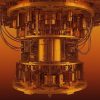
D-Wave has announced its demonstration of scalable on-chip cryogenic control for gate-model qubits. They claim it is an industry-first achievement. This was unveiled at CES 2026. This represents a strategic pivot for a company historically associated exclusively with quantum annealing technology. The achievement suggests D-Wave is positioning itself to compete directly in the gate-model space. This space is dominated by IBM, Google, and IonQ. D-Wave is leveraging its two decades of superconducting qubit expertise. They aim to address one of quantum computing’s most persistent engineering challenges.
“Without on-chip control and multiplexing, useful gate-model quantum computers require an impractically large amount of wiring and massive cryogenic enclosures,”
Dr. Trevor Lanting, chief development officer at D-Wave
The core innovation involves transferring D-Wave’s multiplexed digital-to-analog converter technology to gate-model architectures. This technology is already proven in their annealing systems. It controls tens of thousands of qubits with just 200 bias wires. The company built a multichip package. They used superconducting bump bonding. This package integrates a high-coherence fluxonium qubit chip with a multilayer control chip. Key fabrication was performed at NASA’s Jet Propulsion Laboratory, adding credibility to the technical claims. The critical assertion is that this approach maintains qubit fidelity. It also dramatically reduces wiring complexity. Wiring complexity has been a fundamental barrier to scaling gate-model systems.
The reliance on fluxonium qubits is key to D-Wave’s strategy for high-fidelity gate operations. Unlike simpler transmons, fluxonium qubits leverage Josephson junctions operating in a regime where the qubit frequency is sensitive to the ratio of magnetic flux to Josephson energy. This design naturally suppresses the detrimental effects of charge noise and low-frequency environmental fluctuations, thereby extending the coherence times necessary for running complex quantum circuits. Achieving this high coherence while maintaining compatibility with superconducting integrated control lines represents a formidable materials science and device physics challenge.
Technically, the innovation lies not only in the qubit design but in the integration of the control electronics itself. The multi-layer control chip must operate reliably at cryogenic temperatures, typically 4 Kelvin, necessitating custom Low-Temperature Circuitry (LTC). Traditional classical control wiring generates massive heat load and introduces signal attenuation at these ultra-low temperatures. D-Wave’s ability to integrate multiplexing circuitry directly adjacent to the qubit plane circumvents the severe I/O bottleneck that plagues scaling efforts across all superconducting architectures.
The process of superconducting bump bonding to integrate the qubit and control layers demands extreme precision, ensuring uniform electrical contact and maintaining the pristine electromagnetic environment necessary for coherent quantum information. This vertical integration minimizes parasitic capacitance and inductance, two factors that severely degrade qubit performance. Successfully implementing this complex 3D chip stacking architecture dramatically improves the device density and physical robustness far beyond what is possible with traditional wire-bonded systems.
From an algorithmic perspective, the effective scaling requires more than just more qubits; it demands an exponential increase in connectivity and programmable coupling. D-Wave’s demonstrated platform hints at developing programmable couplers that allow researchers to dynamically adjust the interaction strength between specific qubit pairs. This capability is crucial for implementing advanced quantum error correction codes, such as surface codes, which rely on controlled, nearest-neighbor interactions to protect the fragile quantum state from environmental decoherence.
D-Wave is explicitly framing this as a scalability advantage over competing modalities. The company calls out trapped ions, neutral atoms, and photonics for their slower gate execution times. This is a direct shot at IonQ, Quantinuum, and PsiQuantum. The company claims over 60% of its patent portfolio spans both annealing and gate-model technologies. This suggests substantial IP positioning for this market expansion. If the fidelity claims hold under independent scrutiny, this could materially alter the competitive landscape for fault-tolerant quantum computing development.
Commercial Timeline
D-Wave is hosting Qubits 2026 on January 27-28 in Boca Raton, where further roadmap details are expected. The language around “commercially viable” and “commercial-grade” gate-model systems suggests hardware products are in development. However, no specific availability timeline was announced. This positions the announcement as a technology demonstration. It is not a product launch. Commercialisation is likely 18-36 months out, based on typical quantum hardware development cycles.




See today’s quantum computing news on Quantum Zeitgeist for the latest breakthroughs in qubits, hardware, algorithms, and industry deals.