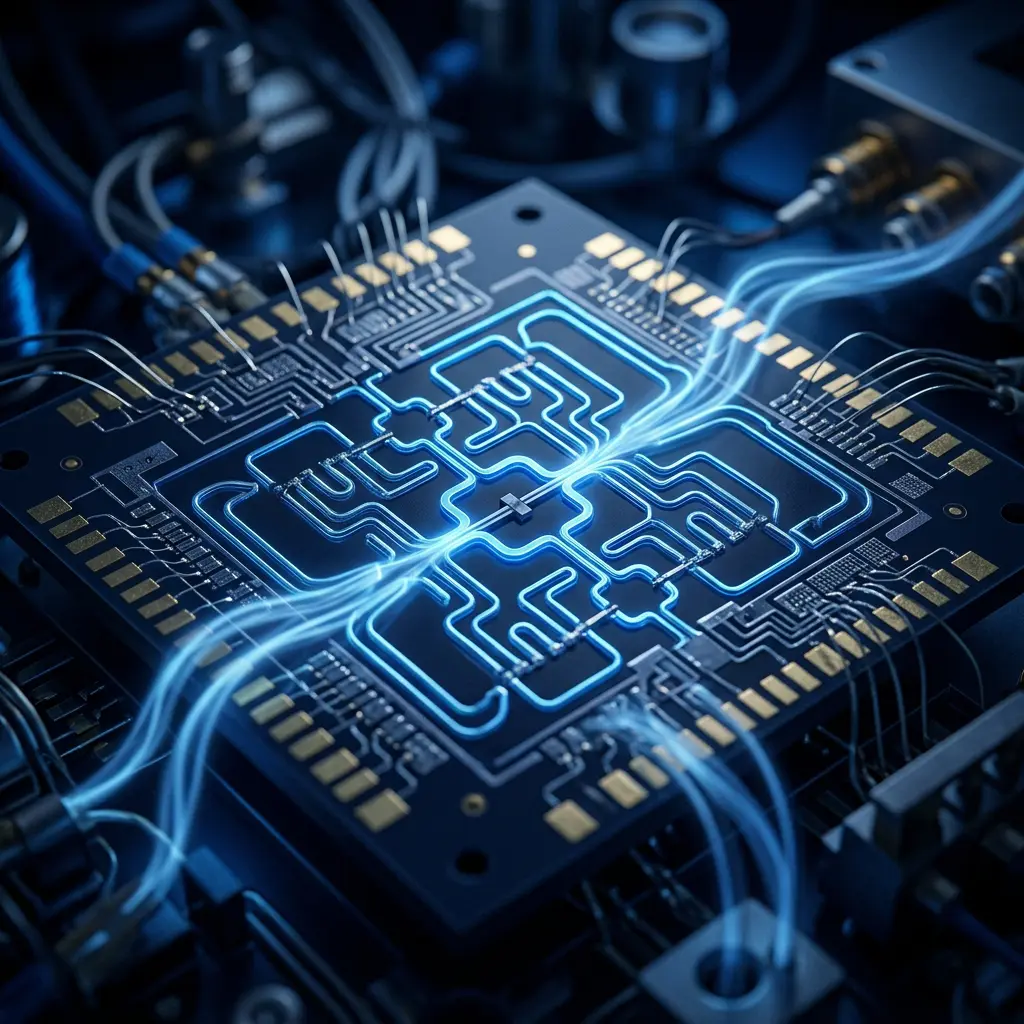
D-Wave’s subsidiary, Quantum Circuits, LLC, will be part of four programs collectively receiving more than $25 million in second-year funding to advance the fabrication of superconducting qubits as part of the SQFab project, one of four programs selected by the U.S. Department of Defense through the NORDTECH consortium. The award recognizes success in designing and fabricating key quantum computing components, progressing the project from research toward manufacturing scalable systems. This funding highlights the growing importance of quantum computing for U.S. microelectronics capabilities, according to D-Wave CEO Dr. Alan Baratz, who stated that this award reflects growing recognition of quantum computing’s role in advancing U.S. microelectronics capabilities. D-Wave is the only company offering both annealing and gate-model quantum computing systems, a distinction highlighted in connection with this award focused on scalable qubit fabrication and bolstering domestic semiconductor supply chains.
D-Wave Receives Year 2 Funding for SQFab Project
This renewed investment follows success in achieving first-year benchmarks, specifically in the design and characterization of essential quantum computing components. The U.S. Department of Defense selected the project through NORDTECH, a consortium uniting semiconductor research facilities, government labs, and academic institutions across New York State. NORDTECH is part of the larger U.S. Microelectronics Commons (MEC) program, a Department of Defense initiative managed by the National Security Technology Accelerator. The project aims to refine materials used in superconducting qubits, focusing on scalable fabrication methods that bridge the gap between research and manufacturing. “This work is critical for transferring nanofabrication processes to full-scale production, ultimately supporting wider adoption and scalability of quantum technologies,” said Dr. Alan Baratz, CEO of D-Wave. Beyond materials science, the SQFab mission extends to co-developing technologies crucial for scalable quantum error correction, incorporating novel materials, quantum circuits, and qubit control schemes. Dr. Rob Schoelkopf, chief scientist at D-Wave, emphasized the importance of establishing core infrastructure for superconducting qubit fabrication and system scalability, stating, “Building on the progress made last year, we are excited to continue our work in establishing the hub’s core infrastructure for superconducting qubit fabrication and system scalability.”
NORDTECH & Microelectronics Commons Drive Scalable Qubit Fabrication
Quantum component fabrication is currently fragmented, with research efforts often struggling to translate laboratory successes into scalable manufacturing processes; however, a concentrated push from the Northeast Regional Defense Technology Hub, or NORDTECH, aims to bridge this gap. NORDTECH functions as a key component of the larger U.S. This collaborative approach, uniting non-profit facilities, government labs, defense contractors, academic institutions, and manufacturing organizations, is intended to address vulnerabilities in the semiconductor supply chain and cultivate a skilled domestic workforce. The SQFab project specifically focuses on improving materials used in superconducting qubits alongside scalable fabrication techniques, aiming to move research toward practical manufacturing. “This work is critical for transferring nanofabrication processes to full-scale production, ultimately supporting wider adoption and scalability of quantum technologies,” said Dr. Alan Baratz, CEO of D-Wave.
This award reflects the growing recognition that quantum computing will play an important role in advancing U.S. microelectronics innovation.
Dr. Alan Baratz, CEO of D-Wave
Dr. Alan Baratz, CEO of D-Wave, underscored the broader implications of this research for the future of microelectronics capabilities.
Building on the progress made last year, we are excited to continue our work in establishing the hub’s core infrastructure for superconducting qubit fabrication and system scalability.
Dr. Rob Schoelkopf, chief scientist at D-Wave

See today’s quantum computing news on Quantum Zeitgeist for the latest breakthroughs in qubits, hardware, algorithms, and industry deals.