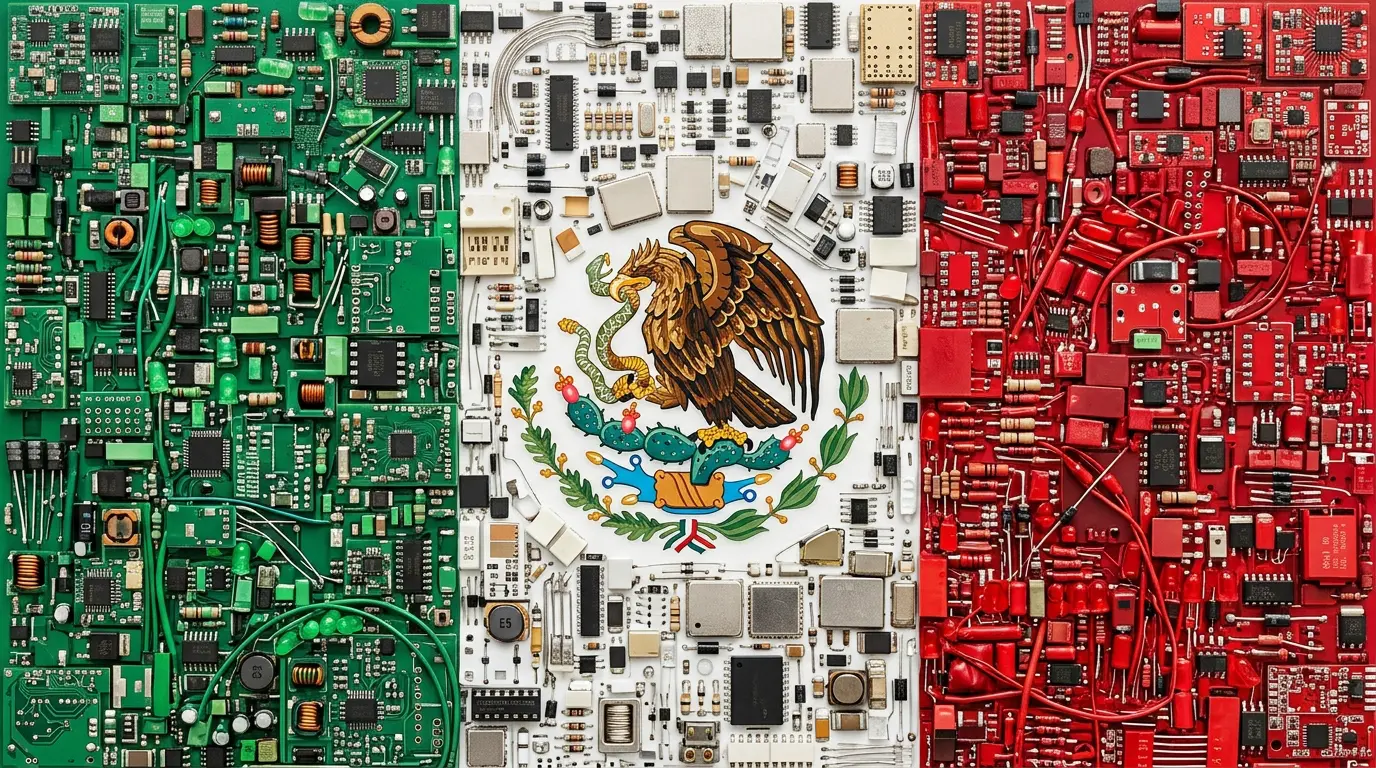
The leading mexico quantum computing companies and institutions in 2026 form a research-led ecosystem, organised around major universities and national research centres rather than commercial firms. Mexico does not yet have a genuine quantum-computing industry, and directory listings that claim dozens of Mexican quantum companies are misleading, because most of those firms are ordinary IT consultancies. The real ecosystem is academic. Ten organisations define the mexico quantum computing companies landscape in this guide: UNAM, Tecnologico de Monterrey, CINVESTAV, IPN CIC, INAOE, CIO, CICESE, BUAP, UNAM CNyN, and the QMexico community.
Why Mexico’s quantum ecosystem is research-led
Mexico’s quantum landscape is research-led, and it is important to be honest about that. The country does not have a set of venture-funded quantum-hardware or quantum-software startups. Some online directories claim that Mexico is home to dozens of quantum companies, but those listings mostly count ordinary cloud and IT consultancies that have no real quantum product, so they should be treated with caution.
What Mexico genuinely has is a strong and distributed academic ecosystem. The mexico quantum computing companies landscape is built from major universities and national research centres, spread across several states, working on quantum optics, quantum information, quantum photonics, and quantum algorithms. The country also has a community network that connects these institutions and teaches quantum computing in Spanish. The ecosystem is therefore best understood as a research-led one, with deep academic roots but, for now, almost no commercial layer.
Quantum computers and hardware access in Mexico
Mexico took a notable step in 2023 when UNAM acquired two small desktop quantum computers, reported as the first quantum computers installed at a Latin American university. These are compact, low-qubit machines intended for teaching rather than for solving hard computational problems, and their value is that they give students hands-on access to real quantum hardware while they learn.
For research that needs more capable machines, Mexican groups reach quantum computers through international collaborations and cloud quantum-computing services. Tecnologico de Monterrey, for example, has worked with international partners on quantum-computing projects, and several groups run their experiments on cloud platforms. This pattern is normal for an emerging quantum nation, because hosting a large quantum computer is expensive and the cloud makes powerful machines available from anywhere. For the mexico quantum computing companies, the priority is building research expertise and teaching capacity, and access to hardware follows through partnerships and the cloud.
The top mexico quantum computing organisations
Ten organisations define the mexico quantum computing companies landscape covered in this guide. Because the ecosystem is research-led, almost all are universities and national research centres. UNAM is the largest university and the academic anchor, Tecnologico de Monterrey is strong in quantum algorithms, and CINVESTAV and IPN CIC bring computer-science depth. INAOE, CIO, CICESE, and UNAM CNyN are research centres strong in optics and photonics, BUAP adds a quantum group in Puebla, and QMexico is the community network. The QMexico community connects the institutions of the mexico quantum computing companies.
The profiles below cover the leading organisations in depth. Each one is a university or national research centre with a verifiable quantum programme, rather than a commercial vendor.










What the landscape reveals
The first pattern is that Mexico’s quantum strength is academic and distributed. The ecosystem is not concentrated in one city or one institution but spread across UNAM, Tecnologico de Monterrey, CINVESTAV, and a set of national research centres in several states. The Mexico quantum companies landscape is a national network of university and research groups rather than a single quantum hub.
Optics and photonics are a real strength
The second pattern is genuine depth in optics and quantum photonics. INAOE, CIO, CICESE, and UNAM CNyN all carry strong optics research, and quantum photonics is a route to both quantum computing and quantum communication. The Mexico quantum companies landscape has a real foundation in the science of light, which is one of the pillars of quantum technology.
There is no commercial layer yet
The third pattern is the absence of a commercial quantum industry. Mexico has no significant quantum-hardware or quantum-software vendors, and claims to the contrary usually count IT consultancies that are not quantum companies. The Mexico quantum companies landscape is academic, and any commercial sector will have to grow out of this research base over time.
The research centres behind Mexican quantum
Mexico’s quantum research rests on a set of universities and national centres, each with a distinct character. UNAM, the largest university, is the academic anchor, with quantum-optics and quantum-information research and a major teaching effort. Tecnologico de Monterrey is strong in quantum algorithms, and CINVESTAV and IPN CIC bring rigorous computer-science and theory research, including a quantum-information laboratory founded in 2022.
The optics-focused centres carry much of the country’s quantum-hardware-related research. INAOE in Puebla has decades of experience in optics and quantum optics, CIO in Leon runs a quantum-photonics laboratory working on photonic circuits and quantum light sources, and CICESE and UNAM CNyN on the Pacific coast work on quantum communication and nanoscale photonics. Together these institutions give the Mexico quantum companies a research base that spans quantum optics, photonics, quantum information, and quantum algorithms.
The Mexico City, Puebla, and Baja California map
The Mexico quantum companies landscape is spread across several regions. The Valley of Mexico is the largest centre, home to UNAM with its quantum research and teaching, CINVESTAV, the quantum-information laboratory at IPN CIC, and the Quantum Information Processing group that Tecnologico de Monterrey runs at its Campus Estado de Mexico. The capital region concentrates much of the country’s quantum-information and computer-science research, even though Tec’s main campus sits far to the north in Monterrey.
The state of Puebla is an optics centre, home to INAOE in Tonantzintla and to BUAP, while CIO is in Leon in the state of Guanajuato. On the Pacific coast, the city of Ensenada in Baja California hosts both CICESE and UNAM CNyN. The QMexico community network connects these dispersed institutions, giving the Mexico quantum companies a national reach that stretches from the Pacific coast to the centre of the country.
When Mexico matters for your quantum strategy
Quantum optics and photonics research
If your priority is research collaboration in quantum optics and photonics, Mexico offers real depth. INAOE and CIO carry decades of optics expertise, with CIO running a dedicated quantum-photonics laboratory, and CICESE and UNAM CNyN add quantum-communication and nanoscale-photonics research. Organisations seeking research partners in light-based quantum technology in Latin America should consider the Mexico quantum companies.
Quantum algorithms and quantum-information research
For quantum algorithms and theory, Mexico has strong groups. Tecnologico de Monterrey is a pioneer of quantum-algorithm research in the country, and CINVESTAV and IPN CIC bring computer-science depth and a dedicated quantum-information laboratory. Organisations seeking collaboration on quantum software, algorithms, or quantum-resistant cryptography should consider the Mexico quantum companies.
Quantum talent and education
For quantum talent, Mexico has a large and growing pipeline. UNAM runs quantum-computing courses and summer schools that have taught hundreds of students, the QMexico community teaches quantum computing in Spanish, and the national network of universities trains researchers across several states. Organisations seeking quantum-trained Spanish-speaking talent should consider the Mexico quantum companies and the institutions behind them.
Frequently asked questions
Who are the leading Mexico quantum companies in 2026?
Mexico’s quantum landscape is research-led rather than company-led, and it has no significant commercial quantum industry. The central organisations are UNAM, the largest university and academic anchor, with quantum research and a major teaching effort, and Tecnologico de Monterrey, which is strong in quantum algorithms. CINVESTAV and the quantum-information laboratory at IPN CIC bring computer-science depth. INAOE, CIO, CICESE, and UNAM CNyN are research centres strong in optics and quantum photonics, BUAP adds a quantum group in Puebla, and QMexico is the community network. Together these ten organisations define the Mexico quantum companies landscape. Online directories that claim dozens of Mexican quantum companies are misleading, because they mostly count ordinary IT consultancies with no real quantum product.
Does Mexico have a quantum computer?
Mexico has small quantum computers used for teaching. In 2023 UNAM acquired two compact desktop quantum computers, reported as the first quantum computers installed at a Latin American university, and they give students hands-on access to real quantum hardware while they learn. These are low-qubit machines intended for education rather than for solving hard computational problems. For research that needs more capable machines, Mexican groups reach quantum computers through international collaborations and cloud quantum-computing services. This pattern is normal for an emerging quantum nation, and for the Mexico quantum companies the priority is building research expertise and teaching capacity rather than hosting large hardware.
Does Mexico have commercial quantum companies?
Mexico does not have a genuine commercial quantum industry, and this is the most important thing to understand about its ecosystem. Some online directories claim that the country is home to dozens of quantum companies, but those listings mostly count ordinary cloud and IT consultancies that have no real quantum product, so they are misleading. The Mexico quantum companies landscape is academic, built from universities and national research centres working on quantum optics, quantum information, quantum photonics, and quantum algorithms. There are, for now, almost no quantum-hardware or quantum-software vendors. Any commercial quantum sector in Mexico will have to grow out of the strong research base over the coming years.
Which Mexican universities are strongest in quantum?
Several Mexican universities and research centres are active in quantum science. UNAM, the National Autonomous University of Mexico, is the academic anchor, with quantum-optics and quantum-information research and a large teaching effort including courses and summer schools. Tecnologico de Monterrey is a pioneer of quantum-algorithm research in the country. CINVESTAV and the Computing Research Centre of the National Polytechnic Institute bring computer-science depth. INAOE, CIO, CICESE, and UNAM CNyN are research centres strong in optics and quantum photonics, and BUAP has a quantum group in Puebla. Together these institutions form the core of the Mexico quantum companies, a distributed academic ecosystem spread across several states.
What is Mexico strong at in quantum technology?
Mexico’s clearest strength in quantum technology is optics and quantum photonics. The country has a set of research centres with decades of optics expertise, including INAOE in Puebla, CIO in Leon with its dedicated quantum-photonics laboratory, and CICESE and UNAM CNyN on the Pacific coast. Quantum photonics is important because photons are robust carriers of quantum information and a route to both quantum computing and quantum communication. Mexico is also strong in quantum algorithms and quantum-information theory, with groups at Tecnologico de Monterrey, CINVESTAV, and IPN CIC. The Mexico quantum companies landscape combines real depth in the science of light with solid quantum-algorithms and theory research.
Where is quantum technology developed in Mexico?
The Mexico quantum companies landscape is spread across several regions. The Valley of Mexico is the largest centre, home to UNAM, CINVESTAV, the quantum-information laboratory at IPN CIC, and the Quantum Information Processing group that Tecnologico de Monterrey runs at its Campus Estado de Mexico, and it concentrates much of the country’s quantum-information and computer-science research. Tec’s main campus lies far to the north in Monterrey, yet its quantum group works near the capital. The state of Puebla is an optics centre, home to INAOE in Tonantzintla and to BUAP, while CIO is in Leon in the state of Guanajuato. On the Pacific coast, Ensenada in Baja California hosts both CICESE and UNAM CNyN. The QMexico community network connects these dispersed institutions across the country.
What is QMexico?
QMexico is a volunteer quantum community, part of the international QWorld network, that brings together students and researchers in Mexico to promote quantum education and outreach. QMexico runs Spanish-language quantum-education activities and helps connect the universities and research centres that make up the Mexico quantum companies into a single community. Quantum education is a genuine bottleneck for the whole industry, because the field needs far more people who understand quantum information than universities normally produce, and teaching quantum computing in the local language widens the talent pool considerably. QMexico gives the Mexico quantum companies a grassroots education and community network, helping to grow the Spanish-speaking quantum-skilled workforce that a future Mexican quantum sector will need.
How does Mexico compare with other quantum nations?
Mexico is an emerging, research-led quantum nation rather than an established quantum power. It does not have the venture-funded company ecosystems of countries such as the Netherlands, Finland, or Germany, and it does not host a large quantum computer. But Mexico has a genuine and distributed academic ecosystem, with strong universities and national research centres working on quantum optics, quantum photonics, quantum information, and quantum algorithms, spread across several states. It has a real depth in the science of light and a large, growing pipeline of quantum-trained students. The Mexico quantum companies landscape competes through research strength and education rather than through commercial products. As the academic base matures, Mexico has the foundation to build a quantum sector over time.




See today’s quantum computing news on Quantum Zeitgeist for the latest breakthroughs in qubits, hardware, algorithms, and industry deals.