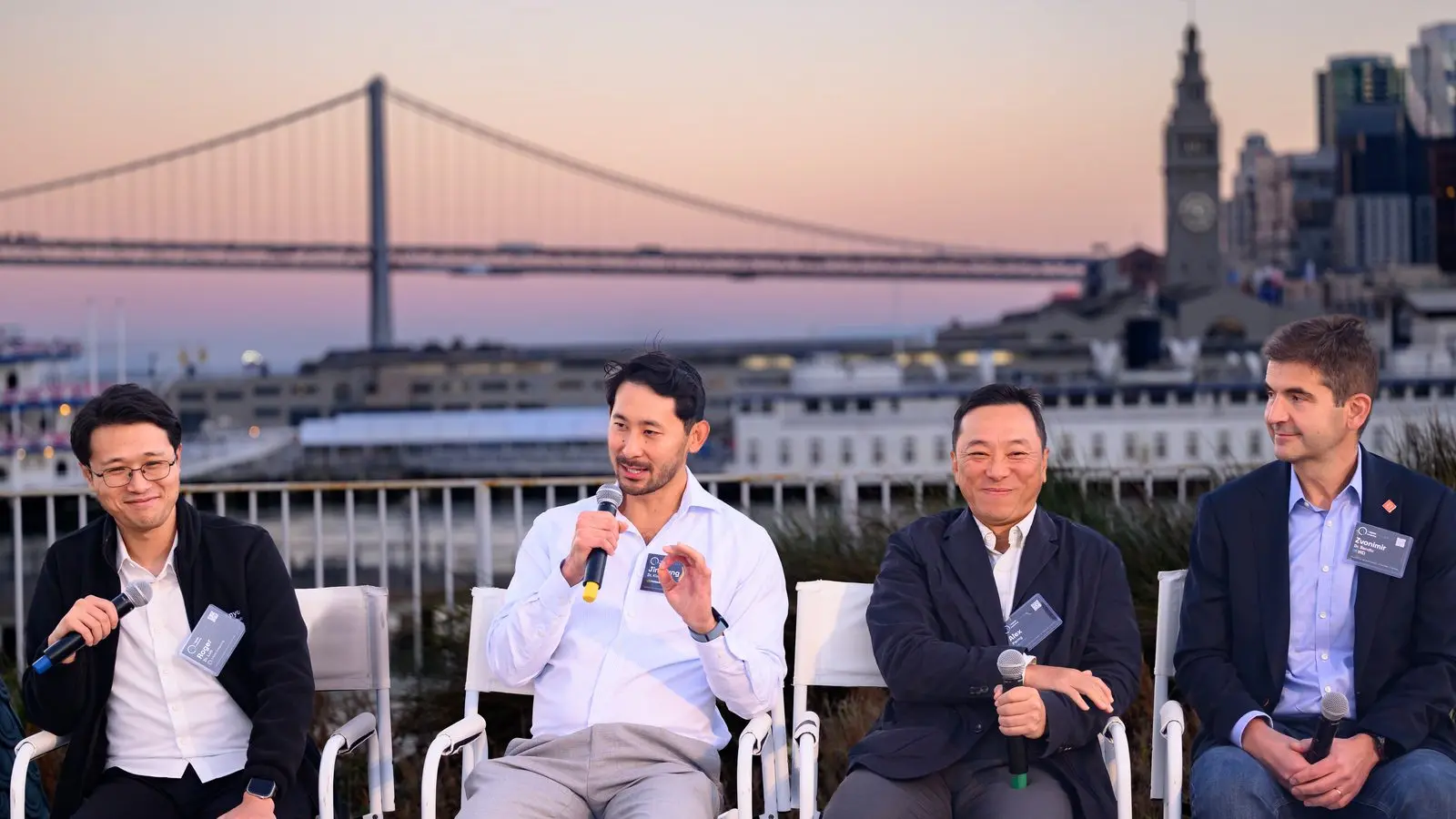
On October 7, NVIDIA’s Jin-Sung Kim joined representatives from Wistron and Western Digital at the “Quantum in the next AI Supercomputer” event during SF Tech Week by a16z to discuss a fundamental shift in supercomputing architecture. The event focused on a vision for machines tightly coupling quantum processing units, GPUs and CPUs within a single system.
This approach, panelists suggested, moves beyond simply adding quantum as an accelerator and addresses the advanced manufacturing and infrastructure challenges ahead. “Quantum is at a similar inflection point now, and AI is accelerating it beyond what anyone expected,” reflected the evening’s discussion.
NVIDIA, Wistron, and Western Digital Address Quantum Supercomputer Scaling
Western Digital and Wistron outlined a collaborative approach to integrating quantum processing units with existing computational infrastructure during a recent event at SF Tech Week. The discussion, framed around the idea that future supercomputers will tightly couple QPUs, GPUs and CPUs, moved beyond the concept of quantum as a mere accelerator and addressed the challenges of full integration.
Jin-Sung Kim of participated in the first panel, “Building the next supercomputer, together,” alongside Chiy-Ferng Alex Perng of Wistron and Zvonimir Bandic of Western Digital, focusing on the manufacturing hurdles inherent in this ambitious architecture. The event highlighted that realizing this vision requires solving problems across the entire tech stack, from chip fabrication to data center infrastructure and software development.
GPUs became AI supercomputers when a broader industry ecosystem coalesced around their potential; quantum computing, they suggest, is now at a similar turning point. “Building the next supercomputer, together,” was the title of the opening session, signaling the need for cross-company cooperation to overcome the scaling challenges. Anyon Computing hosted the event, recognizing that the integration of quantum hardware isn’t solely a quantum problem, but one deeply rooted in established semiconductor manufacturing expertise.
The discussion acknowledged that the path forward requires using the strengths of companies already proficient in these areas. The need for industry-wide collaboration was a recurring theme, with panelists emphasizing that a single company cannot solve the complex challenges of scaling quantum computing, mirroring the historical development of AI supercomputing where success stemmed from a collective effort rather than isolated innovation.
The event also celebrated the roles of national labs and universities in the evolution of computing, positioning them as key partners in building this new foundation with quantum technology. Shuxiang Cao of Alex Shih of later detailed how artificial intelligence could accelerate the development of quantum supercomputers, enabling complex production workloads within large-scale computing centers. This relationship between AI and quantum computing is expected to drive progress beyond what was previously anticipated.
The demonstration of real-time quantum state evolution, displayed on a screen after dark, demonstrated single-shot measurements on superconducting qubits, including Rabi oscillations and a single excitation. This visual representation of quantum dynamics, dubbed “Quantum Dynamics, Shot by Shot,” offered attendees a tangible glimpse into the underlying physics driving these advanced systems.

See today’s quantum computing news on Quantum Zeitgeist for the latest breakthroughs in qubits, hardware, algorithms, and industry deals.