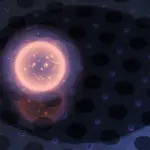
University of Delaware physics professor Spencer Axani invented CosmicWatch, a portable and affordable particle detector that reveals invisible muons originating from extreme cosmic events. These muons, created when high-energy cosmic rays collide with Earth’s atmosphere, help scientists study phenomena like exploding stars and blazars. Originally designed as an educational tool, CosmicWatch is now utilized in international astrophysics experiments and classrooms nationwide, bringing particle physics to a new generation.
After joining the UD faculty in 2022, Axani released the third version of CosmicWatch. “CosmicWatch detectors allow us to do far more physics at a dramatically lower cost,” Axani said, “opening the door to many new kinds of experiments and outreach opportunities.”
CosmicWatch Detects Muons to Explore Extreme Astrophysical Events
CosmicWatch is enabling detailed study of atmospheric muons with a footprint significantly smaller than traditional detectors; a typical undergraduate physics lab course utilizes a rack of electronics roughly the size of a small bookshelf to achieve the same measurements. This portability extends the reach of particle physics research beyond dedicated laboratories and into diverse environments, including classrooms and remote field locations. The device, approximately the size of a box of animal crackers, illuminates and records each muon passage, storing data for subsequent analysis and allowing researchers to track these particles originating from high-energy cosmic events.
The accessibility of CosmicWatch is reshaping the learning experience for students, providing hands-on engagement with real-world scientific inquiry. “They get to learn some coding with it, and sometimes they break the devices and then we have to talk to them about being careful with your equipment,” said Spencer Axani, the University of Delaware physics professor who invented the detector. This direct involvement contrasts sharply with typical physics labs, fostering a sense of ownership and genuine scientific practice among participants.
One student, previously focused on theoretical physics, found CosmicWatch a “perfect opportunity to dive into the experimental side,” noting its seamless connection to their broader research in particle physics. Beyond educational benefits, CosmicWatch is contributing to international astrophysics experiments focused on understanding extreme phenomena like supernovae, gamma-ray bursts, and blazars.
Even experienced researchers are finding new perspectives through the device. One noted, “Even though I had studied cosmic rays, I didn’t fully appreciate the rich physics behind the working of these detectors to actually ‘see’ the world and atmospheric particle production.” The detector’s relatively low cost, built from electronic components that cost around $100, allows for wider deployment and data collection, facilitating a more comprehensive understanding of these high-energy cosmic events and, as Axani explains.
CosmicWatch detectors allow us to do far more physics at a dramatically lower cost, in a compact and portable form.
Spencer Axani, assistant professor in the Department of Physics and Astronomy
Axani’s Low-Cost Detector Enables Particle Physics Education
The third iteration of CosmicWatch, released after Axani joined the UD faculty in 2022, expands the detector’s utility beyond educational settings into calibration for large-scale experiments like NuDot at the University of Delaware and the Coherent CAPTAIN-Mills dark matter detector in Los Alamos, New Mexico. This new version’s precision allows researchers to refine data from significantly more complex and expensive instruments, increasing the overall accuracy of their findings.
Axani’s design, built from electronic components that cost around $100, provides a cost-effective method for verifying the performance of detectors designed to observe far more elusive particles. Beyond its role in validating established experiments, CosmicWatch is also enabling new avenues of research, including the development of a detector variant intended for measuring primary cosmic rays from rockets and spacecraft.
This adaptation demonstrates the device’s versatility and potential for deployment in environments inaccessible to traditional, larger detectors. “Although it started as an educational program it’s found a use in a lot of different areas of physics,” Axani noted, highlighting the unexpected breadth of applications stemming from the initial educational goal. The compact size, roughly equivalent to a box of animal crackers, facilitates integration into diverse experimental setups, broadening the scope of data collection.
The impact of CosmicWatch extends to the classroom, where students gain hands-on experience with real-world particle physics. Students aren’t merely observing established principles; they are actively involved in data acquisition and analysis, mirroring the workflow of professional physicists. “The students seem really excited about doing this thing that is more like what particle physicists and experimental physicists actually do,” he added, emphasizing the shift from passive learning to active participation in scientific inquiry.
Even though I had studied cosmic rays, I didn’t fully appreciate the rich physics behind the working of these detectors to actually ‘see’ the world and atmospheric particle production.
Masooma Sarfraz, a doctoral student in Axani’s lab and primary author on the journal article
CosmicWatch Version 3 Monitors Radiation and Accelerates Data Collection
CosmicWatch version 3 now incorporates environmental monitoring capabilities alongside its primary function of tracking muons, subatomic particles originating from space, a recent publication in the Journal of Instrumentation details. These upgrades allow the device to withstand high radiation levels and speed up data collection, expanding its utility beyond initial design parameters and into more extreme research environments.
The ability to function reliably in harsh conditions was important during a high-altitude balloon experiment led by doctoral student Shams, where a recovered CosmicWatch unit transmitted data demonstrating how cosmic ray flux varies with altitude. This capability addresses a critical need for cost-effective verification methods in large-scale physics projects, as previously, such validation often required dedicated, expensive equipment.
Beyond terrestrial applications, a modified version of CosmicWatch is under development for deployment on rockets and spacecraft, aiming to measure primary cosmic rays directly in space. The original intent of creating a portable, affordable detector has also continued, with Axani utilizing CosmicWatch in undergraduate and graduate courses at the University of Delaware to teach particle, nuclear, and astrophysics concepts. Students actively analyze data collected by the devices, gaining hands-on experience with real-world particle physics.
A typical undergraduate physics lab course uses a rack of electronics about the size of a small bookshelf to measure muons.
Spencer Axani, assistant professor in the Department of Physics and Astronomy
High-Altitude Balloon Experiment Maps Cosmic Ray Flux with CosmicWatch
Muons detected by CosmicWatch aren’t merely products of distant cosmic events like exploding stars, gamma ray bursts and blazars; these subatomic particles also served as early experimental proof of Einstein’s theory of special relativity in the 1940s. Doctoral student Musarate Shams used this phenomenon, customizing a CosmicWatch detector with temperature and pressure sensors to investigate cosmic ray flux in the Earth’s upper atmosphere, launching it aboard a high-altitude balloon reaching 100,000 feet.
Analysis of the recovered data demonstrated how the intensity of cosmic rays changes with increasing altitude, a finding previously difficult to obtain with readily available instrumentation. Recent upgrades detailed in the Journal of Instrumentation expanded CosmicWatch’s capabilities beyond simple particle detection, enabling it to monitor its surrounding environment and withstand high radiation levels while accelerating data collection rates. This enhanced functionality proved critical during Shams’s balloon experiment, as the device successfully operated and recorded data even after the balloon burst, with the unit recovered miles from the launch site.
Although it started as an educational program it’s found a use in a lot of different areas of physics.
Spencer Axani, assistant professor in the Department of Physics and Astronomy
See today’s quantum computing news on Quantum Zeitgeist for the latest breakthroughs in qubits, hardware, algorithms, and industry deals.