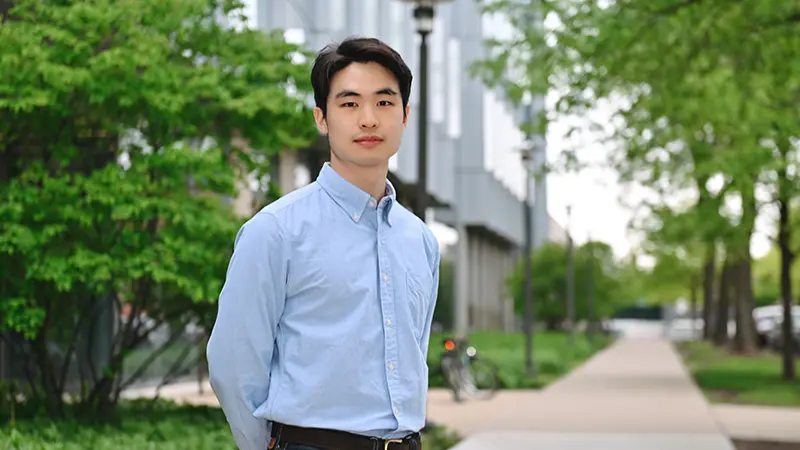
Su-un Lee’s fascination with the logic of planetary motion led him to the quantum realm as an undergraduate at Seoul National University in Korea. After arriving at the University of Chicago Pritzker School of Molecular Engineering in 2022, Lee began research identifying a critical requirement for realizing the potential of quantum computers.
He reports that scientists need highly structured quantum circuits to achieve quantum advantage, suggesting current approaches may be too broad in their design. Lee explained his choice of UChicago PME, stating, “I was particularly interested in his group’s broad range of research across quantum information science, from fundamental theory to practical applications.”
Structured Quantum Circuits Define Near-Term Advantage
Lee’s research demonstrates that highly structured quantum circuits are essential for achieving quantum advantage, a finding that challenges assumptions about the potential of near-term quantum devices. He developed both classical and quantum algorithms to rigorously study the boundaries of these circuits, revealing limitations that previously hindered progress. This work moves beyond simply building quantum computers and focuses on how those computers are programmed to solve problems.
Professor Liang Jiang also provided significant support, offering Lee the freedom to pursue independent research directions and skillfully connecting researchers with complementary expertise. He’s curious about a wide range of topics and has a great sense of which people and perspectives to bring together for a discussion.” The insights gained from this research were further refined through internships at IBM’s facility in Yorktown Heights, New York.
During the summer of 2025 and again in 2026, Lee collaborated with experimental researchers to identify bottlenecks in current quantum devices as part of a large-scale project. He noted that being part of such a large collaboration for such an ambitious goal was a new experience for him, emphasizing the value of translating theoretical findings into practical applications.
Lee believes that despite the challenges, quantum computers are approaching a point where they can deliver tangible benefits. “The capabilities of quantum hardware have advanced significantly, and we’re getting closer to demonstrating quantum advantage on practically meaningful problems.”
I was particularly interested in his group’s broad range of research across quantum information science, from fundamental theory to practical applications, so UChicago PME was my first choice.
Su-un Lee, PhD student
See today’s quantum computing news on Quantum Zeitgeist for the latest breakthroughs in qubits, hardware, algorithms, and industry deals.