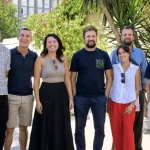
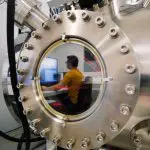
Antoine Brillant, a fourth-year PhD student in the Clerk Group at UChicago Pritzker School of Molecular Engineering, is applying his doctoral research directly to efforts mitigating noise on quantum devices at IBM’s quantum team in Yorktown Heights. Brillant views the internship as a continuation of his PhD work, focusing on the future potential of quantum computing beyond existing algorithms.
“A few very powerful quantum algorithms already exist, but I like to think that the best applications have not yet been discovered,” he said. IBM’s team is actively working toward large-scale fault tolerant quantum computations, potentially impacting numerous areas of modern life within the decade.
Antoine Brillant Connects UChicago Research to IBM Starling Development
Brillant is contributing to the quantum demonstration and capabilities team in Yorktown Heights, focusing on techniques to improve the reliability of quantum computations. His internship is not a detour from his PhD, but rather, as he describes it, “a direct continuation of my PhD work” and an opportunity to address practical implementation challenges. The focus on reducing noise is critical, as even minor disturbances can corrupt quantum calculations; Brillant’s team is actively seeking efficient methods to counteract these errors.
Brillant anticipates the arrival of large-scale, fault-tolerant quantum computers, potentially with IBM’s Starling architecture, by the end of the decade, with continued improvements over the following two decades. He hopes to contribute solutions to the challenges that will arise as these powerful machines become a reality, aiming to shape the future impact of quantum computing on areas like healthcare and cryptography. His work exemplifies the increasingly close relationship between academic inquiry and the development of practical quantum technologies.
Source: https://pme.uchicago.edu/news-events/news/engineering-summer-advancing-quantum-computing-ibm-0

See today’s quantum computing news on Quantum Zeitgeist for the latest breakthroughs in qubits, hardware, algorithms, and industry deals.