In 1925, German physicist Werner Heisenberg published work CERN now considers the “birth certificate” of modern quantum theory, ultimately earning him the Nobel Prize in physics seven years later. Building on that century of progress, researchers at The University of Texas at Austin are preparing for what they describe as a second quantum revolution, seeking to control quantum systems with increased precision.
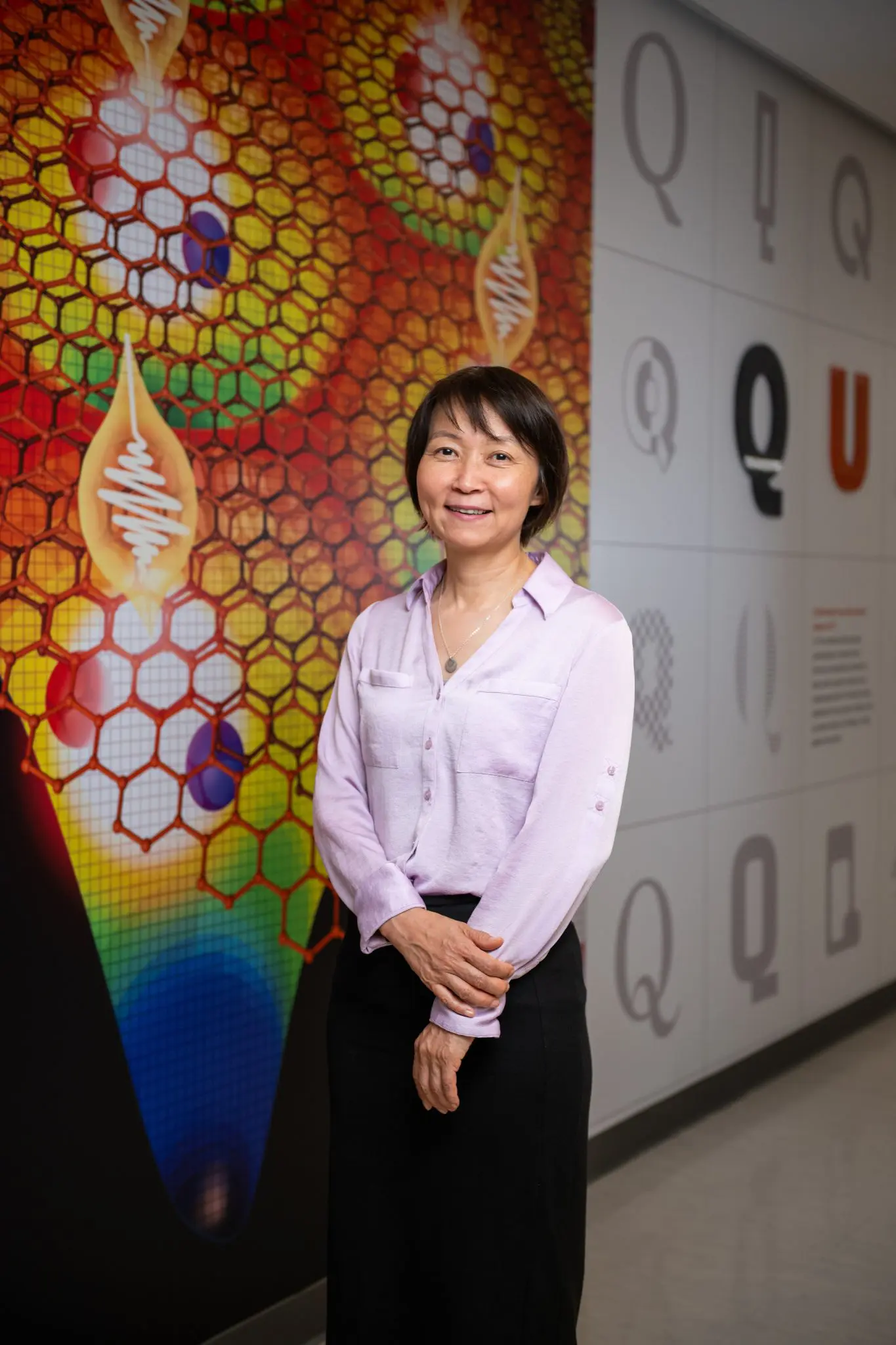
The Texas Quantum Institute, launched in 2024 under co-directors Elaine Li and Xiuling Li, consolidates UT’s quantum research. At its establishment, Elaine Li stated that the institute builds on a “strong track record in designing algorithms for quantum computers, developing materials with properties, inventing advanced measurement tools, and building quantum systems.” This new wave of innovation promises to transform fields from communications to energy, advancing the foundations of modern technology.
Texas Quantum Institute Unites Research for Quantum Advancement
The University of Texas at Austin is actively developing scalable single-photon quantum emitters using metal-organic chemical vapor deposition, a manufacturing process also employed in LED production. Xiuling Li, a professor of electrical and computer engineering at the Cockrell School of Engineering, holds over 25 patents and is currently pursuing another related to these emitters, highlighting the convergence of semiconductor technology and quantum advancements. This focus on materials science is central to enabling greater control over individual quantum systems and their interactions, a key requirement for realizing the potential of a second quantum revolution.
Li emphasizes the strong connection between semiconductors and quantum technologies, asserting that institutions like UT have a vital role in progressing both fields simultaneously. The Texas Quantum Institute (TQI) is fostering interdisciplinary collaboration to build upon UT’s existing strengths in quantum algorithm design, advanced materials development, and precision measurement tools.
Physicists, chemists, computer scientists, and engineers are now working together under the co-direction of Elaine Li and Xiuling Li, consolidating research efforts previously dispersed across the campus. This unified approach aims to capitalize on the principles of quantum entanglement, a phenomenon where microscopic particles become linked in a way that defies classical physics, and translate that understanding into tangible technological applications.
“It’s like building a new generation of MRI machines, but 1,000 times or a million times more sensitive,” observed Elaine Li, who studies the quantum dynamics of electrons, illustrating the potential for dramatically improved sensing capabilities. Momentum behind quantum research in Texas has increased significantly in recent years, with the state legislature approving the Texas Quantum Initiative in 2025. The governor’s office also announced a new quantum-enhanced semiconductor metrology facility on the UT campus, further solidifying the state’s commitment to this emerging field.
These investments are coupled with initiatives like the Quantum Cross-platform Advanced Training program, or Q-CAT, a National Science Foundation-funded program designed to prepare a skilled workforce for the quantum economy. Q-CAT provides graduate students with cross-disciplinary learning opportunities and practical experience at national laboratories and companies including the Air Force Research Laboratory, HRL Laboratories, IBM, NVIDIA, and Sandia National Laboratories.
The first quantum revolution, stemming from these early discoveries, yielded technologies such as MRIs, transistors, and solar cells, demonstrating the real-world benefits of harnessing quantum principles. “Quantum technologies are poised to change the world,” Xiuling Li has said, “and we need a workforce ready to lead that transformation.” The current drive towards a second quantum revolution seeks to build on this foundation, promising even more transformative advancements in areas like communications, computing, and sensing.
physicists, chemists, computer scientists, engineers and other researchers in TQI began to work together to build on the institution’s “strong track record in designing algorithms for quantum computers, developing materials with unprecedented properties, inventing advanced measurement tools, and building quantum systems”




See today’s quantum computing news on Quantum Zeitgeist for the latest breakthroughs in qubits, hardware, algorithms, and industry deals.