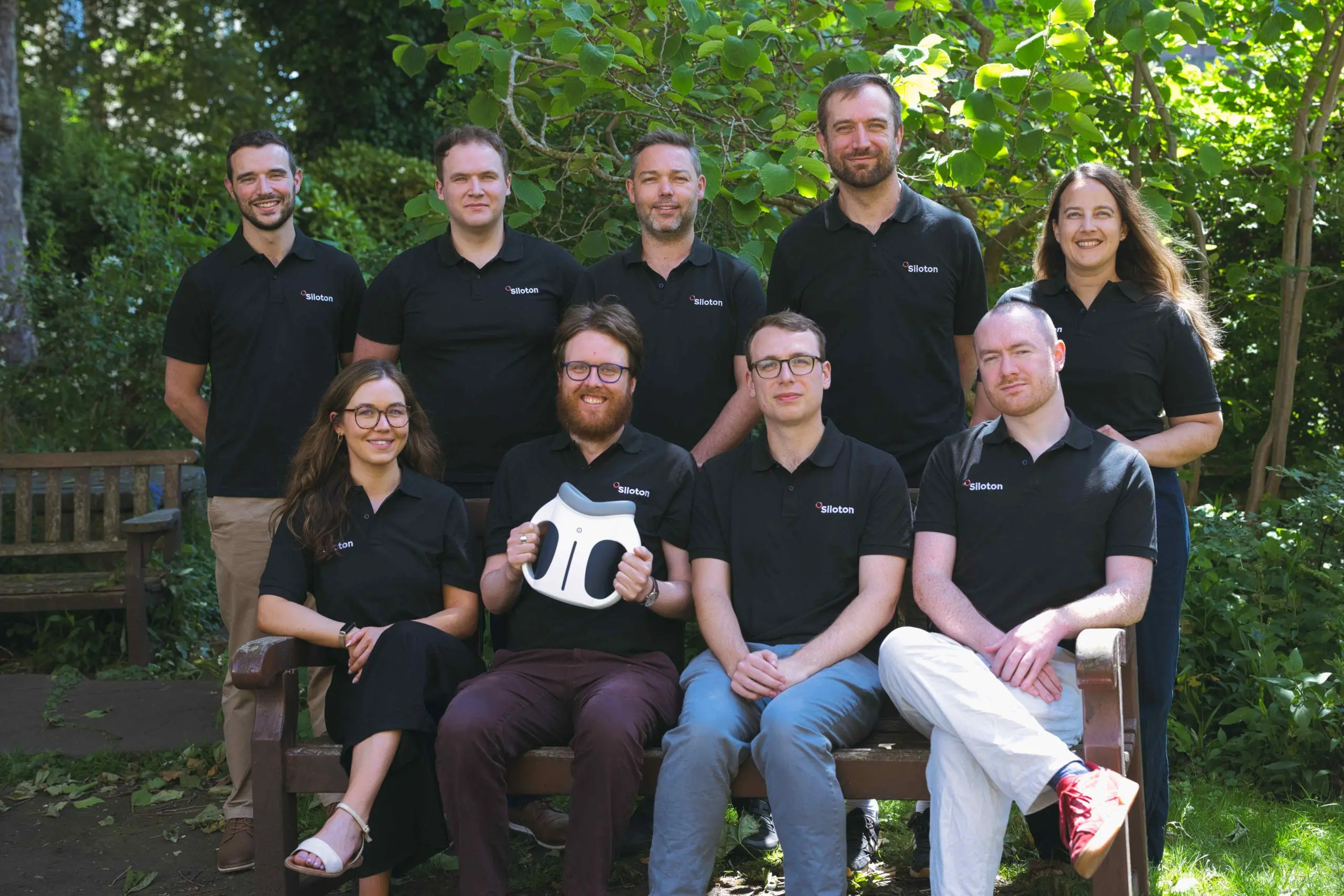
Innovate UK has awarded Bristol-based med-tech start-up Siloton an £8.4 million contract to accelerate development of its GiraffeOCT handheld eye imaging system. The funding will support the design of both in-clinic and at-home versions of the device, as well as clinical trials, potentially shortening the development timeline by up to two years.
Siloton aims to bring advanced retinal imaging outside of traditional hospital settings, addressing an NHS ophthalmology waiting list currently representing 8.7% of all waits. “Winning this Innovate UK contract allows us to accelerate the development of our systems,” said Alasdair Price, CEO of Siloton, “and help a new technology be adopted by the NHS more quickly.”
£8.4 Million Innovate UK Contract Accelerates Siloton’s Quantum OCT Device
The £8.4 million contract awarded to Siloton by Innovate UK will directly support clinical trials of its in-clinic GiraffeOCT device at Sunderland Specialist Eye Hospital, providing access to the technology for patients in the North East and North Cumbria during the development phase. York Health Economics Consortium will use data from these trials to refine cost-saving estimates for potential NHS implementation, a key step toward wider adoption of the handheld imaging system.
This focus on immediate clinical validation distinguishes the project and demonstrates a commitment to real-world impact beyond laboratory testing. The company plans to integrate its second-generation BlueJay chip, originally developed for astronaut health monitoring, into the GiraffeOCT system, enhancing its capabilities and expanding the range of detectable retinal diseases. This chip, utilizing the same architecture as the space-bound version, emphasises Siloton’s commitment to using advanced technology for diverse applications.
The funding will facilitate the construction of a cloud platform to underpin the service, enabling data analysis and remote monitoring capabilities, the company says. The contract’s impact extends beyond technological advancement, with Siloton projecting team growth to 16 employees by August 2028, according to the company.
These new roles will focus on the miniaturization of the system’s electronics, product development, and manufacturing plans, encompassing specializations in photonics, electronics and software development. The company also intends to pursue further investment, bolstering its financial stability and supporting the development of its CheetahOCT device, designed for multi-layer retinal analysis.
Addressing the challenges of NHS waiting lists, currently at 8.7% of all appointments, is a key driver behind Siloton’s technology. Alasdair Price stated, “This contract is a first step toward streamlining the process and ensuring patients in the UK get access to the same innovations as other countries, as soon as they are deployed rather than years after approval.” The GiraffeOCT’s compact design, compressing tabletop-sized components onto a chip smaller than a £1 coin, aims to overcome the limitations of existing OCT systems, which are often large, expensive and confined to hospital settings.
The project aligns with the UK Government’s National Quantum Strategy Missions, announced in 2023, which committed to bringing quantum sensing-enabled solutions to NHS Trusts by the end of the decade. “Developing the in-clinic and at-home versions of the system will help the government meet its ambitions of moving care into the community and bringing quantum technologies into the NHS,” Price explained. Siloton’s GiraffeOCT seeks to shift healthcare delivery from a hospital-centric model to a more accessible, community-based approach, potentially revolutionizing the diagnosis and monitoring of treatable retinal diseases.
The NHS needs new technologies and new ways of working, and it needs them quickly. This contract is a first step toward streamlining the process and ensuring patients in the UK get access to the same innovations as other countries, as soon as they are deployed rather than years after approval.
Alasdair Price, CEO of Siloton
Source: https://siloton.com/




See today’s quantum computing news on Quantum Zeitgeist for the latest breakthroughs in qubits, hardware, algorithms, and industry deals.