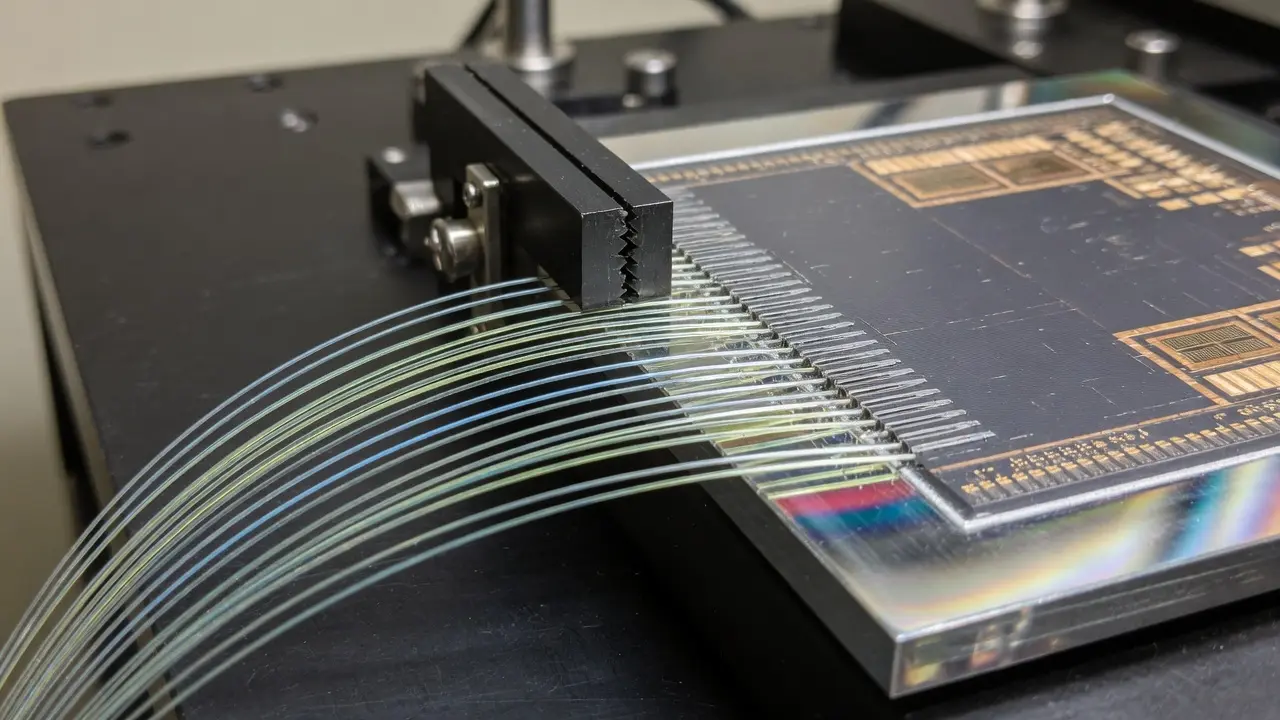
QuiX Quantum contributes to two doctoral research projects within the European QuBriC programme, the company says. One project, led by Barbara Terhal at QuTech, specifically investigates quantum error correction for photonic optical and microwave bosonic architectures.
“The next major step in quantum computing is not simply increasing the number of physical qubits; it is creating reliable logical qubits that allow increasingly complex computations to be performed at scale,” said Dr. Stefan Hengesbach, CEO of QuiX Quantum. This contribution aims to connect theoretical approaches with the demands of future photonic quantum systems, strengthening Europe’s path toward fault-tolerant computation.
QuBriC Initiative Advances Photonic Quantum Error Correction
The company’s contribution focuses on bridging the gap between theoretical error correction and the practical demands of photonic quantum hardware, acknowledging that a universal approach to error mitigation is insufficient. This targeted investment reflects a growing understanding that error correction strategies must be intrinsically linked to the underlying physical architecture of the quantum processor. Dr. Jelmer Renema, Chief Scientist and Co-Founder of QuiX Quantum, explained that “Error correction cannot be considered independently from the hardware architecture,” emphasizing the need to account for characteristics like photon loss, state generation and measurement fidelity in photonic systems.
This focus on hardware-specific error correction is important for realizing scalable photonic quantum computing because generic error correction methods may not effectively address the specific noise profiles of these systems. The QuBriC initiative, a Marie Skłodowska-Curie Actions Doctoral Network under Horizon Europe, unites 23 academic and industrial partners to train 15 doctoral researchers across quantum error correction and diverse quantum computing architectures.
QuiX Quantum views its participation as a strengthening of the connection between its photonic quantum computing architecture and the broader European effort toward fault-tolerant quantum computation, complementing its internal development of scalable systems. “Photonics offers important advantages for scaling quantum systems, but it also creates specific requirements around loss, state generation, measurement and feed-forward,” Renema added, “Designing error correction with these characteristics in mind is essential for scalable photonic quantum computing.” Dr. Hengesbach also highlighted Europe’s strength in photonics, quantum hardware and quantum science, asserting that “Connecting these capabilities around the challenge of fault-tolerant quantum computing is essential if Europe wants to translate scientific strength into globally competitive quantum systems.” The company’s approach to quantum computing is full-stack and fabless, with systems designed for modularity, scalability and compatibility with existing data center and high-performance computing environments. This commitment to a complete system, from hardware to software, positions QuiX Quantum to benefit directly from advances in error correction developed within the QuBriC framework.
The next major step in quantum computing is not simply increasing the number of physical qubits. It is creating reliable logical qubits that allow increasingly complex computations to be performed at scale.
Dr. Stefan Hengesbach, CEO of QuiX Quantum


See today’s quantum computing news on Quantum Zeitgeist for the latest breakthroughs in qubits, hardware, algorithms, and industry deals.