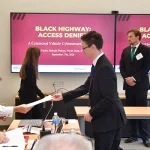
Sandia National Laboratories is proactively addressing emerging artificial intelligence risks by collaborating with private-sector innovators. On July 29, experts from Sandia, including Amanda Dodd, director of Computation and Analysis for National Security, hosted a Lunch and Learn event for Tri-Valley startups at Daybreak Labs in Livermore.
Dodd framed the current AI wave as comparable to the rapid adoption of the internet in the 1990s, stating, “Like with internet connectivity, AI is introducing poorly understood vulnerabilities, not only from adversaries, but also from new failure modes we could not imagine in a less connected, more analog world.” Sandia is now focused on identifying industry needs and using national lab capabilities to bridge analytic and assurance gaps in AI security.
Sandia Frames National Security Risks of Rapid AI Adoption
Sandia National Laboratories is actively working to understand vulnerabilities within rapidly deployed artificial intelligence systems, focusing on how to benchmark those systems for reliability, security, and performance. This outreach signals a deliberate effort to foster collaboration with the private sector, acknowledging that industry faces unique security concerns while sharing common ground with national security objectives.
“Industry may have different security concerns than Sandia, but in sharing our respective concerns and approaches, we can identify areas where our interests overlap and thereby inspire grounds for technical collaboration,” explained cybersecurity researcher Philip Kegelmeyer during the event’s Q&A session. Sandia’s decade-long focus on AI security predates the current surge in adoption, initially investigating how adversaries could manipulate AI systems as part of broader attacks.
This work builds on Sandia’s established expertise in areas like quantum information science, where research on trapped-ion and photonic qubits, supported by partners like Arizona State University and Honeywell Quantum Solutions, demands rigorous security protocols. The recent opening of CAMINO, a new center for advanced manufacturing and prototyping, further strengthens Sandia’s capacity to engineer secure designs informed by vulnerability assessments.
The laboratories are also using red-teaming exercises, actively attempting to exploit AI systems, to identify weaknesses and develop effective mitigations. “We red-team AI systems to identify weaknesses, understand how they can be exploited and develop mitigations,” Dodd stated, highlighting the importance of practical, hands-on testing.
Sandia’s goal is not to be the sole authority on AI security, but to pinpoint where national labs can best support industry in addressing emerging analytic and assurance needs, as Dodd explained, “Sandia would like to identify where industry can meet the analytic and assurance needs arising from AI adoption, as well as understand where the national labs are well-positioned to help address any gaps.”
The widespread adoption of the internet in the 1990s was probably the last time we experienced a period of innovation and rapid adoption as dramatic as the AI wave of today.
Amanda Dodd, director of Computation and Analysis for National Security at Sandia
Secure Algorithms Department Red-Teams AI for Vulnerability Discovery
Sandia’s Secure Algorithms department is actively probing artificial intelligence systems for vulnerabilities through dedicated red-teaming exercises, a practice extending beyond simply identifying threats to encompass a detailed understanding of potential exploitation pathways. Gayle Thayer, manager, explained to attendees at a recent event that assuring the security of high-consequence systems reliant on AI is central to Sandia’s mission, necessitating a focus on what could go wrong.
This proactive approach builds on over a decade of Sandia’s work in AI security, initially focused on how adversaries might manipulate AI systems, a relatively unexplored area at the time. The July 29 Lunch and Learn event, hosted by Daybreak Labs in Livermore, California, provided a forum for Sandia experts to share insights with Tri-Valley startups, signaling a deliberate effort to bridge the gap between cautious government approaches and the rapid adoption of AI within the private sector.
Industry-Lab Partnership Balances AI Innovation with Security Assurance
Sandia National Laboratories is actively fostering collaboration with private sector startups to address emerging artificial intelligence security challenges, a move exemplified by a recent event at Daybreak Labs. This outreach extends Sandia’s decade-long investment in AI security research, initially focused on adversarial manipulation of intelligence systems. The laboratories are prioritizing a shared understanding of vulnerabilities inherent in rapidly adopted AI tools, recognizing a divergence in risk tolerance between government and industry.
Sandia aims to function as an unbiased technical assessor, evaluating the efficacy of security measures and preparing organizations for the challenges of secure AI implementation. “Traditionally, security conversations focused on hardware and software vulnerabilities, but increasingly the focus is on the algorithms themselves,” she added.
“Sharing common concerns and solutions will help us all move faster and smarter,” she said, positioning Sandia as a partner in navigating this complex landscape. Recent partnerships, including a 2021 collaboration with Honeywell Quantum Solutions and a 2024 joint project with Arizona State University receiving $17 million in funding, demonstrate Sandia’s commitment to advancing both AI security and quantum technologies.




See today’s quantum computing news on Quantum Zeitgeist for the latest breakthroughs in qubits, hardware, algorithms, and industry deals.