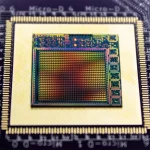
European researchers now have direct access to Poland’s PIAST-Q quantum computer following its service launch via the EuroHPC Joint Undertaking platform. The ion-trapped system, hosted at PCSS, allocated 412 of the 1,142 total QPU hours awarded to 47 approved proposals through the Quantum Access pilot call.
“These projects offer a comprehensive response to key challenges facing science, business, and society in the era of supercomputing, artificial intelligence, and quantum technologies,” according to PCSS representatives presenting at EuroHPC User Days 2026 in Dublin. Poland is also investing in artificial intelligence, with the planned PIAST-AI Factory set to ultimately provide computing power based on over 1,500 GPUs.
PIAST-AI Factory: Scaling Polish GPU Capacity for AI Development
The planned capacity of the PIAST-AI Factory exceeds 1,500 GPUs, signalling a substantial commitment to bolstering Poland’s artificial intelligence infrastructure and positioning the nation as a key player in European AI development. PCSS presented the factory’s potential, emphasizing its role in accelerating innovation across multiple sectors.
The facility’s scale is intended to support complex machine learning models and data-intensive AI tasks, addressing a growing demand for specialized hardware. The presentation of the PIAST-AI Factory at the EuroHPC User Days occurred alongside demonstrations of the QEC4QEA European Quantum Center of Excellence and the PIAST-Q hybrid quantum system, highlighting a coordinated strategy to advance both quantum and classical computing capabilities.
Developed in collaboration with Poznań University of Technology, Adam Mickiewicz University in Poznań and Nicolaus Copernicus University in Toruń, the infrastructure will ultimately provide computing power based on over 1,500 GPUs, being a vital resource for stakeholders across business, academia and society, the company says. This support extended to the launch of a new online platform and a framework for measuring the impact of the initiative’s activities, indicating a focus on quantifying the benefits of PCSS’s contributions. The organization is actively supporting the establishment of the 3D Competence Centre and developing dedicated tools, further expanding its role in advanced computing infrastructure.
Developed in collaboration with PCSS, Poznań University of Technology, Adam Mickiewicz University in Poznań, and Nicolaus Copernicus University in Toruń, the infrastructure will ultimately provide computing power based on over 1,500 modern GPUs, being a vital resource for stakeholders across business, academia, and society. This new venture aims to integrate ground-based quantum key distribution (QKD) networks with satellite technologies, creating a foundation for secure digital communications. By combining terrestrial and satellite infrastructure, the project seeks to establish fully eavesdropping-resistant digital systems, addressing critical security concerns in the modern digital landscape.
Recent developments also include PCSS representation in newly elected advisory groups of the EuroHPC Joint Undertaking, which convened in Luxembourg on June 8-9, 2026. The inclusion of PCSS in these groups highlights the organization’s position as a key contributor to the European quantum and AI ecosystem. The organization’s projects were also featured in the June edition of GÉANT CONNECT Magazine, centered around infrastructure, further amplifying its reach and influence within the European research community.
In total, the project brings together 19 academic and industrial partners from eight European countries.
PIAST-Q System Launched via EuroHPC for Quantum Access
The PIAST-Q quantum system is now directly accessible to European researchers through the EuroHPC Joint Undertaking platform, expanding access to advanced computing resources across the continent. Krzysztof Kurowski, Coordinator of the EuroQCS-Poland project and Head of the Quantum Technologies Department at PCSS, presented the system’s capabilities alongside partners, highlighting its potential for tackling complex computational challenges.
The direct access facilitated by EuroHPC JU simplifies the process for researchers seeking to use quantum computing power. The system’s features, including all-to-all qubit connectivity, high gate fidelity and long coherence times, support a diverse array of applications spanning quantum optimization, quantum chemistry, materials engineering and quantum machine learning.
QEC4QEA: PCSS Leads European Quantum Center of Excellence
This direct access provides European researchers, entrepreneurs and public sector organizations with a hybrid HPC and Quantum Computing model, streamlining access to advanced computational resources. The launch is not merely a technological demonstration. It establishes a pathway for wider adoption and experimentation with quantum computing across multiple disciplines.
The QEC4QEA quantum center of excellence, one of two such centers funded by EuroHPC JU, is designed as a platform bridging academic research with industrial application and HPC infrastructure. This collaborative structure aims to overcome the traditional barriers between fundamental research and practical implementation, supporting innovation and reducing time-to-market for quantum-based solutions.
Beyond Dublin, PCSS also provided comprehensive audiovisual support and technical services for the NORDUnet 2026 conference held in Luleå, Sweden, demonstrating a consistent commitment to supporting international scientific events.

See today’s quantum computing news on Quantum Zeitgeist for the latest breakthroughs in qubits, hardware, algorithms, and industry deals.