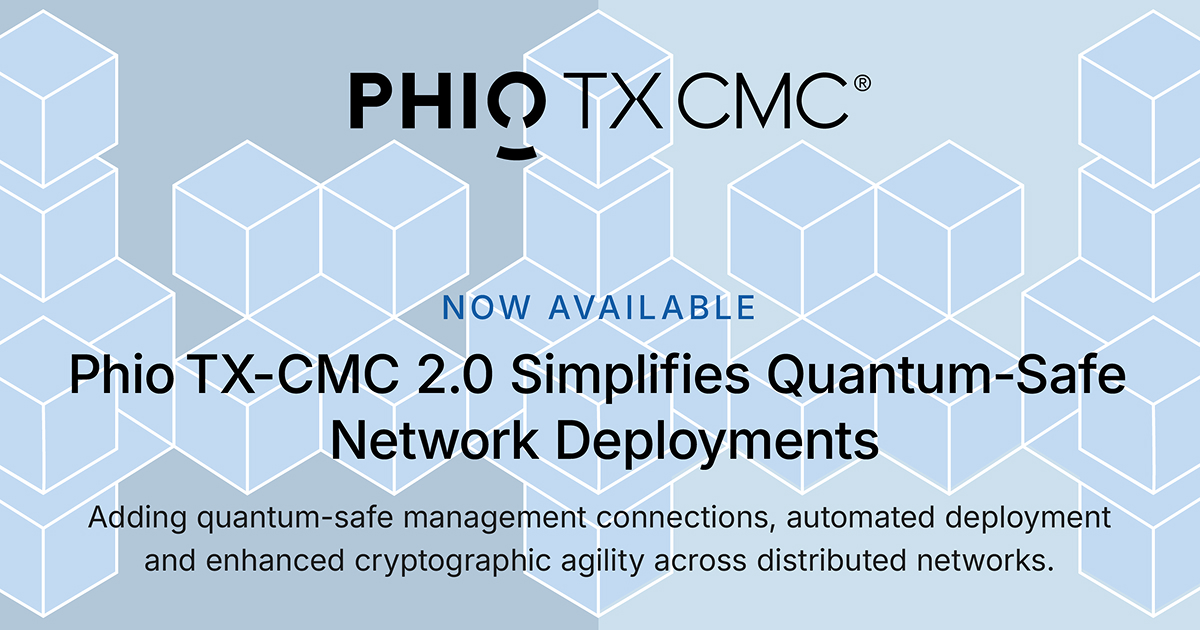
Quantum XChange has released version 2.0 of its Phio TX-Centralized Management Console, simplifying the deployment of quantum-safe networks as organizations move beyond planning to implementation. A 2026 report from the U.S. Government Accountability Office highlights this critical need, coinciding with a growing threat; adversaries are already collecting encrypted data for future decryption, a risk amplified by advances in artificial intelligence. “Deploying quantum-safe security shouldn’t mean adding another layer of complexity to an organization’s network,” said Eddy Zervigon, CEO of Quantum XChange, as the new console allows organizations to secure connections without replacing existing infrastructure.
Phio TX-CMC 2.0 Centralizes Quantum-Safe Network Management
The latest release of Quantum XChange’s Phio TX-Centralized Management Console 2.0 introduces quantum-safe management tunnels, securing communications between the console and individual Phio TX nodes with post-quantum cryptography. Unlike traditional security upgrades, the Phio TX-CMC 2.0 is designed to operate within existing network infrastructure, minimizing disruption and cost. Quantum XChange appears to be answering this call with features like Zero-Touch Provisioning, which automates the setup and configuration of Phio TX instances, accelerating deployment across large networks and offering flexibility for restricted network environments.
Streamlined container enrollment further simplifies the process, reducing the administrative burden on security teams managing increasingly complex, distributed systems. The console’s new flexible naming taxonomy for post-quantum cryptographic algorithms is a proactive measure against the evolving standards landscape.
As PQC algorithms undergo name changes, this taxonomy ensures uninterrupted operation of deployments, preventing emergency configuration adjustments and maintaining quantum resiliency. Quantum XChange stated, “We’ve focused on making Phio TX easy to deploy, monitor and maintain, and the Phio TX-CMC 2.0 feature release reflects our continued commitment to reducing the operational burden on customers as they expand their quantum-safe protections.” Quantum XChange recently demonstrated the practical application of this approach in a federal agency deployment.
The company integrated its Phio TX-EM solution into existing network infrastructure without requiring major hardware replacements, successfully adding post-quantum protection to critical network traffic. This deployment highlights the potential for organizations to proactively secure their data against future quantum threats, even before the widespread availability of quantum computers. The company’s focus is on enabling organizations to begin securing critical network traffic rather than waiting for the uncertain arrival of “Q-Day.”
Deploying quantum-safe security shouldn’t mean adding another layer of complexity to an organization’s network.
Eddy Zervigon, CEO of Quantum XChange


See today’s quantum computing news on Quantum Zeitgeist for the latest breakthroughs in qubits, hardware, algorithms, and industry deals.