

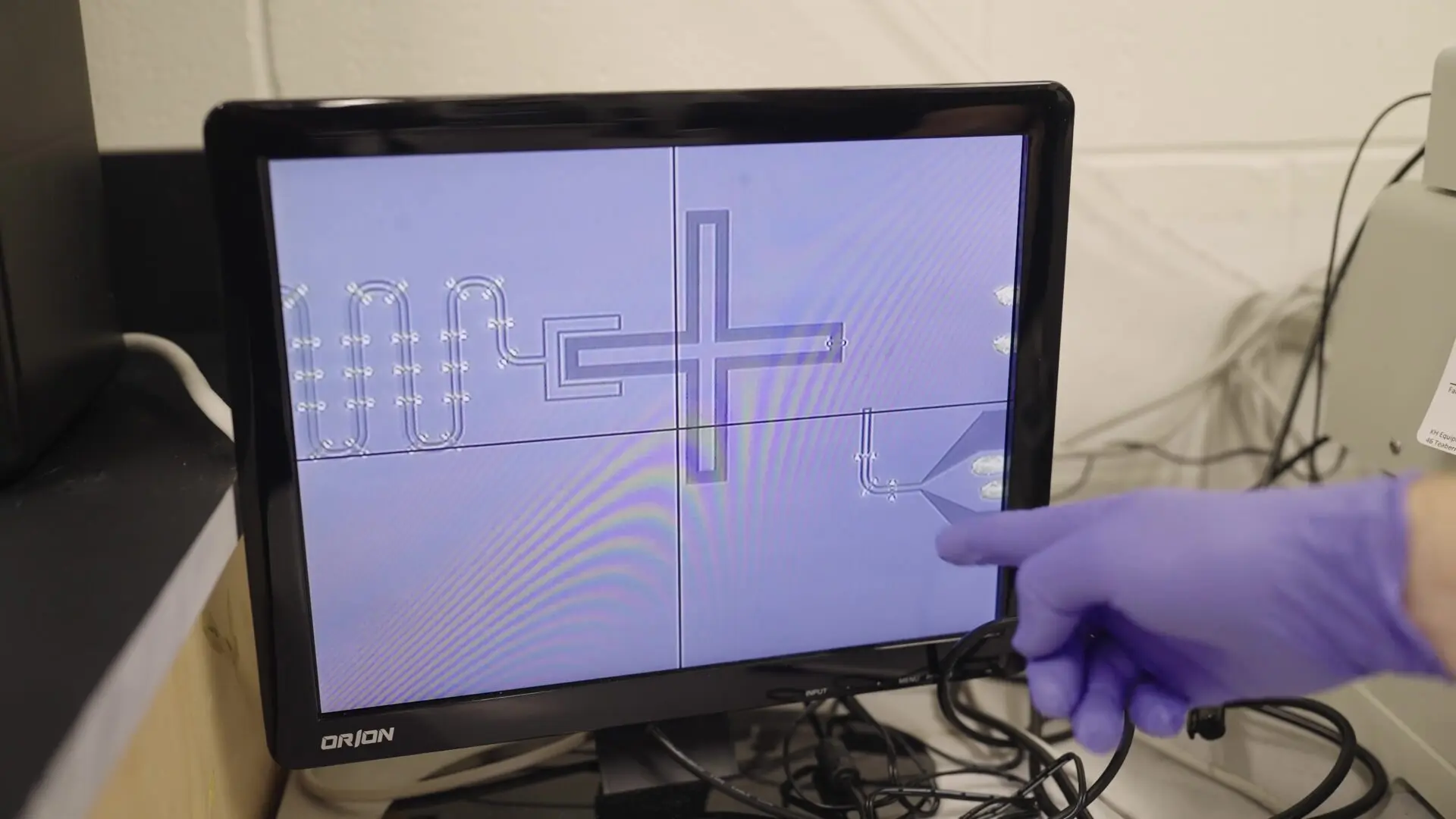
Associate Professor of Physics Machiel Blok and his research group at the University of Rochester are moving beyond the standard qubit by investigating superconducting qudits, quantum systems encoding information across multiple energy levels. Their work stems from the observation that many physical systems, including atoms and molecules, are not naturally binary, suggesting a potential efficiency gain by matching quantum hardware to the problems being simulated.
According to Blok, “The holy grail of qudit research would be to build a simulator that maps the dimension of the information to the problem in nature, and then solves a problem that we actually care about.” The team’s focus on adapting existing superconducting circuits aims to unlock the benefits of these higher-dimensional systems for quantum simulation and error correction.
Superconducting Qudits Mirror Multi-State Natural Systems
The compact design of Bluefors’ cryogenic systems is particularly beneficial for the Rochester team, freeing up valuable laboratory space. “The compact system leaves more space for everything else. I can now dream of putting three, maybe even four dilution refrigerators in my lab. That really matters when space comes at a premium,” Blok explains. The team’s recent advances in qudit control represent a step toward realizing the potential benefits of these multi-level systems.
Previously, manipulating qudits involved sequentially transitioning between adjacent energy levels, a process Blok likened to “moving one floor at a time.” The researchers developed a new method that simultaneously drives transitions across all energy levels, dramatically improving efficiency. “One big step that we made was coming up with a way to efficiently control a single qudit,” Blok says, detailing how this simultaneous control method represents a fundamental improvement in qudit manipulation.
This innovation allows for faster and more precise control over the quantum information encoded within the qudits. The motivation behind exploring qudits extends beyond simply increasing the number of available states. Blok’s group recognizes that many natural physical systems, atoms, molecules, vibrational modes and quantum fields, are inherently multi-level. By using qudits, researchers aim to create quantum simulations that more accurately reflect the complexity of these systems, potentially leading to more efficient and insightful modeling.
The development of a skilled quantum workforce is also a priority for the Rochester team, and Blok emphasizes the importance of providing students with hands-on experience in quantum technologies. “Give students a chance to see these quantum systems, touch them, design them, engineer them, and work with them,” he says, highlighting the lab’s commitment to training the next generation of quantum scientists and engineers.
He notes the inspiring shift in the quantum landscape, stating, “When I came in as an undergraduate student, there wasn’t really a quantum industry. We knew we were acquiring skills that would become useful in industry, but I was thinking about classical microwave engineering companies or nanofabrication for the chips industry.
Seeing companies and startups seriously taking quantum technology and employing people with quantum PhDs and undergraduate degrees has been really inspiring for me.” The long-term goal of the Rochester team is to build quantum simulators that can accurately map the dimensionality of the problem being studied onto the quantum hardware. This would allow researchers to explore complex quantum phenomena with precision and efficiency. The collaboration with Bluefors is a critical step toward achieving this vision, providing the necessary cryogenic infrastructure to support the development and characterization of increasingly sophisticated qudit-based quantum systems.
The holy grail of qudit research would be to build a simulator that maps the dimension of the information to the problem in nature, and then solves a problem that we actually care about. The killer applications that I can think of are problems in quantum field theory or quantum chemistry that we solve with a qudit simulator, and solve more efficiently than any classical computer could.
Machiel, Associate Professor of Physics at University of Rochester
Bluefors Cryogenics Enable High-Fidelity Qudit Experiments
The University of Rochester’s qudit research benefits from a streamlined cryogenic footprint, allowing for potential expansion of experimental capacity. Machiel Blok explains that the Bluefors Ultra-Compact LD System addresses a common constraint in academic labs, where space is often at a premium, and the ability to house multiple dilution refrigerators is limited. This compact design is not merely a convenience. It directly impacts the scale of experimentation possible, with Blok envisioning a future where his lab could accommodate three or even four such systems.
Reliable cryogenic operation is paramount to the success of these experiments, as superconducting circuits require millikelvin temperatures to function. “Achieving the low temperatures for us is absolutely crucial,” Blok says, emphasizing that reaching these temperatures is only the first step. Maintaining stable, low-temperature conditions and enabling rapid experimental cycles are equally important for high-quality measurements.
The Bluefors system’s performance in these areas allows the Rochester team to concentrate on the scientific challenges of qudit control and characterization, rather than troubleshooting the cryogenic infrastructure itself. This innovation builds upon existing superconducting quantum hardware, adapting established technology to the unique demands of higher-dimensional quantum systems. “We need our chips to go superconducting, and we need our circuits to go to the ground state before we can start climbing this ladder of highly excited states,” Blok notes, highlighting the foundational role of cryogenic stability in enabling these control techniques.
The exploration of higher-dimensional quantum systems also raises fundamental questions about the nature of entanglement and quantum mechanics itself. How does entanglement behave in dimensions beyond the binary framework? What new physical phenomena emerge when researchers move beyond the limitations of qubits? These questions are central to research in Rochester and within the broader qudit community, promising to expand our understanding of the quantum world and its potential applications. The ability to reliably control and characterize these complex systems, facilitated by advancements in cryogenic technology, is essential for making progress on these fundamental questions.
When I came in as an undergraduate student, there wasn’t really a quantum industry. We knew we were acquiring skills that would become useful in industry, but I was thinking about classical microwave engineering companies or nanofabrication for the chips industry. Seeing companies and startups seriously taking quantum technology and employing people with quantum PhDs and undergraduate degrees has been really inspiring for me.
Machiel, Associate Professor of Physics at University of Rochester
Qudits Advance Quantum Simulation and Error Correction
The University of Rochester’s exploration of superconducting qudits examines whether these higher-dimensional systems could provide advantages for quantum simulation, quantum error correction, and future quantum computing architectures by using more of the quantum states that already exist within the hardware itself. The team studies superconducting circuits similar to those used throughout the quantum computing industry. Their goal is not necessarily to replace qubits, but to understand when higher-dimensional quantum systems may provide a more efficient way to represent information and solve a problem.
The team is especially interested in applications such as quantum chemistry and quantum field theory, where the systems being modeled naturally contain multiple states and degrees of freedom. Instead of forcing those systems into a binary representation, qudits might allow researchers to represent them more directly.
Machiel Blok explains that a simulator mirroring this inherent structure could offer a more natural and potentially more efficient way to study these problems, a vision driving the long-term goals of his research group. Beyond simulation, the team is investigating how qudits might improve quantum error correction, a significant hurdle in building large-scale, fault-tolerant quantum computers. The same hardware used for simulation can also be adapted to explore more effective error correction strategies, potentially using the increased dimensionality of qudits to encode and protect quantum information.
The lab’s structure, with senior researchers working alongside students, reflects a commitment to supporting innovation and practical skill development. A qubit-based system, Blok notes, resembles a sprawling city of many small buildings, while a qudit-based system is more akin to a dense skyline of taller buildings capable of accommodating more information within the same physical space. This analogy highlights the potential for qudits to increase information density and reduce the overall footprint of quantum processors.
The challenge, however, lies in efficiently managing the flow of information both within and between these “floors,” requiring innovative control and characterization techniques. The team’s approach to manipulating qudits draws inspiration from concepts in spin physics, allowing for more efficient control of complex quantum states than traditional level-by-level methods.
Every increase in dimensionality also reveals new aspects of how quantum information behaves, providing insight into whether qudits can ultimately become practical tools for quantum simulation, error correction, and future quantum computing architectures. Blok states that understanding the opportunities and limits of qudits is as important as making progress toward building functional devices. Blok envisions a landscape where qubits, qudits, and hybrid systems coexist, each playing a role depending on the specific application.
The key lies in determining how to best represent quantum information for a given problem. Research at the University of Rochester is helping to expand the possibilities of what a quantum processor can be. As quantum computing matures, exploring techniques beyond binary systems will be essential for unlocking its full potential, not only in terms of computational power but also in our fundamental understanding of quantum mechanics itself.
One big step that we made was coming up with a way to efficiently control a single qudit. Previously, control meant moving information between adjacent energy levels. That’s not very efficient because you’re effectively moving one floor at a time. We came up with a new method that essentially drives all these transitions at the same time, and that was a much more efficient way to control qudits.
Machiel, Associate Professor of Physics at University of Rochester
Source: https://bluefors.com/stories/beyond-binary-quantum-computing-exploring-higher-dimensional-qudits/



See today’s quantum computing news on Quantum Zeitgeist for the latest breakthroughs in qubits, hardware, algorithms, and industry deals.