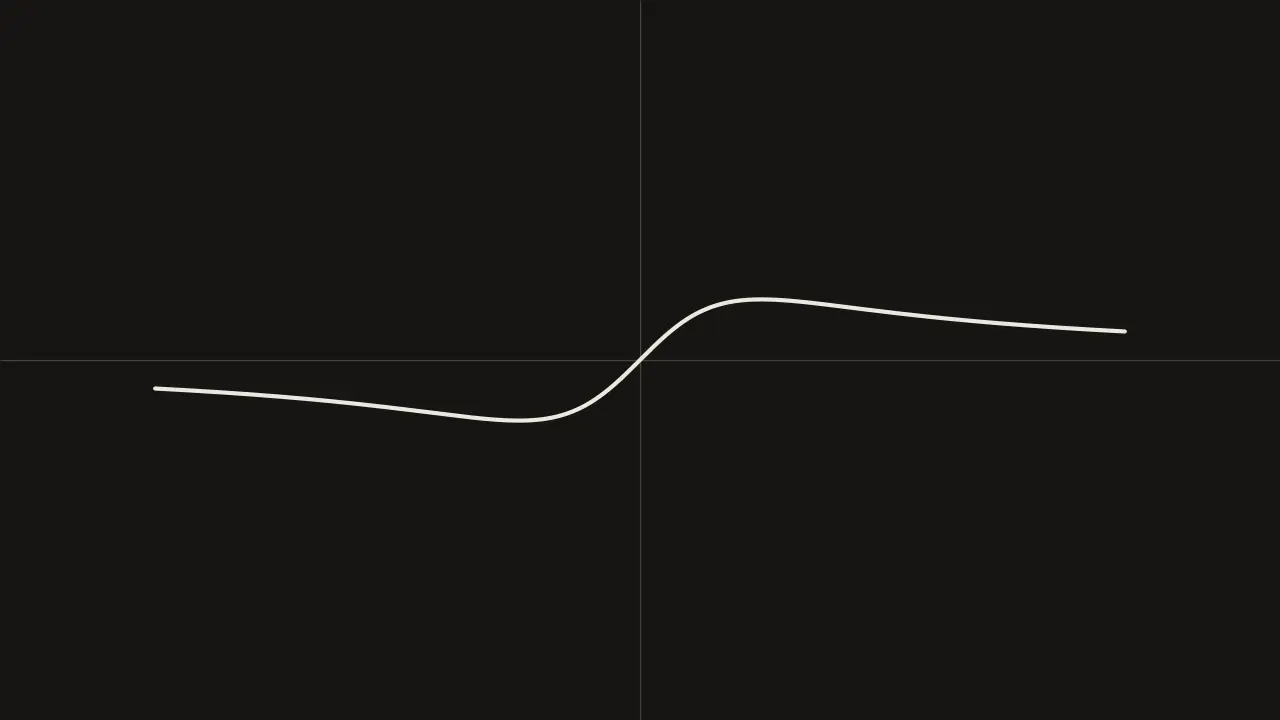
Researchers at Quantum Art in Ness Ziona, Israel, have developed a quantum algorithm that efficiently solves the Helmholtz equation, a partial differential equation important for modeling wave propagation. The team overcame a key obstacle, the singularity created by the relationship k^2 = ω^2/c^2, which previously rendered standard quantum methods exponentially inefficient.
The resulting algorithm eliminates the exponentially large overhead associated with post-selection on the resonant manifold, yielding a success probability that depends linearly on the number of sources and is independent of the computational domain size. This new method recasts the solution of hyperbolic differential equations as a problem of geometric quantum state preparation.
Helmholtz Equation & Quantum Linear System Solvers
The algorithm directly prepares quantum states on what is known as the resonant manifold, a step that avoids inefficiencies inherent in conventional quantum approaches. This method addresses a singularity appearing in the equation’s inverse operator, specifically when k2 =, which previously rendered Fourier-space state preparation exponentially inefficient. The conventional approach to solving the Helmholtz equation with quantum linear system solvers relies on inverting a discretized operator, a process whose computational demands scale with the operator’s condition number.
While these solvers offer potential exponential compression of system degrees of freedom, a high condition number can negate any speedup. Quantum Art’s innovation bypasses explicit matrix inversion by focusing on the analytic structure of the differential operator, a strategy previously demonstrated with the screened Poisson equation. The team’s work recasts the problem not as matrix inversion, but as a task of geometric quantum state preparation, fundamentally altering the computational pathway.
A key advantage of this new algorithm lies in its success probability, which depends linearly on the number of sources, the points where waves originate, and remains independent of the computational domain size. The researchers detail that the discretized Helmholtz equation results in a linear system Au = b, where u represents the field values at each grid point and b contains the source information.
The work builds on the foundation of Quantum Linear Systems Solvers (QLSS), such as the Harrow-Hassidim-Lloyd (HHL) algorithm, which promise polylogarithmic scaling with system size. However, the condition number of the discretized operator remains a significant hurdle for QLSS, often growing with the domain size. The team’s approach offers a potential solution by exploiting the specific structure of the Helmholtz equation, effectively sidestepping the limitations imposed by a poorly conditioned matrix.
In two spatial dimensions, the discretized Helmholtz equation leads to a sparse matrix A coupling each grid point to its nearest neighbors. The algorithm’s efficiency stems from its ability to directly encode source locations through Fourier phases, effectively mapping the problem onto a geometric quantum state preparation task. This allows for the creation of quantum states supported on the resonant manifold without the need for exponentially complex post-selection procedures.
The researchers explain that the central computational task is the implementation of the matrix inverse A-1 on a quantum computer, a step they have effectively streamlined through their geometric approach. The implications extend beyond the Helmholtz equation itself, potentially applicable to a broader class of hyperbolic differential equations exhibiting similar singular support on dispersion manifolds. The team, comprised of Yakov Solomons, Lee Peleg, Netanel Barel, Jonathan Nemirovsky, Amit Ben-Kish and Yotam Shapira, all affiliated with Quantum Art, performed this work.
Dispersive Manifolds Limit Fourier-Space State Preparation
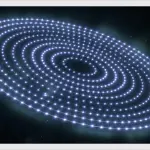
By directly preparing states on the resonant manifold, the team avoids the exponentially inefficient methods of direct Fourier-space state preparation. The approach uses the simple Fourier-space representation of a point source, an equal superposition of Fourier modes with phases determined by the source’s coordinates. The algorithm first establishes a uniform superposition on the resonant manifold, then imprints these source-specific phases, directly encoding the propagated wave in Fourier space. The team notes that this principle can be generalized to other differential equations where spectral solutions reside on lower-dimensional manifolds.
Geometric Quantum State Preparation of Resonant Manifolds
This circumvents limitations of prior methods for solving the discretized Helmholtz equation, which suffered from exponentially increasing overhead due to post-selection requirements. The team, based in Ness Ziona, Israel, achieved this by encoding source locations through Fourier phases, a departure from approaches relying on explicit matrix inversion. The authors write that this applies to hyperbolic differential equations whose Fourier-space solutions possess singular support on dispersion manifolds, recasting their solution as a problem of geometric quantum state preparation. A growing condition number with domain size can negate the expected exponential speedup, a problem the method avoids.
👉 More information
🗞 Solving wave propagation problems via geometric quantum state preparation on dispersion manifolds
✍️ Yakov Solomons, Lee Peleg, Netanel Barel, Jonathan Nemirovsky, Amit Ben-Kish and Yotam Shapira (Quantum Art, Ness Ziona 7403682, Israel)
🧠 ArXiv: https://arxiv.org/abs/2609.10282



See today’s quantum computing news on Quantum Zeitgeist for the latest breakthroughs in qubits, hardware, algorithms, and industry deals.