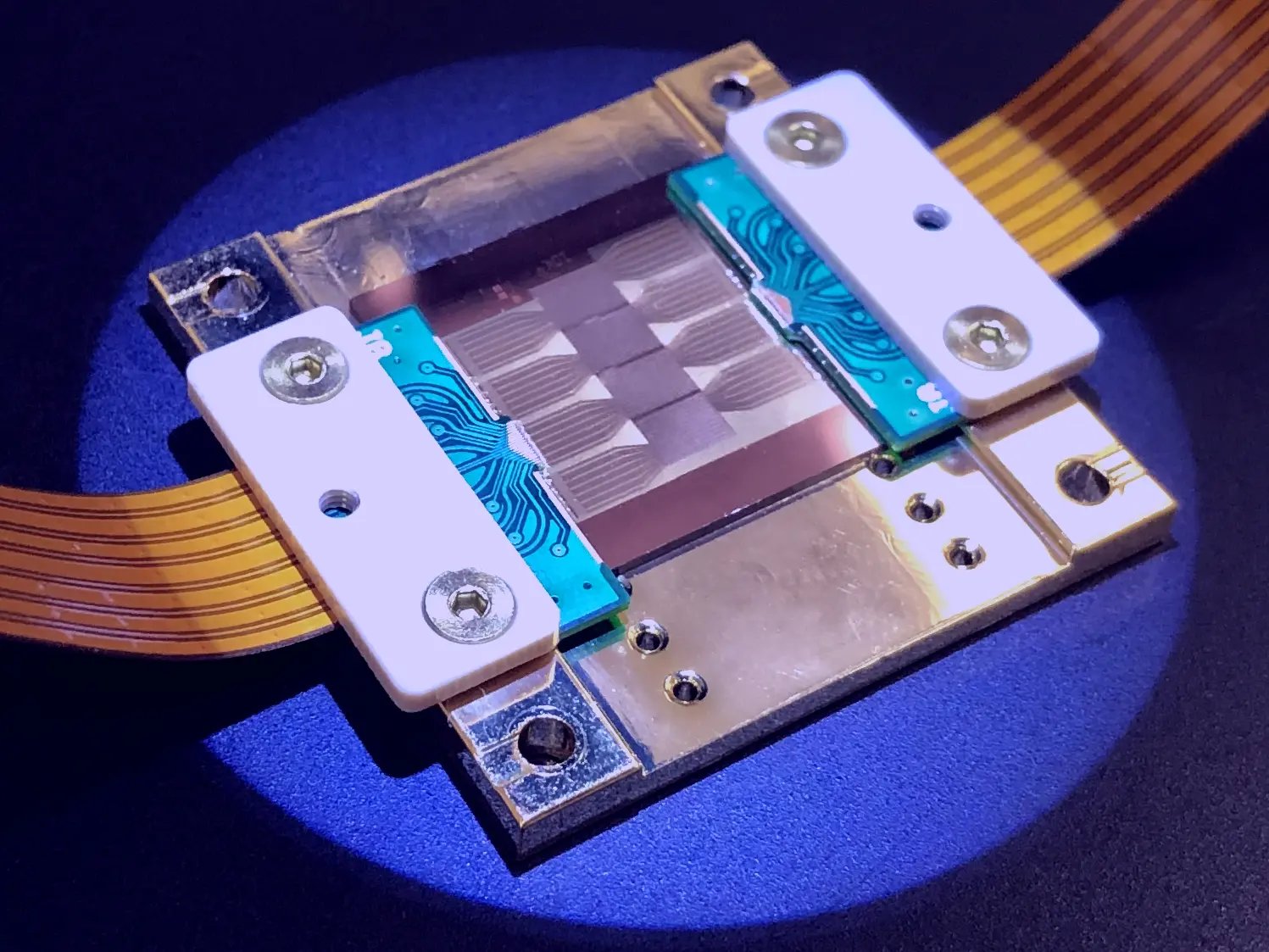
Photonic Inc. and Microsoft are collaborating to refine estimates of the resources needed for practical, large-scale quantum computers. By combining SHYPS with Microsoft’s Quantum Resource Estimation (QRE) framework, the companies aim to account for the costs of running algorithms across interconnected, modular systems, a growing trend in the field. “As the industry moves from individual quantum processors toward interconnected, distributed systems, understanding the resources required to run meaningful applications becomes increasingly important,” said Paul Terry, Chief Engineering Officer at Photonic.
Photonic’s QLDPC Code Family Reduces Qubit Overhead
Photonic’s Quantum Low-Density Parity Check (QLDPC) code family, specifically SHYPS, is demonstrably reducing the qubit overhead needed for practical quantum computation, enabling potentially more efficient large-scale systems. This advance directly addresses a critical bottleneck in scaling quantum computers beyond the experimental stage, as fewer physical qubits are required to represent a logical qubit capable of reliable computation.
The impact extends beyond simply reducing hardware demands; it allows for more complex algorithms to be explored within current technological constraints. Microsoft’s Quantum Resource Estimation (QRE) framework is now being used in collaboration with Photonic to rigorously assess how architectural decisions and networking impact the resources needed to run quantum algorithms at scale.
This partnership isn’t simply about improving existing estimation tools, but about adapting them to account for the emerging trend of modular, distributed quantum systems. “Quantum resource estimation helps developers understand the real-world requirements of quantum applications before large-scale quantum computers are available,” said Matthias Troyer, Technical Fellow and CVP, Microsoft Quantum. The QRE framework allows developers to model the performance of algorithms on different hardware configurations, providing important insights into cost and feasibility. This technology is central to their approach to reducing qubit overhead, as silicon-spin qubits offer advantages in scalability and coherence.
The company has raised over CA$475M, including a CA$180M Series B round led by Planet First Partners, and recently proposed a $500M semiconductor facility in Canada to bolster domestic quantum and AI manufacturing. This investment reflects a broader strategy to not only advance the technology but also to establish a secure and resilient supply chain for critical components. This capability is vital for building distributed quantum computers where processing power is spread across multiple nodes, and the cost of communication between them must be carefully considered.
Quantum resource estimation helps developers understand the real-world requirements of quantum applications before large-scale quantum computers are available.
Matthias Troyer, Technical Fellow and CVP, Microsoft Quantum
Microsoft QRE Framework Models Distributed Quantum Architectures
Photonic Inc. is enabling more precise modelling of distributed quantum systems through collaboration with Microsoft, specifically using the Quantum Resource Estimation (QRE) framework to assess the impact of architectural choices on algorithm performance, the company says. The company currently employs approximately 175 people and maintains a research collaboration with the National Quantum Computing Centre (NQCC) focused on trapped-ion networking.
As the industry moves from individual quantum processors toward interconnected, distributed systems, understanding the resources required to run meaningful applications becomes increasingly important.
Paul Terry, Chief Engineering Officer at Photonic
Source: https://photonic.com/

See today’s quantum computing news on Quantum Zeitgeist for the latest breakthroughs in qubits, hardware, algorithms, and industry deals.