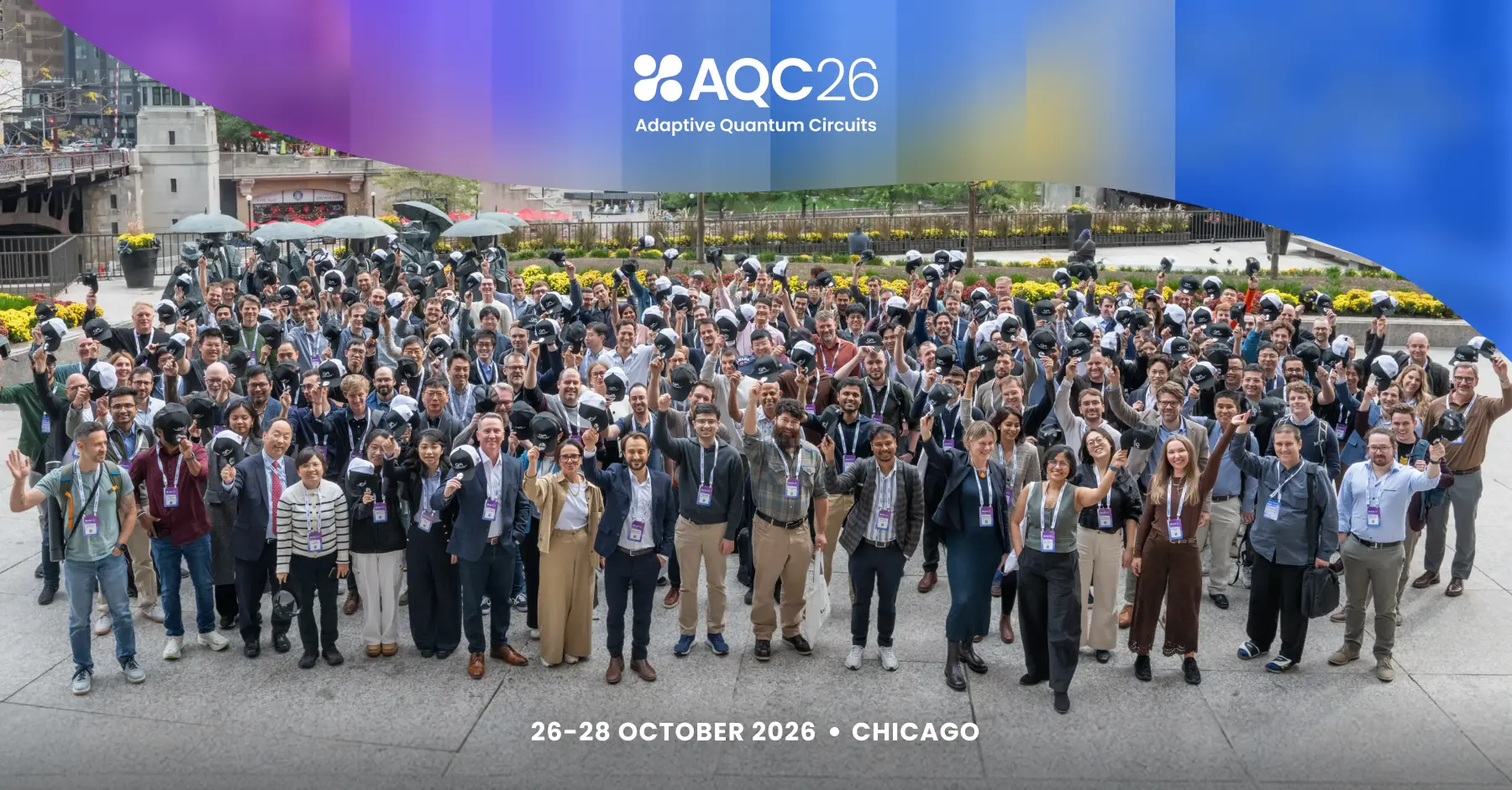
Quantum computing’s pursuit of stability may depend on a surprising partner: classical computing systems. At Adaptive Quantum Circuits 2026, hosted by Quantum Machines in Chicago October 26 to 28, researchers from quantum hardware developers, classical computing companies, national laboratories and universities presented findings suggesting fault tolerance relies on classical systems acting mid-computation. The conference explored advances in quantum error correction and adaptive circuits, revealing this need extends across all major qubit types. “The ability to measure qubits, process the results on classical hardware and adjust operations within extremely short timescales is becoming critical,” researchers found.
Adaptive Quantum Circuits Drive Fault Tolerance Across Qubit Types
Researchers detailed how real-time classical computation is becoming integral to quantum error correction, regardless of the underlying qubit technology. Dr. Volodymyr Sivak demonstrated reinforcement learning’s ability to calibrate quantum processors during error correction, dynamically adjusting thousands of control parameters using only error-detection signals. This approach, presented at Adaptive 2026, highlights a shift toward systems where classical processing isn’t merely supportive, but actively shapes quantum operations.
The speed of this classical response is now a defining factor in achieving fault tolerance across diverse platforms including superconducting circuits, spin qubits, trapped ions, neutral atoms and bosonic systems. The integration of quantum processors with classical infrastructure extended beyond calibration, encompassing error correction decoding and remote entanglement generation. Shane Caldwell examined accelerated computing for fault-tolerant quantum processing units, while Smriti Bajaj of Dell Technologies addressed the orchestration of resources for real-time quantum error correction.
The increasing reliance on real-time inference prompted Dr. Itamar Sivan, CEO and Co-Founder of Quantum Machines, to observe, “What struck me this year was how speakers working on very different qubit technologies kept arriving at the same conclusion: how fast the classical side of the system can measure, decide and respond now shapes the path to fault tolerance.” Dr. Yonatan Cohen, Co-Founder and CTO of Quantum Machines, further posited that scalable quantum computing will increasingly depend on a hierarchy of real-time inference, processing measurement outcomes across multiple timescales to estimate system states and drive control decisions. This suggests a future where every quantum circuit, at its lowest levels, may become adaptive, fundamentally altering the architecture of quantum computers.
Daniel Crow explored scalable neutral-atom quantum processors, while Dr. David Stephen examined adaptive circuits that use mid-circuit measurements and feedforward to reduce runtime, demonstrating results from the company’s Helios trapped-ion system, Quantum Machines says. Quantum computing, according to the discussions, is becoming a systems engineering challenge as much as a physics challenge.
The question is no longer only how good the qubits are, but how effectively the industry brings together quantum hardware, classical computing, software and real-time control.
Classical-Quantum Integration Accelerates Real-Time Error Correction
Google Quantum AI demonstrated an efficient method for producing high-fidelity quantum states essential for fault-tolerant operations, a technique known as magic state cultivation, at Adaptive Quantum Circuits 2026. This advance addresses a critical need for stable qubits, but its practical implementation relies heavily on the speed and precision of associated classical computing systems, a theme consistently echoed throughout the conference, according to Quantum Machines.
Professor Morten Kjaergaard of the University of Copenhagen presented a suite of OPX1000-based mathematical tools designed for adaptive quantum experiments, enabling real-time decision-making and faster characterization of quantum systems. These tools highlight a shift toward circuits that dynamically adjust based on measurement outcomes, a trend demanding tight integration with classical hardware.
Researchers from NVIDIA and Xanadu explored specific strategies for accelerating this process. From calibration and stabilization to error correction and remote entanglement generation, workflows will increasingly depend on real-time inference on measurement outcomes to determine subsequent control actions, establishing adaptive circuits as a foundational element of scalable quantum computing.
Researchers showed how achieving fault tolerance will depend on classical systems that act mid-computation, raising a bigger question: will every quantum circuit become adaptive? The pursuit of stable quantum computation is no longer solely a physics problem, but a complex systems engineering challenge demanding smooth integration of quantum and classical resources.
What struck me this year was how speakers working on very different qubit technologies kept arriving at the same conclusion: how fast the classical side of the system can measure, decide and respond now shapes the path to fault tolerance.
Dr. Itamar Sivan, CEO and Co-Founder of Quantum Machines


See today’s quantum computing news on Quantum Zeitgeist for the latest breakthroughs in qubits, hardware, algorithms, and industry deals.