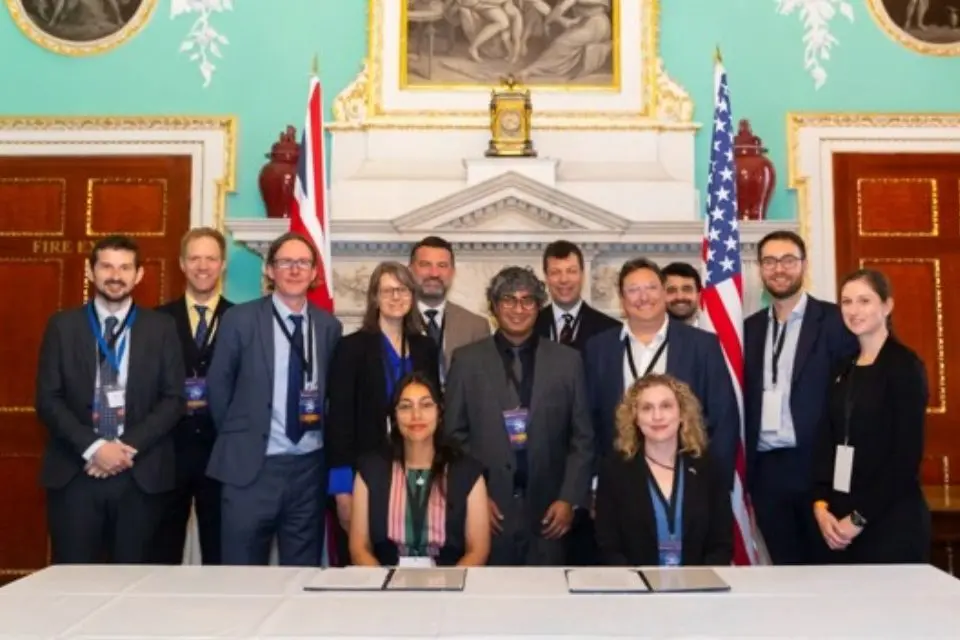
The University of Liverpool is now part of a 16-school transatlantic alliance focused on accelerating fusion energy development. A Memorandum of Understanding signed earlier this month at the Global Fusion Policy Summit establishes a collaborative framework between the University Fusion Association and universities across the United Kingdom. This partnership will prioritize building a talent pipeline for the fusion sector over the next decade, according to Kirsty McKay from the University of Liverpool’s Department of Electrical Engineering and Electronics, who said this collaboration will “drive progress across the fusion community.”
Transatlantic Alliance Advances Fusion Research, Skills, and Policy
The agreement’s flexible structure anticipates further expansion, allowing additional institutions to join the effort in the coming months and broaden its impact. Beyond collaborative scientific discovery, the partnership prioritizes a long-term commitment to workforce development, specifically through “multilevel educational and training initiatives” designed to build a talent pipeline extending beyond the next decade.
This focus on skills is critical, as David Capper, Director for New Nuclear Strategy and Fusion Energy at the UK Department for Energy Security & Net Zero, emphasized that delivering fusion energy necessitates collaboration across academia, industry, and government, alongside a robust supply of skilled professionals. The framework also addresses economic impact, aiming to promote entrepreneurship and commercialization pathways to generate tangible economic benefits from fusion technologies.
Anchoring these efforts is a shared commitment to research integrity and ethical standards, alongside a focus on student and trainee wellbeing, fostering a supportive environment for the next generation of fusion scientists and engineers. Matthew Lanctot, Acting Research Division Director at the US Department of Energy’s Fusion Energy Services, highlighted the partnership’s potential to strengthen publicly funded research and cultivate a competitive private fusion sector; he stated, “By connecting expertise across the Atlantic, this partnership can help close critical gaps on the path to commercial fusion,” underscoring the strategic importance of this transatlantic alliance in overcoming the complex challenges inherent in realizing fusion as a viable energy source. Professor Harkness affirmed the University’s delight in participating, noting the partnership’s strong alignment with the institution’s strategic priorities in nuclear research and the unique capabilities of the Chadwick Institute for Nuclear Innovation.
Delivering fusion energy will require collaboration across disciplines, institutions and borders, and universities have an important role to play in the development of the skills, research and innovation needed to foster the sector.
Professor Laura Harkness, Pro-Vice-Chancellor and Head of the Faculty for Science and Engineering



See today’s quantum computing news on Quantum Zeitgeist for the latest breakthroughs in qubits, hardware, algorithms, and industry deals.