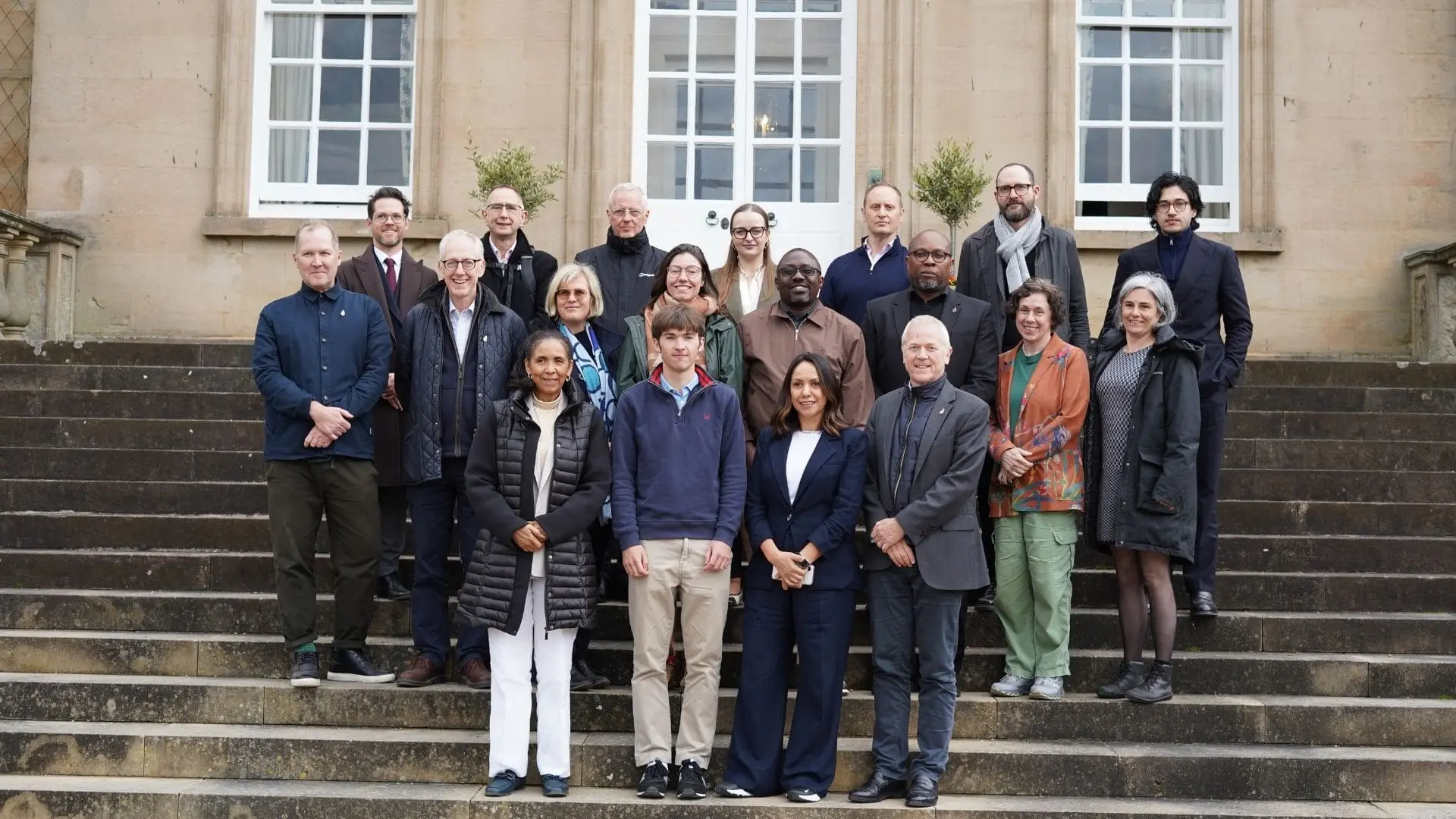
The King’s Foundation is partnering with quantum computing company FormationQ to address a pressing global challenge: the rapid growth of unplanned settlements. Currently, 1.3 billion people live in these areas, a number projected to increase by over one billion in the next 30 years, bringing the total to over 2.3 billion and creating significant strain on infrastructure and public services. The new three-year program will apply quantum optimization, utilizing trapped-ion systems from IonQ, to The King’s Foundation’s Rapid Planning Toolkit, initially targeting cities within the Commonwealth. “We are excited to partner with FormationQ to explore how our Rapid Planning Toolkit can help communities grow sustainably across the world,” said Ben Bolgar, Executive Director for Projects at The King’s Foundation. “We hope that the work of the Projects Team at The King’s Foundation will positively impact more communities as a result.”
Rapid Planning Toolkit Addresses Unplanned Urban Growth
Over one billion people could be added to the ranks of those living in unplanned settlements in the next 30 years, a challenge The King’s Foundation and FormationQ are addressing through a novel application of quantum computing. The collaborative program specifically targets cities throughout the Commonwealth, building upon the Foundation’s existing Rapid Planning Toolkit, a methodology refined through pilot projects like the one in Bo, Sierra Leone, where it successfully steered development away from vulnerable floodplains. This toolkit empowers local authorities to proactively establish responsible expansion frameworks, preventing the entrenchment of informal settlements. The initiative moves beyond conventional planning methods by integrating advanced computational modelling, including quantum optimization utilizing trapped-ion systems from IonQ.
This technology allows for the exploration of numerous potential spatial configurations across interconnected urban systems, such as water networks and transportation infrastructure, to identify solutions that balance competing priorities. “Rapid urbanisation is one of the most complex systems challenges of the 21st century,” explains Nada Hosking, Founder and CEO of FormationQ, emphasizing the need for innovative approaches. “Cities must balance environmental resilience, infrastructure capacity, economic opportunity and human wellbeing simultaneously.” The program integrates digital modelling with a participatory planning process involving planners, authorities, and community members who collaboratively review options and shape preferred frameworks. Proposed plans are then physically tested on-site, with streets and public spaces marked to guide early development.
IonQ Trapped-Ion Systems Enable Quantum Optimization
The application of quantum computing to urban planning represents a unique intersection of technology and philanthropy, as The King’s Foundation partners with FormationQ to address the escalating challenges of sustainable growth within the Commonwealth. Approximately 1.3 billion people currently reside in unplanned settlements, a figure projected to grow by well over one billion more in the next 30 years, bringing the total to over 2.3 billion, underscoring the urgency of proactive and efficient planning methodologies. FormationQ will contribute advanced computational and optimisation capabilities, utilizing the IonQ quantum platform to allow planners to evaluate numerous potential spatial configurations across interconnected systems, including vital infrastructure like water networks, ecological corridors, and transportation. Urban planning across these layers involves complex combinatorial decisions, and advanced optimisation techniques, including quantum approaches, can help analyse these interactions more efficiently and generate alternative spatial frameworks that balance walkability, environmental resilience, infrastructure efficiency and economic accessibility. Digital modelling techniques, powered by IonQ’s technologies, will enhance this toolkit, creating platforms to better understand urban complexity.
We are excited to partner with FormationQ to explore how our Rapid Planning Toolkit can help communities grow sustainably across the world.
Ben Bolgar, Executive Director for Projects at The King’s Foundation
Harmonious Urban Growth: A Three-Year Sustainability Programme
This three-year initiative, focused on cities within the Commonwealth, aims to address the escalating challenge of unplanned settlements. Currently, 1.3 billion people live in unplanned settlements, and that number is expected to grow by well over one billion more in the next 30 years. The programme provides practical tools for local authorities facing rapid population increases and limited resources, including leveraging trapped-ion systems from IonQ to explore optimal urban configurations. This process involves analyzing complex interactions between infrastructure, ecological corridors, and community needs.
Rapid urbanisation is one of the most complex systems challenges of the 21st century. Cities must balance environmental resilience, infrastructure capacity, economic opportunity and human wellbeing simultaneously.
Nada Hosking, Founder and CEO of FormationQ
FormationQ & The King’s Foundation Partnership Goals
The convergence of philanthropy and quantum computing offers a novel approach to managing the planet’s escalating urbanization challenges. The King’s Foundation has initiated a three-year program, in partnership with FormationQ, aiming to equip cities within the Commonwealth with tools for sustainable expansion. This collaboration directly addresses a critical issue: currently, 1.3 billion people live in unplanned settlements, and that number is expected to grow by well over one billion more in the next 30 years. Unlike conventional approaches, this initiative seeks to analyze complex urban systems, including water networks, transportation, and ecological corridors, by exploring a vast number of spatial configurations.



See today’s quantum computing news on Quantum Zeitgeist for the latest breakthroughs in qubits, hardware, algorithms, and industry deals.