EPB, serving over 202,000 customers across metro Chattanooga, Tennessee, is collaborating with IonQ to tackle a critical challenge for modern power grids: Distribution Network Reconfiguration. This operational task, adjusting a power grid’s topology to minimize outages and balance loads, has become a “massive real-time combinatorial optimization challenge” with the increasing number of switching assets on grids.
The team recently published three papers detailing quantum applications for DNR, indicating a depth of research beyond initial exploration, IonQ says. EPB’s evolution from a power utility to a quantum innovation hub was enabled by its commitment to develop its own quantum team and a $4 million grant from the National Institute of Standards and Technology.
EPB’s Transition to a Quantum Innovation Hub
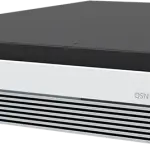
EPB established the EPB Quantum Center, the first quantum hub in the United States to house both a commercial quantum computer, the IonQ Forte Enterprise and a quantum network under one roof. This move signifies a deliberate shift for the utility, transitioning it from a traditional power provider to a center for applied quantum innovation within a year. The company now supports a growing Quantum Computing Fellows program, demonstrating a commitment to internal expertise alongside external collaboration, according to IonQ.
This parameter reduction is particularly valuable as modern grids increasingly rely on switching assets like distribution feeders, sectionalizers and tie switches, exacerbating the complexity of DNR. EPB’s strategy of internal workforce development and close collaboration with IonQ is intended to be a model for other utilities and organizations. The company’s approach demonstrates a pathway to use quantum computing to address specific operational challenges, the company says.
Funded by a NIST Grant, supports this effort and highlights the potential for broader adoption of quantum solutions within the energy sector. IonQ offers enterprise co-development programs and quantum hardware solutions to organizations seeking to replicate EPB’s success and explore the benefits of quantum computing for their own needs.
Hybrid Quantum-Classical Approach to Distribution Network Reconfiguration
Recent research demonstrates a speed advantage for quantum-assisted power grid reconfiguration across multiple network sizes, ranging from 33 to 417 buses. EPB and IonQ’s collaborative work detailed in published papers shows that a two-stage quantum-classical approach, using LR-QAOA subspace search, achieved optimal solutions faster than conventional classical methods on six test distribution networks, the company states. This improvement stems from pairing the quantum algorithm with a Mixed-Integer Second-Order Cone Programming (MISOCP) solver, guided by hardware-derived sample distributions.
Another paper outlines a method employing radiality-preserving branch-exchange encoding combined with iterative warm-start Quantum Iterative Tolerance Estimation (QITE). The team’s work highlights the potential of hybrid algorithms to address the “massive real-time combinatorial optimization challenge” inherent in modern distribution network reconfiguration. The utility’s investment in quantum computing extends beyond research, with a focus on internal workforce development. EPB earned a $4 million grant that helped it address a longstanding need across the entire quantum sector to educate, train, and encourage a deep-bench quantum workforce.
DNR Performance: Parameter Reduction & Faster Solutions with Quantum Methods
Achieving up to 95.8% parameter reduction compared to classical neural networks, a hybrid quantum-classical deep reinforcement learning approach demonstrated faster distribution network reconfiguration (DNR) while maintaining radial grid topologies, according to research published by EPB and IonQ. This parameter reduction is a key benefit, as it allows for quicker solutions to the complex optimization problems inherent in modern power grids, where the number of switching assets continues to increase.
The team’s work focused on preserving radial grid topologies, an important requirement for maintaining grid stability and reliability during reconfiguration events. This two-stage quantum-classical approach used hardware-derived sample distributions to guide the MISOCP solver, effectively narrowing the search space and accelerating convergence. EPB is exploring the operational benefits quantum computing can provide for the company, including the ability to leverage quantum to address such optimization challenges. Results from this approach were within 0.
The team attributes their success to the use of domain-specific, “constraint-native” encodings, which helped bypass common challenges in quantum optimization, such as barren plateaus. Mapping power grid topology directly into quantum registers, they found, produced better results without the need for penalty terms. These encoding strategies may offer a blueprint for future industrial quantum computing development, providing a pathway to overcome limitations in current quantum hardware.
Constraint-Native Encodings Enhance Quantum Grid Optimization Research
EPB’s collaborative research with IonQ yielded a 95.8% reduction in parameters compared to classical neural networks, leading to faster reconfiguration times while preserving essential grid topologies. A key element driving these results was the adoption of domain-specific, “constraint-native” encodings, which allowed researchers to circumvent challenges like the barren plateau often encountered in unconstrained quantum optimization. The research papers collectively focus on distribution network reconfiguration, yet each tackles the challenge with a distinct approach and delivers unique benefits.
Beyond the deep reinforcement learning method, the team explored alternative quantum algorithms and encodings, indicating a depth of research and a commitment to identifying the most effective solutions, the company’s account states. EPB’s investment in training eight quantum fellows, co-developed with IonQ, provided the necessary expertise to build algorithms, refine mathematical encodings and execute circuits on a real IonQ Forte Enterprise system.
“Many industrial firms and corporate enterprises that want to explore quantum may feel daunted by their own lack of a quantum workforce and quantum applications expertise,” the research notes, highlighting the importance of workforce development alongside technological advancement.
Source: https://www.ionq.com/blog/co-innovating-with-ionq-how-one-utility-is-solving-power-grid-complexity




See today’s quantum computing news on Quantum Zeitgeist for the latest breakthroughs in qubits, hardware, algorithms, and industry deals.