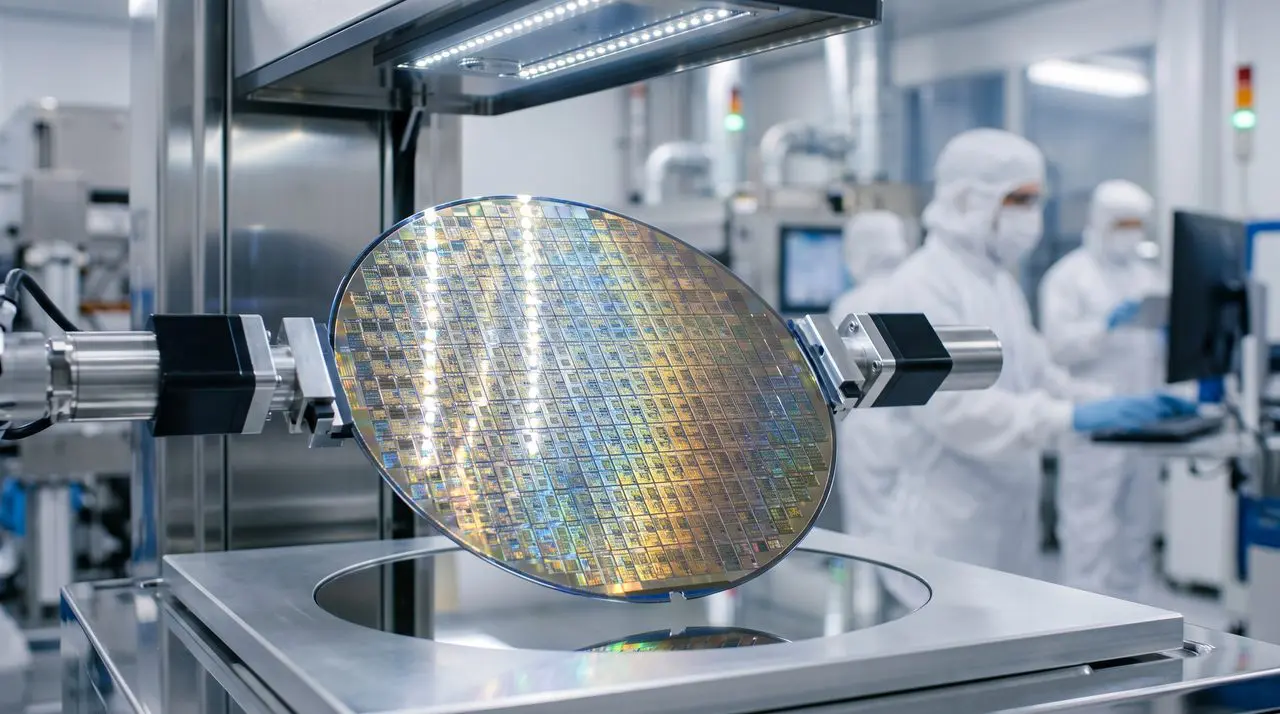
Argonne National Laboratory researchers have mapped atomic-level flaws that directly impact the performance of silicon spin qubits, a promising platform for scalable quantum computing. The team used the Chicago Quantum Computing Testbed, the first full-stack, solid-state qubit testbed at a U.S. research institution, to analyze industrial-grade silicon wafers and pinpoint the origin of qubit failure.
Their study revealed that random atomic-scale fluctuations within the silicon quantum well layers are the primary cause of variability in valley splitting, a critical energy difference affecting electron stability. This work, the researchers state, “transforms valley splitting from an unexplained obstacle into a materials engineering challenge with clear paths toward improved silicon qubits.”
Atomic-Scale Disorder Correlates with Valley Splitting Variability
Silicon spin qubits offer a compelling route to scalable quantum computing because they leverage established semiconductor manufacturing techniques. The research institution has pinpointed a critical factor limiting their performance: atomic-scale disorder within the silicon quantum well layers. Researchers demonstrated a direct correlation between these material imperfections and the variability of valley splitting, a quantum property impacting electron stability and qubit fidelity. The team employed a sensitive electrical spectroscopy method to map valley splitting across individual quantum dots positioned within the silicon quantum well.
By shifting the quantum dot’s location and measuring the resulting changes in valley splitting, they generated a nanoscale map revealing random atomic-scale fluctuations as the dominant source of variability. These fluctuations, occurring within the alloyed quantum well, directly influence the energy difference between electron valley states; a smaller split increases the risk of electrons leaking into unwanted states, introducing errors into calculations.
This detailed mapping was made possible through a collaboration between Argonne and Intel, combining the laboratory’s measurement expertise with Intel’s industrial fabrication capabilities on a 12-qubit class silicon quantum dot processor. James Clarke, Director of Quantum Hardware at Intel Corporation, emphasizes the significance of this shift in understanding, as explained in a recent publication by Marcks, J.C., et al. in Nature Communications. The ability to directly link atomic-level flaws to qubit performance provides a tangible target for material refinement and optimization, potentially leading to more reliable and higher-fidelity silicon qubits and, ultimately, more powerful quantum computers.
Source: https://www.energy.gov/science/bes/articles/uncovering-hidden-disorder-silicon-quantum-computers




See today’s quantum computing news on Quantum Zeitgeist for the latest breakthroughs in qubits, hardware, algorithms, and industry deals.