D-Wave Quantum Inc. is positioning itself in the growing quantum computing field, showcasing both its annealing and gate-model systems at Quantum World Congress 2026, September 23-25 in College Park, Maryland. The company, listed on Nasdaq as QBTS, will highlight existing customer applications of its annealing technology alongside progress in its dual-rail gate-model architecture, designed to simplify quantum error correction, D-Wave says.
“In our view, quantum computing is not a single-architecture race,” says D-Wave chief science officer Robert Schoelkopf, “and it will not be won by qubit counts alone.” Schoelkopf will deliver a plenary address Friday outlining the company’s dual-platform strategy for tackling computationally complex challenges.
D-Wave’s Dual-Platform Strategy: Annealing and Gate-Model Systems
This architecture focuses on reducing the complexity of quantum error correction, an important step toward enabling applications like quantum chemistry and materials simulation. Executives from D-Wave will participate in multiple discussions, including a plenary address by chief science officer Robert Schoelkopf titled “From Innovation to Utility: The Quantum Era Takes Shape with Two Platforms.” Schoelkopf will detail D-Wave’s annealing and gate-model technologies, asserting the need for both approaches to tackle computationally complex problems.
Senior vice president of global government relations and public affairs, Allison Schwartz will join the panel “Quantum You Can See: Real Use Cases, Real Impact,” highlighting practical quantum computing applications improving everyday services. She will also participate in “Quantum Policy from the Inside: How Industry Is Shaping the Federal Agenda,” examining policies and partnerships needed to accelerate quantum adoption and strengthen U.S. leadership.
Schwartz will advocate for a strategy supporting long-term research while also accelerating near-term application development, procurement, and deployment. “D-Wave is bringing two kinds of evidence to Quantum World Congress: production results from annealing systems solving complex optimization problems now, and gate-model results showing how hardware-level erasure detection can reduce the burden of quantum error correction.” The company’s position is that organizations should not be forced to choose between immediate utility and a path toward fault tolerance, and its dual-platform strategy aims to deliver both, according to D-Wave.
D-Wave secured over $25 million in funding in May 2026 to advance fabrication of components for improved materials used in quantum computing, specifically for scalable systems, and a $1.5 million NSF grant in June to advance fault-tolerant quantum computing using its dual-rail gate-model technology for the ERASE project.
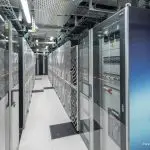
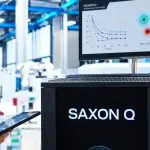
Attendees at Quantum World Congress can visit D-Wave at booths 51 and 53 to meet with experts, attend technical talks, view quantum processing units, and explore live demonstrations of quantum-powered applications, according to the event schedule.
In our view, quantum computing is not a single-architecture race, and it will not be won by qubit counts alone.
Robert Schoelkopf, Chief Science Officer at D-Wave
Robert Schoelkopf Details D-Wave’s Two-Platform Quantum Approach
Robert Schoelkopf, D-Wave’s chief science officer will detail the company’s approach to building both annealing and gate-model quantum computers in a plenary address at Quantum World Congress 2026, emphasizing that practical quantum utility requires diverse architectures beyond simply increasing qubit counts. D-Wave’s presence at the September 23-25 event in College Park, Maryland, as a platinum sponsor, underscores its commitment to showcasing real-world applications of quantum computing alongside advancements in its gate-model technology, the firm reports.
The company will present production results from its annealing systems demonstrating solutions to complex optimization problems currently impacting commercial and public-sector clients. This architecture incorporates hardware-level erasure detection, aiming to reduce the overhead associated with maintaining quantum information.
The company’s approach differs from the prevailing focus on maximizing qubit numbers, a metric Schoelkopf argues is insufficient for achieving practical quantum advantage. The acquisition added gate-model quantum computing capability, and D-Wave plans to ship its first dual-rail gate-model machine later in 2026 from a new research center in New Haven, Connecticut.
Beyond technical demonstrations, D-Wave executives will participate in panel discussions addressing the broader ecosystem needed to accelerate quantum adoption and strengthen U.S, the company states. quantum leadership. “Organizations should not have to choose between useful quantum computing today and a credible path to fault tolerance.”
D-Wave is bringing two kinds of evidence to Quantum World Congress: production results from annealing systems solving complex optimization problems now, and gate-model results showing how hardware-level erasure detection can reduce the burden of quantum error correction.
Production Applications & Dual-Rail Architecture for Error Reduction
According to D-Wave, this approach allows for a credible path toward fault tolerance without sacrificing the ability to deliver useful quantum computation in the near term. In May 2026, it signed a non-binding $100 million letter of intent with the U.S. Department of Commerce, with the final CHIPS R&D award of up to $100 million received on September 8, to build quantum systems, further solidifying its position in the rapidly evolving quantum landscape.
D-Wave’s presence at Quantum World Congress extends beyond technical demonstrations, by the company’s account. Schwartz will also participate in a panel discussing how industry can shape federal quantum policy, emphasizing the need for public-private partnerships to strengthen U.S. leadership in the field. “Our two-platform strategy is designed to deliver both,” Schoelkopf explained.
Organizations should not have to choose between useful quantum computing today and a credible path to fault tolerance.


See today’s quantum computing news on Quantum Zeitgeist for the latest breakthroughs in qubits, hardware, algorithms, and industry deals.