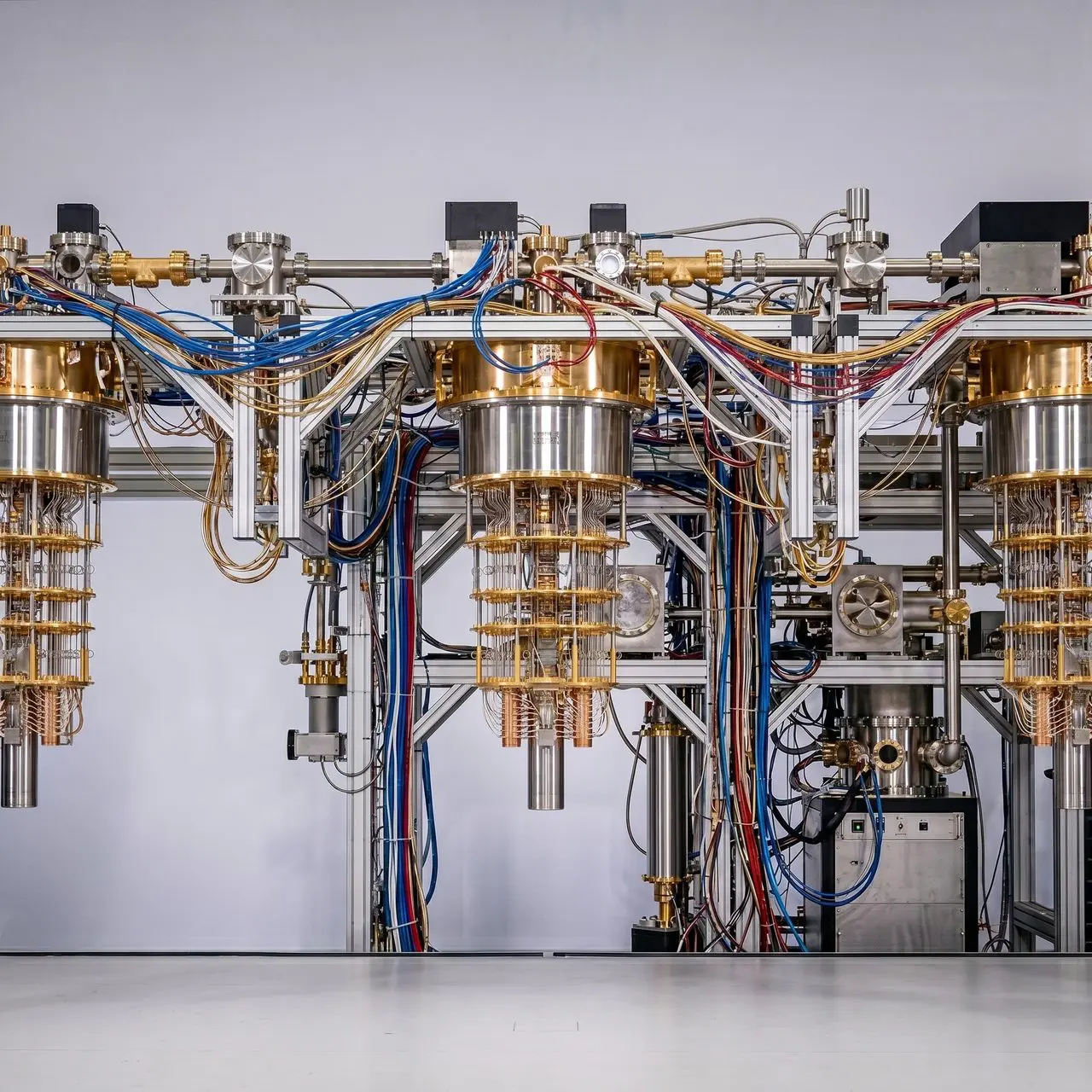
The National Science Foundation will extend funding for the University of Illinois Urbana-Champaign-led NSF Quantum Leap Challenge Institute for Hybrid Quantum Architectures and Networks (NSF HQAN) with a renewed $37.5 million investment over five years. Established as one of the original three NSF Quantum Leap Challenge Institutes, HQAN focuses on networking smaller quantum processing units as a path toward scalable quantum computing, an approach considered most promising.
Brian DeMarco, Illinois physics professor and NSF HQAN director and principal investigator, said the first phase of HQAN made substantial progress in both research and building the quantum workforce. The renewed funding will prioritize developing industry-ready quantum computing and expanding workforce development initiatives.
NSF HQAN Secures $37.5 Million to Advance Modular Quantum Architectures
NSF HQAN has secured $37.5 million in renewed funding, extending its research into modular quantum architectures for another five years and demonstrating a strong commitment to industry-focused quantum computing development. The center’s approach centers on networking smaller quantum processing units, a strategy gaining consensus as the most viable path to achieving significant quantum advantage over classical computers.
This renewed investment will allow HQAN to move beyond initial research successes, including the creation of entangled states within a four-node superconducting circuit quantum network and the development of the first reconfigurable superconducting quantum computing modules.
Rashid Bashir, dean of Illinois’ Grainger College of Engineering, emphasized the university’s commitment, stating, “Together with our partners and NSF, we will advance the fundamental architectures needed to make quantum computing scalable and useful, while strengthening the talent, partnerships and innovation ecosystem that will drive the industry forward.” HQAN’s efforts extend beyond hardware, with educational programs already reaching over 12,000 participants and placing graduates into key roles in academia, national laboratories, and industry.
The first phase of HQAN has made substantial progress in terms of both research advances and building the quantum workforce of the future.
Brian DeMarco, Illinois physics professor and NSF HQAN director and principal investigator
Illinois Quantum Hub Builds Regional Network with Industry and University Partners
NSF HQAN’s renewed $37.5 million funding establishes a regional network designed to accelerate the development of industry-ready quantum computing, extending research for another five years. This network includes Illinois, The University of Chicago, the University of Wisconsin-Madison, and Northwestern University, bolstered by contributions from Stanford University and the MIT Lincoln Laboratory. Beyond foundational research, NSF HQAN prioritizes workforce development, having already trained 27 alumni for industry positions, 17 for faculty roles, and nine for national laboratories.
Educational programs, such as TeachQuantum and Wonders of Quantum Physics, have reached over 12,000 students nationwide. Preeti Chalsani, the chief quantum officer for the state of Illinois, said, “HQAN is a major driver of quantum research and the quantum workforce pipeline in the area.”
Quantum technology is a strategic priority for the state of Illinois, and HQAN’s efforts are vital to addressing the needs of the state, the Midwest region, and more broadly the nation.
Preeti Chalsani, the chief quantum officer for the state of Illinois
HQAN’s First Phase Delivers Key Advances in Quantum Networking and Workforce Development
Researchers achieved entangled states within a four-node superconducting quantum network during its initial five-year phase, a key step toward linking smaller quantum processing units. This accomplishment addresses a significant hurdle in scaling quantum computers beyond the limitations of single, monolithic processors. HQAN’s focus on networking smaller QPUs stems from a shift in thinking within the field; the institute was formed in 2020 to explore modular approaches as alternatives to scaling single-platform technologies.
The center’s work extends beyond hardware, encompassing algorithms and software optimized for these modular systems, and has resulted in over 210 peer-reviewed publications. to technical achievements, NSF HQAN has prioritized building a skilled quantum workforce. The renewed $37.5 million in funding will allow HQAN to build on these successes, aiming to deliver a comprehensive pathway to modular quantum computing ready for industrial application.
Illinois has made a bold commitment to becoming a global leader in quantum technology, and Grainger Engineering is proud to help turn that vision into reality.
Rashid Bashir, dean of Illinois’ Grainger College of Engineering where NSF HQAN is hosted

See today’s quantum computing news on Quantum Zeitgeist for the latest breakthroughs in qubits, hardware, algorithms, and industry deals.