A 7. 5 million euro grant has been awarded to the HAIQ consortium to address the challenge of disturbances in quantum systems by uniquely combining the pattern-recognition skills of the public with artificial intelligence. Physicists Evert van Nieuwenburg and Julia Cramer are leading the effort, believing “even people with no knowledge of quantum physics can contribute ideas for solutions.” The consortium uses games as a shared platform for experts, members of the public and AI to collaborate, with strategies from gameplay already improving AI models designed to correct errors in quantum computers. “The AI models trained in this way are already outperforming existing ones,” says Van Nieuwenburg, as players directly contribute to scientific research.
HAIQ Consortium Uses Gamification for Quantum Challenges
The HAIQ consortium is using a 7. 5 million euro grant from NWA ORC to explore an unconventional approach to quantum research: using the pattern-recognition abilities of the general public through gamification and artificial intelligence. This funding demonstrates a significant investment in harnessing non-expert insights to address complex challenges in quantum technology, moving beyond traditional expert-driven models.
The project’s structure intentionally integrates three distinct groups, specialists, members of the public and AI systems, to encourage collaborative problem-solving. Central to this effort is the belief that individuals without formal training in quantum physics can offer valuable perspectives.
This approach isn’t simply about data collection. Julia Cramer emphasizes the importance of inclusive development, stating, “In addition, we involve members of the public in the development process on a more equal footing, which can foster a strong sense of connection.” Gamification is the common language on the online HAIQ platform, facilitating communication and collaboration between these diverse groups. The consortium’s methodology extends beyond simply playing games; the act of designing them is considered an important step for researchers.
Van Nieuwenburg proposes that gamifying research forces a clear articulation of core principles, organizing thoughts and generating new insights from the resulting gameplay data. This iterative process includes impact assessments to ensure a genuine two-way dialogue between experts and non-experts, ultimately aiming to benefit the integration of quantum technology into society. The project also received 50,000 euros from QDNL, supplementing the NWO funding and supporting the development of these innovative research tools.
ERRATIQ Game Data Improves AI Error Correction in Quantum Systems
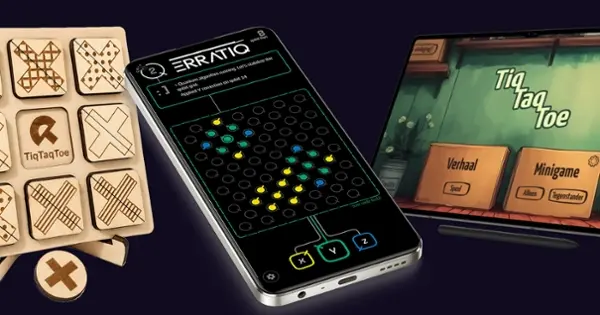
The strategy game ERRATIQ is yielding artificial intelligence models that surpass current error-correction systems for quantum computers, according to recent findings from the HAIQ consortium. Players attempting to maximize their score by correcting errors within the game unknowingly generate data sets that refine the AI’s ability to identify and resolve disturbances in quantum systems, a process that bypasses traditional, expert-driven approaches to algorithm development. This method uses the pattern-recognition skills of non-specialists, offering a novel pathway to stabilizing fragile quantum calculations.
The collaborative design of these games extends beyond simple data collection. The act of creation itself is integral to the research process. “Simply devising the rules of the game forces you to organise your own thoughts,” explains Evert van Nieuwenburg, highlighting how gamification compels researchers to articulate fundamental principles.
This iterative design process includes impact assessments, ensuring a genuine exchange between experts and the public, and supporting a shared understanding of the complex rules governing the quantum world without requiring formal training or theoretical study. The approach also cultivates a sense of shared ownership in the development of quantum technology.
This collaborative environment allows participants to quickly establish a common language, facilitating communication and mutual learning between researchers and individuals without prior quantum physics knowledge. Van Nieuwenburg notes, “Their strategies provide researchers with new insights and data that can be used to improve AI systems.”



See today’s quantum computing news on Quantum Zeitgeist for the latest breakthroughs in qubits, hardware, algorithms, and industry deals.