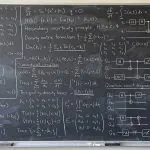
A new fidelity metric assesses the quality of quantum annealing processes, moving beyond evaluation of just the final solution to an optimisation problem. Gabriel Gouraud of Grenoble Alpes University and colleagues propose an accuracy measure based on the overlap between actual and ideal quantum states during annealing. This provides a key assessment of the annealing process itself.
Variational and Green function Monte Carlo assessment of quantum annealing accuracy
Quantum Monte Carlo simulations functioned as a computational microscope to examine quantum systems. The technique employs random sampling, repeatedly calculating many possible solutions to build a statistical picture of the system’s behaviour, much like estimating the area of an irregular shape by throwing darts at it and counting how many land inside. This approach is particularly valuable when dealing with complex quantum many-body problems where analytical solutions are intractable. Variational quantum Monte Carlo (VMC) and Green function quantum Monte Carlo (GFMC), two distinct variants of this approach, each offered a different perspective on the annealing process. VMC operates by introducing a trial wave function with adjustable parameters, which are then optimised to minimise the energy of the system. This optimisation process provides an upper bound on the true ground state energy. GFMC, on the other hand, projects out the ground state from an initial trial wave function using an iterative process based on the Green’s function, offering a more accurate, albeit computationally demanding, method. Both methods are crucial for validating and refining theoretical models of quantum systems.
The computational techniques achieved accuracies of between 10⁻² and 10⁻³ with the variational approach, and around 10⁻⁴ using the Green function method; these levels of precision surpass current Rydberg atom quantum annealing experiments. This simulation-based approach evaluated the annealing process itself, moving beyond assessments solely focused on the optimisation problem’s solution. Traditionally, quantum annealers are evaluated by their ability to solve specific optimisation problems, such as finding the minimum energy configuration of a spin glass. However, this approach is inherently limited as performance is heavily influenced by the choice of problem instance and the classical algorithms used for verification. The new metric, by focusing on the annealing trajectory, provides a more fundamental measure of the device’s performance. Achieving this level of accuracy for systems of up to 100,000 atoms opens new avenues for benchmarking and improving quantum annealer hardware. The Green function approach enabled calculations for systems of up to 100,000 atoms, and a single CPU demonstrated the ability to simulate systems containing 100,000,000 atoms, highlighting the computational efficiency of the technique. This scalability is achieved through algorithmic optimisations and efficient data structures. Currently, however, these results focus on idealized systems and do not yet account for the complexities of real-world noise or the challenges of scaling to even larger, practical problem sizes. The simulations assume perfect qubits and a noise-free environment, which is a significant simplification of reality.
Quantum Monte Carlo simulations quantify annealing fidelity in Rydberg atom systems
Quantum Monte Carlo simulations of Rydberg atom systems revealed accuracy values, ε, dropping from approximately 10−4 to 10−2, 10−3. This represents a sharp leap, exceeding the precision of current Rydberg atom quantum annealing experiments by orders of magnitude. Rydberg atoms, with their strong interactions and long coherence times, are a promising platform for building quantum annealers. However, accurately characterising the performance of these devices is challenging. Previously, assessing annealing quality relied solely on the final optimisation result, a method prone to inaccuracies. The new metric evaluates the quantum annealing process itself, quantifying how closely it adheres to its intended, ideal path, rather than simply verifying the solution. This is achieved by calculating the overlap between the actual quantum state of the system during annealing and the ideal ground state that corresponds to the solution of the optimisation problem. A higher overlap indicates a more accurate and efficient annealing process.
Although these simulations utilise Rydberg atom systems, an idealised scenario that doesn’t fully capture the complexities of real-world quantum annealers, this work establishes a strong methodological advance. Noise and imperfections in physical qubits, which inevitably impact performance, remain unaddressed in their models. Decoherence, arising from interactions with the environment, and control errors, stemming from imperfections in the applied control pulses, are major sources of noise in real quantum devices. Addressing these effects will require incorporating more realistic noise models into the simulations. This new metric, assessing annealing quality rather than just final results, offers a pathway to objectively compare different quantum annealing devices and designs. Mirroring fidelity-per-gate measurements used for other quantum computers, a new way to assess quantum annealers was developed. In gate-based quantum computing, fidelity-per-gate is a crucial metric for evaluating the performance of individual quantum gates. By analogy, this new metric provides a similar measure for quantum annealers, allowing researchers to identify and address bottlenecks in the annealing process. The ability to quantify annealing fidelity will be essential for developing more robust and reliable quantum annealers.
A fidelity metric for quantum annealing evaluates process efficiency beyond solution accuracy
Establishing a reliable measure of quantum annealing quality represents a fundamental shift, moving beyond simply identifying correct solutions to understanding the efficiency and fidelity of the annealing process itself. An ‘accuracy’ metric was developed, analogous to fidelity measurements used in other quantum computing approaches, allowing objective comparison of different systems. Calculations demonstrated accuracies exceeding those of current experimental Rydberg atom platforms. The development of such a metric is crucial for advancing the field of quantum annealing, as it allows for a more nuanced and comprehensive evaluation of device performance. It moves the focus from simply achieving a solution to understanding how the solution was obtained, providing insights into the underlying physics of the annealing process. This, in turn, can guide the development of improved hardware and algorithms. The ability to accurately quantify annealing fidelity will be essential for realising the full potential of quantum annealers for solving complex optimisation problems in fields such as materials science, finance, and machine learning.
The research established a new metric to evaluate the quality of quantum annealing, moving beyond simply assessing whether the correct solution is found. This metric, termed ‘accuracy’, functions similarly to fidelity-per-gate measurements used in other quantum computers and allows for objective comparison of different quantum annealers. Calculations using up to 100,000 atoms demonstrated accuracies of approximately 10 -4 , exceeding those of current Rydberg atom quantum annealing platforms. Researchers suggest this new approach is crucial for comprehensively evaluating device performance and understanding the underlying physics of the annealing process.
👉 More information
🗞 A fidelity metric for quantum annealing benchmarked by extreme scaling quantum Monte-Carlo simulations
🧠 ArXiv: https://arxiv.org/abs/2606.26233


See today’s quantum computing news on Quantum Zeitgeist for the latest breakthroughs in qubits, hardware, algorithms, and industry deals.