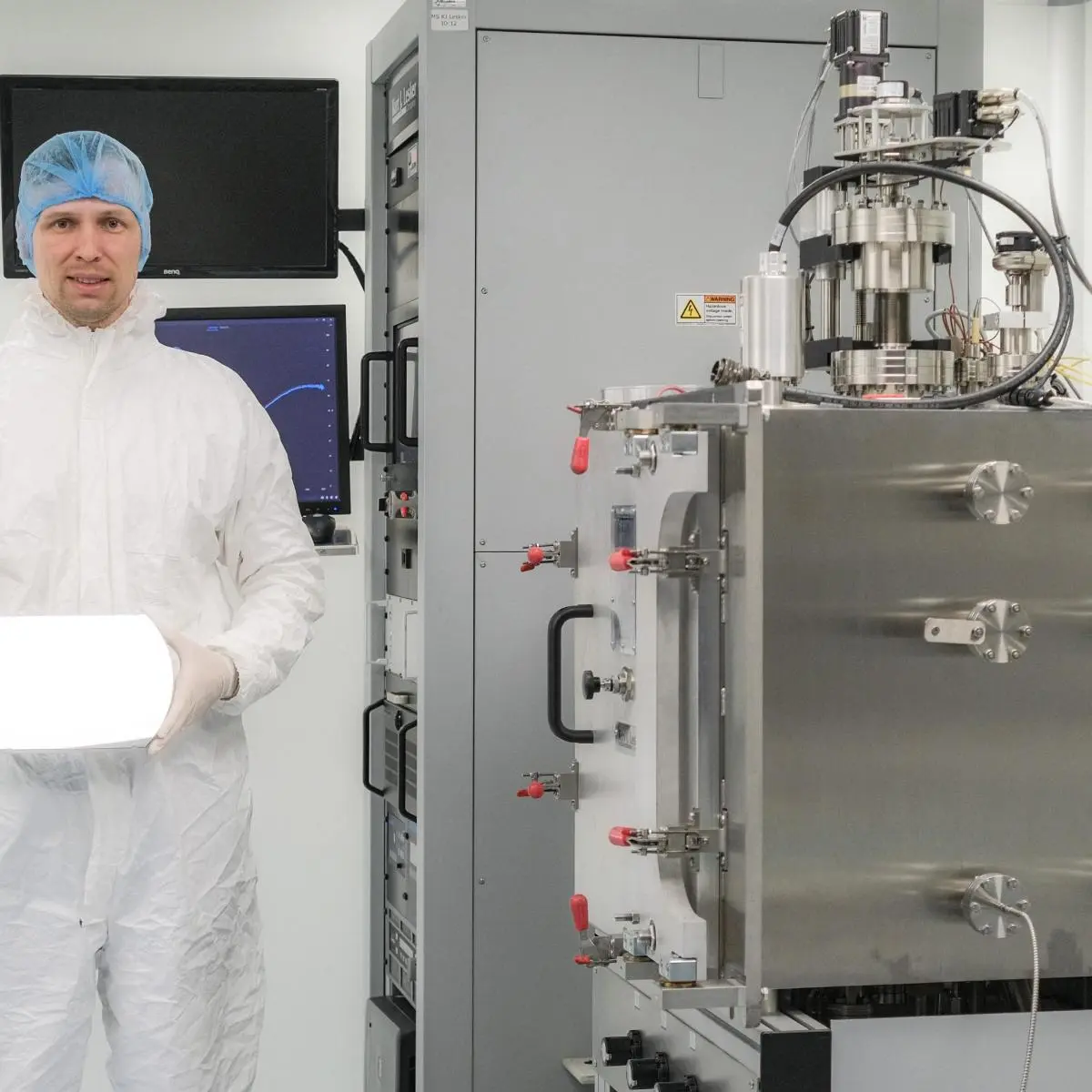
Researchers Dr. Alexandr Belosludtsev and Dr. Ignas Bitinaitis are combining 3D printing and magnetron sputtering to create lightweight mirrors with improved optical properties, a technique detailed in a recent study published in Optical Materials. This work, funded by the Research Council of Lithuania through the QuantiCoat project, focuses on developing optical components for laser sources used in quantum key distribution (QKD) systems. “This is the first step towards developing high-speed and secure optical quantum communication technologies,” says Dr. Belosludtsev, with the components intended for both terrestrial and space-based signal transmission.
3D Printing and Magnetron Sputtering for Lightweight, Reflective Mirrors
FTMC researchers recently detailed in Optical Materials a method for fabricating mirrors that combines additive manufacturing with magnetron sputtering, a technique important for minimizing weight in space-based optical systems. These components are not limited to space-based applications. The same technology is intended for terrestrial optical signal transmission, indicating a dual-use design philosophy. The team’s work extends to investigating the resilience of silver and aluminium mirrors to proton radiation, a significant factor in the longevity of space-based optical systems.
A study published in Advances in Space Research details their findings on how varying coating compositions affect performance under radiation exposure. The research team’s approach to mirror fabrication uses the precision of 3D printing to create a lightweight substrate, which is then enhanced with a thin film coating deposited via magnetron sputtering. These characteristics are essential for both high-bandwidth data transmission and the delicate measurements required for quantum communication protocols.
Beyond secure communication, the technology has found a more immediate application in refurbishing telescopes used by Lithuanian amateur astronomers, demonstrating the versatility of the developed coating techniques. Prolonged exposure to radiation degrades the performance of optical components, reducing their reflectivity and introducing errors into signal transmission. The development of these lightweight, reflective mirrors represents a tangible step towards realizing the potential of high-speed, secure optical quantum communication, both on Earth and among the stars.
This is the first step towards developing high-speed and secure optical quantum communication technologies. The optical components we are developing could contribute to future communication systems in which information will be transmitted using light.
Dr. Alexandr Belosludtsev, FTMC



See today’s quantum computing news on Quantum Zeitgeist for the latest breakthroughs in qubits, hardware, algorithms, and industry deals.