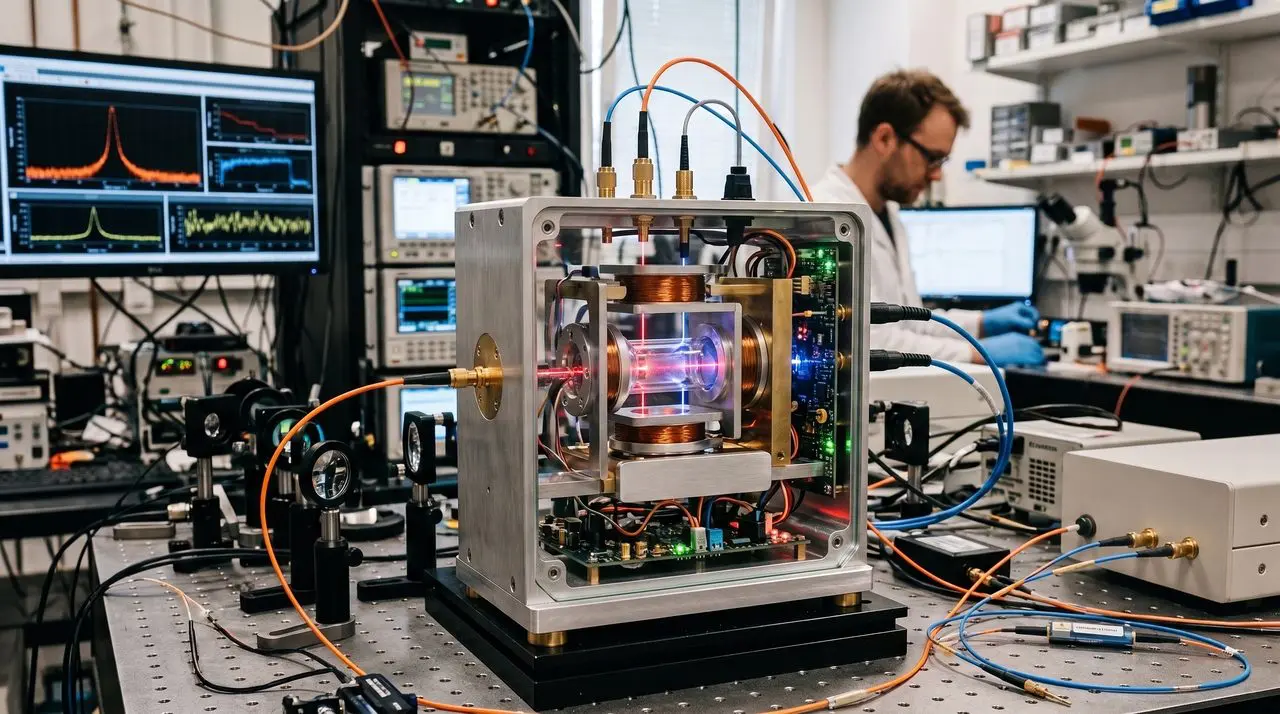
Element Six is presenting advances in synthetic diamond materials at the Quantum World Congress 2026 in Washington, U.S., positioning the technology as critical for building practical quantum systems. The company’s engineered diamonds offer advantages in size, weight, power, and deployability compared to other quantum approaches, addressing a key challenge in scaling up these technologies.
“The future of quantum will depend not only on algorithms and hardware, but on the advanced materials that make these systems possible,” says Dr. Daniel Twitchen, CTO at Element Six. The company’s work ranges from sensors for healthcare to thin-film diamond supporting future quantum networks, utilizing manufacturing processes compatible with existing semiconductor facilities.
Synthetic Diamond Enables Scalable Quantum Sensing, Networking, Computing
Scalable manufacturing of three-inch wafer-scale single crystal diamond, established through a reproducible process between Element Six and Orbray in June 2026, directly addresses a critical bottleneck in quantum device production. This achievement moves beyond small-scale laboratory samples toward the larger substrates needed for commercial applications, a step previously limiting wider deployment of diamond-based quantum technologies. The larger wafers reduce per-unit costs and enable integration with existing semiconductor fabrication techniques, streamlining production for quantum sensors and computing components.
Element Six has built upon over eighty years of synthetic diamond innovation to deliver these materials, positioning itself as a key enabler for the burgeoning quantum industry, the company says. The advantages of synthetic diamond extend beyond manufacturing ease; the material’s properties directly improve device performance in several key areas. Element Six is developing thin-film diamond and silicon-vacancy technologies specifically for quantum interconnects, aiming to build future quantum networks capable of transmitting quantum information over significant distances.
These interconnects, built using scalable processes compatible with standard semiconductor manufacturing, offer a pathway to overcome limitations in current quantum communication methods. This approach contrasts with many alternatives, potentially reducing the size, weight, and power consumption of quantum systems while increasing their deployability in real-world environments. “Synthetic diamond is an increasingly critical technology platform for quantum sensing, networking and computing, helping accelerate the path from scientific discovery to deployable systems,” said Dr. Daniel Twitchen, CTO at Element Six.
The company’s portfolio includes high-performance materials for quantum sensing applications spanning healthcare, navigation, and semiconductor diagnostics, demonstrating a broad range of potential uses, according to Element Six. As both the United States and other nations increase investment in quantum capabilities, Element Six aims to support these efforts by providing the advanced materials necessary for the next generation of quantum devices and systems.
The future of quantum will depend not only on algorithms and hardware, but on the advanced materials that make these systems possible.
Dr. Daniel Twitchen, CTO at Element Six




See today’s quantum computing news on Quantum Zeitgeist for the latest breakthroughs in qubits, hardware, algorithms, and industry deals.