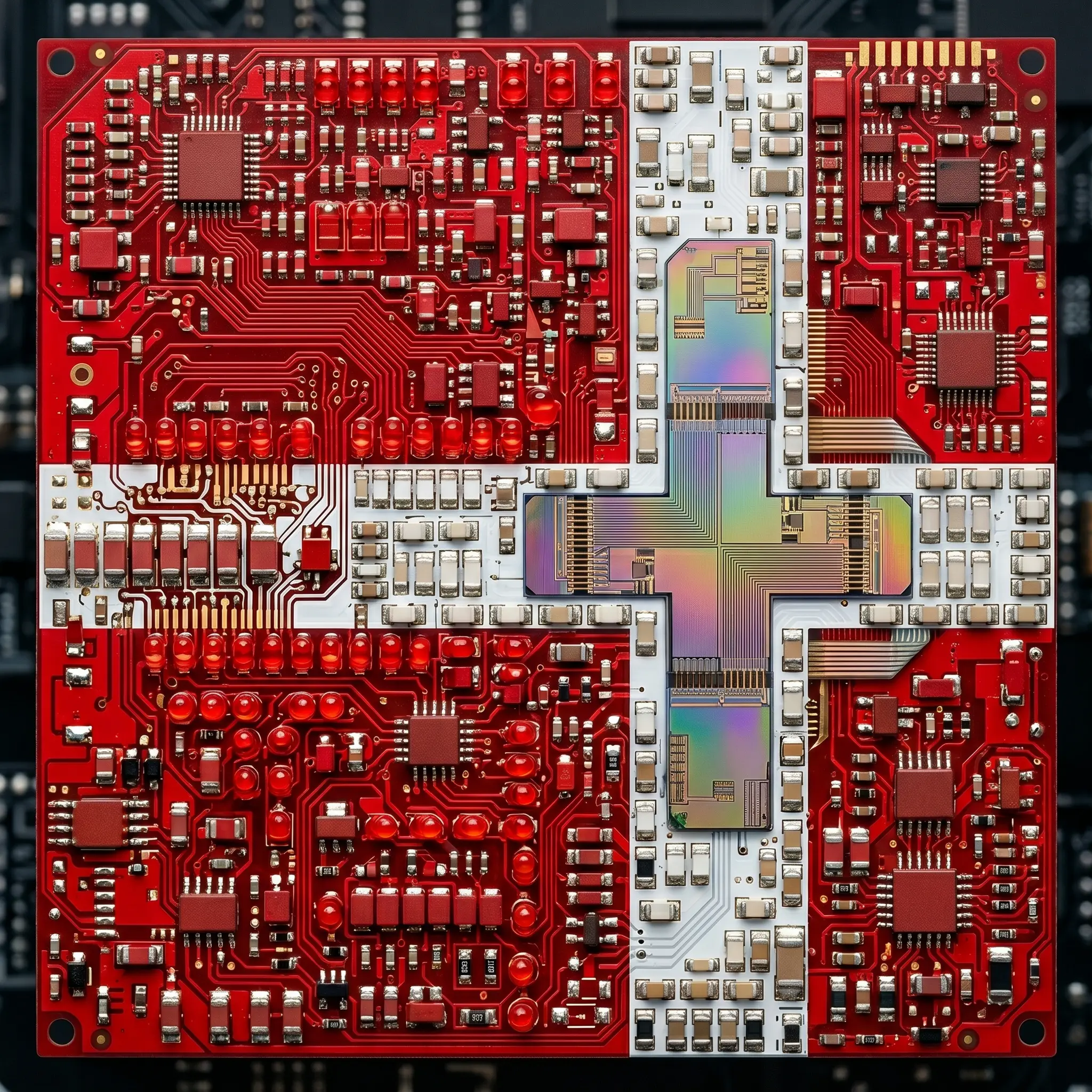
Why Denmark became a quantum heavyweight
Denmark’s quantum standing rests on two foundations, one historic and one very recent. The historic foundation is the Niels Bohr Institute in Copenhagen, named after the founder of modern quantum theory, which has been one of the world’s important physics institutions for a century and remains a leading centre of quantum research. The recent foundation is money, because in the 2020s Denmark began funding quantum technology at a scale that few countries of its size can match.
The combination is what makes the denmark quantum computing companies distinctive. The country has deep scientific roots, a cluster of spin-out companies from the Niels Bohr Institute, a strong life-sciences and pharmaceutical industry that gives quantum chemistry a real market, and an unusual concentration of capital from the Novo Nordisk Foundation and the Danish state. The result is an ecosystem that, while geographically small, has become one of the most ambitious in Europe.
The Novo Nordisk Foundation and national funding
The single most important factor in Danish quantum technology is the Novo Nordisk Foundation, one of the wealthiest charitable foundations in the world, which has made quantum computing a major funding priority. The foundation backs the NNF Quantum Computing Programme at the Niels Bohr Institute, and together with EIFO, the Export and Investment Fund of Denmark, it funded the Magne quantum computer. The two organisations also stand behind 55 North, a Copenhagen-based venture fund described as the world’s largest dedicated to quantum technology.
In September 2026 the Foundation and Quantum Foundry Copenhagen announced a 5,300 square metre chip plant in Copenhagen, due to open in 2027. The Foundation says it has now committed more than DKK 2.9 billion, about EUR 390 million, to quantum technology.
Alongside this private and quasi-public funding, Denmark launched a National Strategy for Quantum Technology in 2023, with the government targeting public investment on the order of a billion Danish kroner across the following years, plus additional money for commercialisation and quantum security. Innovation Fund Denmark supports quantum research projects, and the Niels Bohr Institute is also linked to a NATO centre for quantum technologies. This depth of funding is the reason the denmark quantum computing companies have grown so quickly.
The top denmark quantum computing companies
Several organisations define the denmark quantum computing companies covered in this guide. One operates the national quantum computer (QuNorth), one is building a quantum chip plant (Quantum Foundry Copenhagen), one builds photonic quantum hardware (Sparrow Quantum), and one builds cryogenic control electronics (QDevil). Three are chemistry and simulation software companies (Kvantify, Molecular Quantum Solutions, Hafnium Labs). Two are quantum-security and sensing hardware companies (Alea Quantum Technologies, DiaSense). NKT Photonics is an established photonics manufacturer, Qpurpose writes quantum software in Odense, 55 North is the dedicated quantum venture fund, and two research homes sit at the centre of it all, the Niels Bohr Institute and the Technical University of Denmark. The Niels Bohr Institute anchors the national research effort behind the denmark quantum computing companies.
Independent directories of the denmark quantum computing companies list a similar shortlist of names. The profiles below cover the leading organisations in depth.







The company works with quantum computing platforms to help clients reach better and faster solutions to complex computational problems. It has partnered with Novo Nordisk and SDU to help prepare pharmaceutical research for advances in quantum computing. Qpurpose focuses on finance and energy sector use cases, developing both quantum-inspired and native quantum algorithms for optimization challenges.
In October 2025, 55 North announced the first close of its EUR 300 million inaugural fund, having raised EUR 134 million with backing from anchor investors Novo Holdings and EIFO, the Export and Investment Fund of Denmark. The firm takes a stage-agnostic approach, backing enabling technologies and full-stack solutions, with 75% of its capital supporting European companies, including 25% targeting Nordic firms, and 25% pursuing select worldwide opportunities.

The university’s Center for Silicon Photonics advances integrated quantum photonics, and DTU researchers contribute to quantum hardware, quantum networks, and quantum applications. DTU collaborates with Danish and European quantum companies to advance commercialization. Through research, education, and technology transfer, it supports the Danish quantum technology ecosystem and Nordic quantum innovation.
What the lineup reveals
The first pattern is the weight of foundation funding. The Magne quantum computer, the NNF Quantum Computing Programme, and the 55 North venture fund all trace back to the Novo Nordisk Foundation and EIFO. Very few countries have a charitable foundation willing to fund quantum technology on this scale, and that capital is the single biggest reason the Denmark quantum companies have advanced so fast.
Chemistry and life sciences set the direction
The second pattern is a strong tilt toward chemistry and life sciences. Kvantify, Molecular Quantum Solutions, and Hafnium Labs all build software for molecular simulation and drug discovery, and even the Magne quantum computer is justified partly by life-science applications. This reflects Denmark’s major pharmaceutical industry, and it gives the Denmark quantum companies a clear and commercially grounded focus rather than a generic one.
The Niels Bohr Institute is the source
The third pattern is how much of the ecosystem flows from one institution. Sparrow Quantum, QDevil, and Molecular Quantum Solutions are all Niels Bohr Institute spin-outs, the NNF Quantum Computing Programme is based there, and the institute has built Denmark’s largest quantum computers. The Denmark quantum companies are, to an unusual degree, the commercial expression of a single century-old research institute.
QuNorth and the Magne quantum computer
A national quantum computer
The most visible single project in Danish quantum technology is Magne, the quantum computer operated by QuNorth. QuNorth is a joint venture created in 2025 and owned equally by EIFO, the Danish export and investment fund, and the Novo Nordisk Foundation, with the two backers committing funding on the order of EUR 80M. The machine is named Magne, after a figure from Norse mythology, and it is intended to be one of the most powerful quantum computers in the world when complete.
How Magne is being built
Magne is being built by Atom Computing, which supplies neutral-atom hardware, with Microsoft providing the software stack, and it is designed as a fault-tolerant machine operating in the regime of around 50 logical qubits drawn from more than a thousand physical qubits. Logical qubits are error-corrected qubits assembled from many physical ones, and a machine at that scale would be a major step toward genuinely useful quantum computing. The specialised rooms were finished in September 2026, and installation of the machine is under way. Magne is due to be fully operational in the spring of 2027. For the Denmark quantum companies, Magne is both a national landmark and, once it is running, a working platform.
The Copenhagen quantum cluster
The Denmark quantum companies are concentrated to a remarkable degree in a single city, Copenhagen, and within it around the Niels Bohr Institute and the Copenhagen Innovation District. QuNorth, Sparrow Quantum, Kvantify, QDevil, Molecular Quantum Solutions, Alea Quantum Technologies, Hafnium Labs, and DiaSense are all in the Copenhagen area, which creates an unusually tight cluster where companies, the research institute, and the funding bodies sit close together.
That concentration is a genuine advantage, because it shortens the distance between research, talent, capital, and companies. A quantum startup in Copenhagen can draw on the Niels Bohr Institute for science and people, on the Novo Nordisk Foundation and 55 North for funding, and on neighbouring companies for partnerships and supply. NKT Photonics in nearby Birkerod adds an established photonics manufacturer to the mix. The Denmark quantum companies are effectively a single Copenhagen cluster, which is one reason the ecosystem has been able to move so fast.
When Denmark matters for your quantum strategy
Quantum chemistry and drug discovery
If your interest is quantum computing for chemistry, materials, or drug discovery, Denmark is one of the most relevant countries in the world. Kvantify, Molecular Quantum Solutions, and Hafnium Labs all build software for molecular simulation, and the entire ecosystem is oriented toward life-science applications, backed by Denmark’s major pharmaceutical industry. Organisations in pharma and materials should treat the Denmark quantum companies as a leading source of quantum-chemistry software.
Access to a fault-tolerant quantum computer
For organisations that want to engage with advanced quantum hardware, the Magne quantum computer operated by QuNorth is a significant opportunity. It is designed to run with around 50 logical qubits, and it is due to be fully operational in the spring of 2027. Tracking QuNorth and the Denmark quantum companies gives a view of where error-corrected quantum computing is heading.
Photonic hardware and quantum security
For photonic quantum hardware and quantum security, Denmark has real capability. Sparrow Quantum builds deterministic single-photon sources, a critical component for photonic quantum systems, NKT Photonics supplies advanced lasers, and Alea Quantum Technologies builds quantum random number generators. Organisations building photonic quantum hardware or planning quantum-safe security should account for the Denmark quantum companies.
Germany quantum companies
Sweden quantum companies
UK quantum companies
Netherlands quantum companies
Top quantum hardware companies
Top quantum software companies
Frequently asked questions
Who are the leading Denmark quantum companies in 2026?
The Danish ecosystem is anchored by QuNorth, the company operating the Magne quantum computer, by Quantum Foundry Copenhagen, which is building a chip plant due to open in 2027, and by the Niels Bohr Institute, the national research centre. Sparrow Quantum builds photonic single-photon sources, and QDevil builds cryogenic control electronics. Kvantify, Molecular Quantum Solutions, and Hafnium Labs build quantum and computational chemistry software. Alea Quantum Technologies builds quantum random number generators, DiaSense builds diamond quantum sensors, and NKT Photonics is an established maker of lasers and photonic components. Together these organisations lead the Denmark quantum companies covered in this guide, an ecosystem unusually concentrated in Copenhagen and heavily oriented toward chemistry and life sciences.
What is the Magne quantum computer?
Magne is a quantum computer being built in Denmark and operated by QuNorth, a joint venture created in 2025 and owned equally by EIFO, the Export and Investment Fund of Denmark, and the Novo Nordisk Foundation. The two backers committed funding on the order of EUR 80M. Magne is being built by Atom Computing, which supplies neutral-atom hardware, with Microsoft providing the software stack, and it is designed as a fault-tolerant machine in the regime of around 50 logical qubits drawn from more than a thousand physical qubits. The specialised rooms in Copenhagen were finished in September 2026, and installation of the machine is under way. Magne is due to be fully operational in the spring of 2027. Magne is the centrepiece of the Denmark quantum companies and one of the most ambitious quantum projects in Europe.
Why is Denmark so strong in quantum computing?
Denmark’s strength rests on two foundations. The historic one is the Niels Bohr Institute in Copenhagen, named after the founder of modern quantum theory, which has been a leading physics institution for a century and remains a major centre of quantum research. The recent one is funding, because in the 2020s Denmark began backing quantum technology at an exceptional scale, led by the Novo Nordisk Foundation, one of the wealthiest charitable foundations in the world, together with EIFO and the Danish state. The combination of deep science, a strong pharmaceutical industry that gives quantum chemistry a market, and an unusual concentration of capital is what makes the Denmark quantum companies one of the most ambitious quantum ecosystems in Europe.
What is the Novo Nordisk Foundation’s role in Danish quantum?
The Novo Nordisk Foundation is the single most important factor in Danish quantum technology. It is one of the wealthiest charitable foundations in the world, and it has made quantum computing a major funding priority. The foundation backs the NNF Quantum Computing Programme at the Niels Bohr Institute, it co-funded the Magne quantum computer through the QuNorth joint venture alongside EIFO, and it stands behind 55 North, a Copenhagen venture fund described as the world’s largest dedicated to quantum technology. Very few countries have a charitable foundation willing to fund quantum technology on this scale, and that capital is the main reason the Denmark quantum companies have advanced so quickly in recent years.
What is Sparrow Quantum known for?
Sparrow Quantum is a Copenhagen-based hardware company, founded in 2016 as a spin-out of the Niels Bohr Institute based on the research of Professor Peter Lodahl. It builds deterministic single-photon sources, components that generate individual photons reliably and on demand. This is one of the hardest and most important problems in photonic quantum computing and quantum communication, because most photon sources are probabilistic, producing photons at random times, which makes scaling difficult. Sparrow Quantum’s chip-based technology aims to make single-photon generation predictable enough for scalable photonic quantum systems. In December 2025 the company raised a EUR 27.5M Series A, reported as the largest quantum-technology investment in Scandinavia, giving the Denmark quantum companies a globally significant photonic-hardware position.
What kind of quantum software do Danish companies build?
The Denmark quantum companies have a strong focus on chemistry and life-sciences software. Kvantify builds quantum and classical software for drug discovery and chemistry, Molecular Quantum Solutions provides quantum-chemistry simulation as a cloud service for pharmaceutical and materials customers, and Hafnium Labs builds molecular-simulation tools using advanced computational chemistry. This concentration reflects Denmark’s major pharmaceutical and life-sciences industry, which gives quantum chemistry a genuine commercial market. Quantum chemistry is also one of the clearest near-term targets for quantum computing, because the behaviour of molecules is itself a quantum problem. The Danish software scene is therefore unusually focused and commercially grounded, oriented toward the industries where Denmark already has global strength.
Where are Denmark’s quantum companies located?
The Denmark quantum companies are concentrated to a remarkable degree in Copenhagen, and within the city around the Niels Bohr Institute and the Copenhagen Innovation District. QuNorth, Sparrow Quantum, Kvantify, QDevil, Molecular Quantum Solutions, Alea Quantum Technologies, Hafnium Labs, and DiaSense are all in the Copenhagen area, with NKT Photonics in nearby Birkerod. This creates an unusually tight cluster where companies, the research institute, and the funding bodies sit close together, which shortens the distance between research, talent, capital, and companies. The concentration is a genuine advantage and one reason the Danish quantum ecosystem has been able to move so quickly.
How does Denmark compare with other quantum nations?
Denmark is one of the most ambitious quantum nations relative to its size. It does not have the broad industrial base of Germany or the many startups of larger countries, but it has exceptional depth in a few areas. The Magne quantum computer is one of the most ambitious quantum-hardware projects in Europe, the Niels Bohr Institute is a world-class research centre, and the funding from the Novo Nordisk Foundation and EIFO is on a scale few countries can match. The Denmark quantum companies are concentrated, well funded, and clearly focused on chemistry and life sciences. Denmark competes through depth, capital, and focus rather than through breadth, and it is widely regarded as one of Europe’s leading quantum hubs.



See today’s quantum computing news on Quantum Zeitgeist for the latest breakthroughs in qubits, hardware, algorithms, and industry deals.