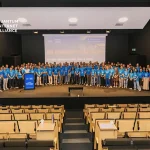
Nearly 20 companies are now engaged in a demanding six-month assessment as part of DARPA’s Quantum Benchmarking Initiative, signaling a substantial investment in a diverse range of approaches to building practical quantum computers. The initiative aims to rapidly verify if a fault-tolerant quantum computer, one where computational value exceeds cost, can be realized by 2033, a timeline far more aggressive than conventional predictions. Successful completion of this initial stage will lead to a yearlong, rigorous examination of research and development plans.
DARPA’s Quantum Benchmarking Initiative: Stage A Company Selection
This selection signals a significant investment in a diverse range of quantum approaches, particularly notable given the early stage of the technology and the high bar for entry into the program. DARPA launched QBI in July 2024 with the explicit goal of determining if the development of a useful, fault-tolerant quantum computer can be accelerated beyond current projections. The initiative’s core aim is rigorous verification of whether any quantum computing approach can achieve utility-scale operation, where computational value surpasses cost, by 2033.
The companies selected for Stage A, including established players like IBM and Google Quantum AI, represent a broad spectrum of qubit technologies. Beyond superconducting and trapped-ion approaches, the cohort encompasses neutral atom qubits, photonic qubits, and silicon CMOS spin qubits, demonstrating DARPA’s commitment to exploring multiple pathways toward quantum advantage.
Diraq, with operations spanning Australia, California, and Massachusetts, is pursuing silicon CMOS spin qubits, while QuEra Computing focuses on neutral atom qubits, highlighting the international scope of the initiative and the varied technological bets being placed. This diversity reflects an understanding that the optimal qubit technology remains an open question, and a comprehensive evaluation is important. Joe Altepeter, DARPA QBI program manager, emphasized the immediate challenge facing these selected companies.
“For the chosen companies, now the real work begins. Stage An is a six-month sprint in which they’ll provide comprehensive technical details of their concepts to show that they hold water and could plausibly lead to a transformative, fault-tolerant quantum computer in under 10 years,” he stated. This timeframe is particularly aggressive, demanding rapid delivery of detailed technical information to demonstrate the feasibility of each approach.
The program’s structure is designed to quickly identify and support concepts with genuine potential, while rigorously scrutinizing those that fall short. Successful completion of Stage A will allow for a year-long Stage B, where DARPA will conduct an in-depth examination of each company’s research and development plans. This will not be a superficial review; Altepeter clarified that the agency intends to assess the long-term viability of each approach, not just short-term milestones.
“During Stage B we’ll thoroughly review all aspects of their R&D plans to see if they can go the distance — not just meet next year’s milestones — and stand the test of trying to build a transformative technology on this kind of a timeline,” he explained. Companies that navigate Stage B will then enter Stage C, where DARPA’s independent verification and validation (IV&V) team will subject their hardware to rigorous, real-time testing.
DARPA’s approach to QBI differs from a traditional competitive model. The agency frames the initiative as a scan of the commercial quantum computing landscape, aiming to identify all companies on a plausible path to a useful quantum computer. This suggests a collaborative spirit, focused on accelerating progress across the field rather than crowning a single winner.
This strategy is informed by the agency’s experience with the Underexplored Systems for Utility-Scale Quantum Computing (US2QC) program, which served as a pilot for the expanded QBI. Microsoft and PsiQuantum, both participants in the second phase of US2QC, are now entering the final phase, demonstrating a clear progression of investment and evaluation.
The development of a robust IV&V team is central to DARPA’s strategy. The agency is actively expanding this team, using federal and state test facilities to provide objective assessments of quantum computing claims. “We’ve built and are expanding our IV&V team of U.S. This emphasis on independent verification is crucial, given the potential for inflated performance claims in the rapidly evolving quantum computing field. The team will scrutinize not only the hardware but also the commercial concepts, designs, and R&D plans of each participating company.
The selection of memQ as a partner to develop a quantum compiler further illustrates DARPA’s comprehensive approach. MemQ’s technology aims to reduce resource demands by a factor of 1,000, addressing a critical challenge in scaling quantum computers. This partnership, alongside collaborations with Safran Federal Systems on robust quantum sensors, demonstrates DARPA’s commitment to supporting the entire quantum computing ecosystem, not just qubit development. The agency’s broader quantum research portfolio, encompassing programs like ONISQ, LUMOS, and US2QC, underscores its position as the most consequential US funder of quantum R&D.
By imposing a demanding timeline and prioritizing rigorous verification, DARPA aims to separate viable concepts from those that are unlikely to deliver on their promise. “Our team is eager to scrutinize the commercial concepts, designs, R&D plans, and prototype hardware — all with the goal of helping the U.S. government identify and support efforts that are genuinely advancing toward transformative, fault-tolerant quantum computing,” Altepeter concluded. The initiative’s success will hinge on the ability of these companies to deliver comprehensive technical details and demonstrate a clear path toward achieving utility-scale operation by 2033.
We’ve built and are expanding our world-class IV&V team of U.S. quantum experts, leveraging federal and state test facilities to separate hype from reality in quantum computing.
Joe Altepeter, DARPA QBI program manager



See today’s quantum computing news on Quantum Zeitgeist for the latest breakthroughs in qubits, hardware, algorithms, and industry deals.