Rigetti Computing reported third-quarter revenues of $1.4 million alongside a GAAP net loss of $3.1 million, as the company continues to advance its full-stack quantum computing platform. The company highlighted achieving 99.5% median two-qubit fidelity on its 108-qubit Cepheus-1 system, validating its chiplet-based approach to scaling, Rigetti says. “Rigetti delivered meaningful progress during the third quarter across system performance, technology development and strategic execution,” said Dr. Subodh Kulkarni, Rigetti CEO. The company also secured a definitive $100 million agreement with the U.S. Department of Commerce.
$1.4 Million Q3 Revenue with $3.1 Million Net Loss
Rigetti Computing’s revenues reached $1.4 million for the quarter ending September 30, 2026, an increase from $5.2 million in 2025, totaling $10.9 million over the first nine months of the year. Operating loss for the same three-month period totaled $33.2 million, while the company reported a GAAP net loss of $3.1 million and a non-GAAP net loss of $20.5 million for the quarter. These figures reflect continued investment in the company’s full-stack quantum computing platform and its ongoing efforts to scale superconducting processors.
As of September 30, 2026, Rigetti held $497.1 million in cash, cash equivalents and available-for-sale investments, providing a financial cushion for continued research and development. The company remains debt-free, which allows for strategic flexibility in a rapidly evolving technological landscape.
Looking ahead, Rigetti anticipates approximately $20 million in revenue for the full year 2026, contingent upon acceptance by C-DAC, a customer, and subsequent revenue recognition in the fourth quarter, according to the company. This projection represents a significant increase from 2025 revenue figures, signaling potential growth in commercial applications of quantum computing. The company’s progress is particularly evident in the performance of its Cepheus-1-108Q system, which achieved 99.5% median two-qubit gate fidelity, the company says.
“Building on the progress achieved this quarter, our next major system objective is to demonstrate a 300-plus-qubit system with approximately 99.7% median two-qubit gate fidelity and gate speeds below 60 nanoseconds by mid-2028,” said Dr. Subodh Kulkarni, Rigetti CEO. This achievement validates the company’s chiplet-based approach to scaling superconducting quantum computers, a method designed to overcome the limitations of monolithic processor designs.
Total stockholders’ equity stood at $541,966 as of September 30, 2026, compared to $546,199 at the end of 2025, while total liabilities and stockholders’ equity totaled $623,944 and $666,574 respectively. The condensed consolidated statements of cash flows reveal net cash used in operating activities of $49,061 for the nine months ending September 30, 2026, and $43,642 for the same period in 2025. Purchases of property and equipment totaled $42,598, while purchases of available-for-sale securities reached $229,329.
Proceeds from the sale of common stock through At-The-Market offerings and a Quanta private placement transaction contributed to the company’s cash position, Rigetti reports. The company’s financial statements also detail adjustments to reconcile net loss to net cash used in operating activities, including depreciation, amortization, stock-based compensation and changes in fair value of derivative warrant and earn-out liabilities.
Rigetti’s financial reporting includes a “Cautionary Note Regarding Forward-Looking Statements,” acknowledging that certain statements contained within the report are forward-looking and subject to risks and uncertainties. These statements reflect the company’s current expectations and are not guarantees of future performance. Investors are cautioned not to place undue reliance on these forward-looking statements, as actual results may differ materially from those expressed or implied. The company’s commitment to transparency is evident in its detailed financial disclosures, providing stakeholders with a comprehensive overview of its financial position and operating results.
Our Cepheus-1-108Q system achieved our goal of 99.5% median two-qubit gate fidelity, demonstrating continued performance improvement at the 100-plus-qubit level and further validating our chiplet-based approach to scaling superconducting quantum computers.
Dr. Subodh Kulkarni, Rigetti CEO
$100 Million CHIPS Act Deal Includes Equity Stake for US Commerce
This growth, coupled with a strong cash position of $497.1 million as of September 30, 2026, provides Rigetti with financial flexibility to pursue its technology roadmap and capitalize on emerging customer opportunities. Rigetti’s approach to scaling quantum computers centers on a chiplet-based and open modular architecture, which the company believes offers a practical framework for future expansion.
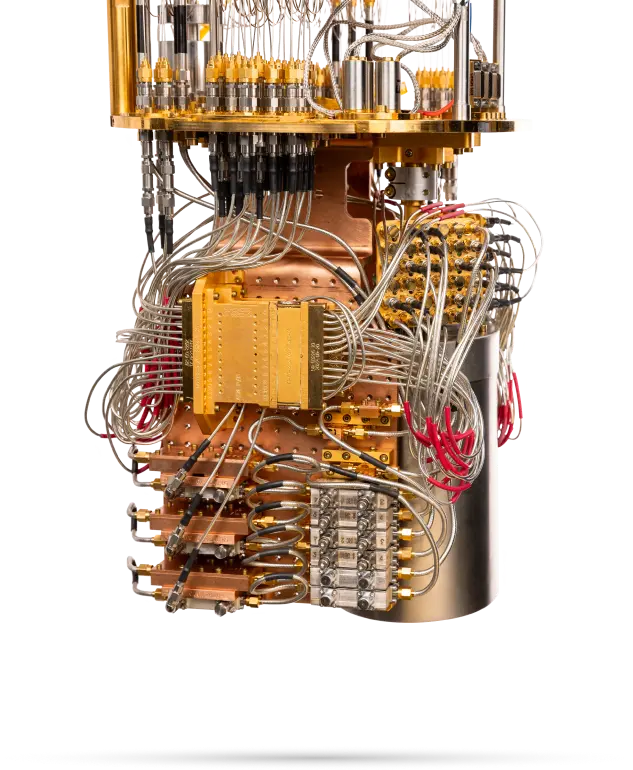
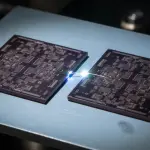
This architecture was demonstrated in 2026 with the deployment of Cepheus-1-108Q, the industry’s largest multi-chip quantum computer, assembled from twelve 9-qubit chiplets. The company’s commitment to in-house manufacturing is evident in Fab-1, its dedicated and integrated quantum device manufacturing facility, allowing for greater control over the production process and potentially reducing reliance on external suppliers.
Net proceeds from stock options and warrants issued contributed to the overall cash flow, while prepayments for property and equipment were recorded as other assets, the company’s account states. These financial maneuvers highlight Rigetti’s ongoing investment in infrastructure and its commitment to expanding its manufacturing capabilities. The company ended the third quarter of 2026 with a strong cash position and no debt, providing flexibility to continue investing in its technology roadmap and customer opportunities, and the company’s proprietary quantum-classical infrastructure provides high-performance integration with public and private clouds for practical quantum computing.
We also signed a definitive $100 million agreement with the U.S. Department of Commerce.
Dr. Subodh Kulkarni, Rigetti CEO



See today’s quantum computing news on Quantum Zeitgeist for the latest breakthroughs in qubits, hardware, algorithms, and industry deals.