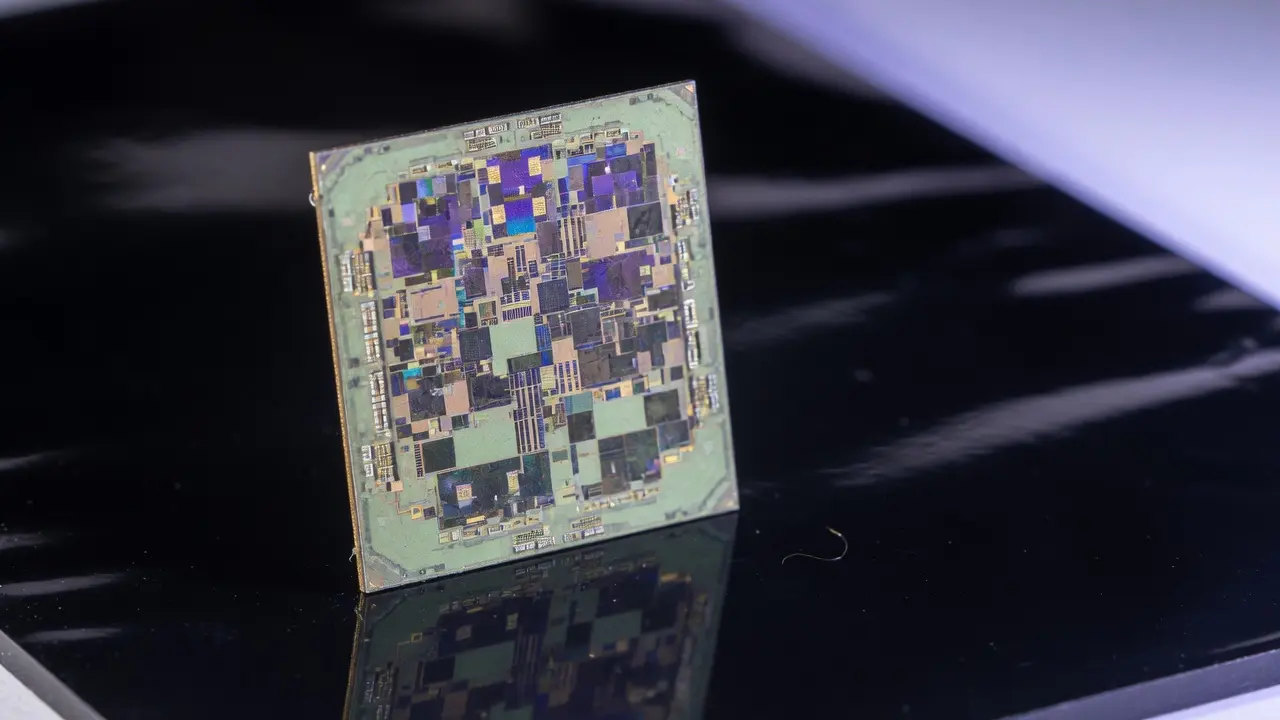
Researchers at Chalmers University of Technology in Sweden and collaborating institutions have achieved 99.9% accuracy for the X gate in single-qubit superconducting quantum processors. The team developed energy-optimal control pulses designed to be resilient to both frequency detuning and variations in waveform, while also minimizing leakage. This level of fidelity, demonstrated with a 90-nanosecond gate duration, surpasses the performance of conventional Gaussian pulses by a factor of ten. These results establish a path toward robust single-qubit control necessary for building large-scale, fault-tolerant quantum computers.
TRIO Pulses Achieve 99.9% Fidelity for Single-Qubit X Gates
Adaptive control schemes paired with optimized pulse envelopes experimentally demonstrated robust gates on a superconducting quantum processor, achieving over 99.9% fidelity for the X gate with a 90-nanosecond duration. The work introduces time-rescaling robust inverse-optimal (TRIO) pulses, a combination of the RIO framework and an adaptive pulse-engineering technique designed to suppress leakage outside the computational subspace.
Beyond the X gate, TRIO pulses also enabled Hadamard-type gates with fidelities exceeding 99.6%, indicating the potential for a universal single-qubit gate set. Interleaved randomized benchmarking confirmed these results, yielding fidelities of 99.91%, 99.69% and 99.62% for the X, Y−π/2, and Xπ/2 gates, respectively.
The robustness of the TRIO pulses stems from their ability to maintain high fidelity across a range of control parameter variations, a critical feature for scaling quantum processors. “By combining robust, energy-optimal trajectories with a time-rescaling technique, we obtain smooth, hardware-compatible waveforms that retain robustness against simultaneous amplitude and detuning errors while suppressing leakage outside the computational subspace,” the researchers write. This resilience is vital, as realizing fault-tolerant quantum computation demands single-qubit gates that remain reliable despite inherent control imperfections.
The team’s methodology involved adjusting virtual-Z rotations to create Xπ/2 and Y−π/2 gates, forming a universal single-qubit gate set alongside the X gate. The resulting waveforms are not only robust but also hardware-compatible, which is an important consideration for practical implementation in large-scale quantum systems. The study’s findings establish a practical foundation for deploying robust control schemes as alternatives to conventional pulses.
These results establish a route toward robust single-qubit control in large-scale quantum processors, advancing the development of fault-tolerant quantum computing, and providing the first experimental demonstration of optimal robust gates. The team’s work highlights the importance of carefully engineered control pulses in mitigating the effects of hardware imperfections and achieving the high levels of fidelity required for reliable quantum computation, and offers a promising avenue for future research in this rapidly evolving field.
Robustness of TRIO Pulses to Amplitude and Detuning Errors
The ability to maintain gate fidelity while simultaneously contending with variations in drive amplitude and qubit frequency is critical for scaling quantum processors, and recent experiments demonstrate TRIO pulses achieving 99.5% fidelity even with 20% amplitude variations and 4 MHz frequency detuning. This level of resilience represents an improvement over conventional Gaussian pulses, which experience a significant fidelity drop under the same conditions, falling to approximately 92%.
The enhanced robustness stems from TRIO pulses’ unique method of modulating both the Rabi frequency and detuning, continuously adjusting the rotation axis on the Bloch sphere, a dynamic approach that contrasts with the fixed rotation axis of standard Gaussian π-pulses. This continuous modification mitigates the accumulation of systematic errors caused by amplitude and detuning fluctuations, a common challenge in superconducting quantum systems.
The team benchmarked this robustness by introducing controlled frequency detuning via adjustments to the coupler’s DC flux bias and by directly modifying the output amplitude of the pulse generator, then characterizing gate fidelity and leakage using interleaved randomized benchmarking. While TRIO pulses demonstrate exceptional robustness, a trade-off exists between gate duration and leakage. Shorter gate times, below 90 nanoseconds, result in a larger area under the TRIO pulse, necessitating a higher-amplitude envelope and consequently increasing leakage to approximately 10-3, a value slightly higher than the 10-5 leakage observed with Gaussian-based π-pulses.
This increased leakage manifests as a lower gate fidelity at shorter time scales, indicating a need for careful optimization of pulse parameters to balance robustness and performance. The resulting infidelity distributions clearly demonstrate TRIO’s superior performance across a range of error realizations.
Experimental Setup: Superconducting Transmon Qubit Implementation
Superconducting transmon qubits served as the platform for experimentally validating the newly developed TRIO pulses, a system using a tightly integrated approach to error mitigation. The processor used in these experiments contained two fixed-frequency transmon qubits, strategically coupled via a flux-tunable coupler, allowing for precise control and manipulation of quantum states. Device parameters and the complete experimental setup are documented in supplemental materials, ensuring reproducibility and transparency of the methodology.
Implementing TRIO pulses required in-phase and quadrature (IQ) control, alongside a compensating virtual-Z rotation, , whose phase was determined through optimal-control solutions and refined through experimentation. The TRIO envelope’s design prioritizes smooth boundaries, a critical feature for compatibility with real-world experimental implementation, while simultaneously preserving the intended trajectory geometry within the (θ,γ) representation. Here, θ and γ denote the qubit mixing angle and global phase, respectively, parameters central to the pulse’s effectiveness.
Perturbed evolution, induced by both amplitude error and frequency detuning, was visually tracked using dashed curves, demonstrating TRIO’s ability to reconverge toward the target state even under these conditions, a stark contrast to the substantial final-state deviation exhibited by conventional Gaussian trajectories. This reconvergence is a key indicator of the pulse’s robustness and its potential for maintaining fidelity in noisy quantum systems.
The Hadamard operation, a fundamental building block for quantum computation, was implemented using a TRIO pulse with an area of 3. 395π, achieving an IRB fidelity of approximately 99. 63(1)%. This operation relies on two virtual-Z rotations, and , applied before and after the core pulse, effectively converting the initial pulse into a standard H gate up to a global phase.
For comparison, a Gaussian-based implementation of the same H gate, using a operation, achieved a slightly higher fidelity of 99. 92(1)%, highlighting a minor trade-off between peak fidelity and overall robustness. The team’s data indicates that TRIO pulses maintain a substantially higher fidelity, around 99. 5%, than conventional Gaussian pulses, which fall to approximately 92%, under combined errors of up to 4 MHz in frequency detuning and 20% in waveform amplitude mismatch.
To reconcile the theoretical optimization with practical implementation, the researchers introduced the robust time-rescaling inverse optimization (TRIO) protocol, a technique designed to preserve the energy-optimal geometric trajectory while constructing smooth, experimentally feasible control fields. This involved a time-rescaling scheme, defining a rescaled time τ with the relationship t = g(τ), where g(0) = 0 and g(τ_f) = , with representing the final time in the rescaled frame and denoting the total gate duration. The manuscript was jointly written by T.H. and J.Z., with revisions contributed by A.F.K. and G.T., highlighting the interdisciplinary nature of the research and the collective expertise brought to bear on this challenging problem.
The Schrödinger evolution remains invariant under this transformation, ensuring the preservation of both the quantum evolution and the geometric trajectory. The researchers explain. Statistical distributions of gate infidelity were generated for both the H and X gates, alongside their TRIO counterparts, under randomly sampled drive-amplitude and frequency-detuning errors.
These errors, denoted by α ∈ [-20,20] % and δ ∈ [-2,2] MHz, were drawn from truncated normal distributions, providing a comprehensive assessment of the pulses’ resilience. The experimental and numerical data supporting this study are available upon reasonable request, furthering the commitment to open science and collaborative research.
Time-Rescaling Robust Inverse-Optimal (TRIO) Pulse Framework
The TRIO pulse framework achieves 99.9% fidelity for the X gate on a superconducting quantum processor, a result exceeding the 92% fidelity of conventional Gaussian pulses of the same duration under similar error conditions. The method simultaneously addresses frequency detuning up to 4 MHz and waveform amplitude mismatches as high as 20%, significantly outperforming conventional approaches in maintaining high fidelity under realistic operating imperfections. This versatility indicates the potential for TRIO to support a universal set of single-qubit gates, a necessary component for complex quantum algorithms.
The smooth TRIO pulse allows for the application of standard DRAG (Derivative Removal by Adiabatic Gate) correction, suppressing leakage to higher energy levels and compensating for the AC Stark shift induced by the finite anharmonicity of the transmon qubits. The resulting control fields, incorporating both leakage suppression and Stark-shift compensation, are derived in detail in the supplemental material accompanying the publication.
This comprehensive approach, combining theoretical optimization with practical hardware considerations, establishes a foundation for deploying robust control schemes in large-scale quantum processors. The complete optimization procedure, including the derivation of the time-rescaling function and reconstructed detuning, is detailed in the supplemental material, providing a resource for other researchers seeking to implement and adapt the TRIO framework.
👉 More information
🗞 Optimal robust single-qubit gates in superconducting quantum processors
✍️ Tangyou Huang et al. (Department of Microtechnology and Nanoscience, Chalmers University of Technology, 41296 Gothenburg, Sweden); Stéphane Guérin (Université Bourgogne Europe, CNRS, Laboratoire Interdisciplinaire Carnot de Bourgogne ICB, UMR 6303, 21000 Dijon, France); Gheorghe Sorin Paraoanu (Department of Applied Physics and InstituteQ, Aalto University, FI-00076 Aalto, Finland)
🧠 ArXiv: https://arxiv.org/pdf/2610.24212v1



See today’s quantum computing news on Quantum Zeitgeist for the latest breakthroughs in qubits, hardware, algorithms, and industry deals.