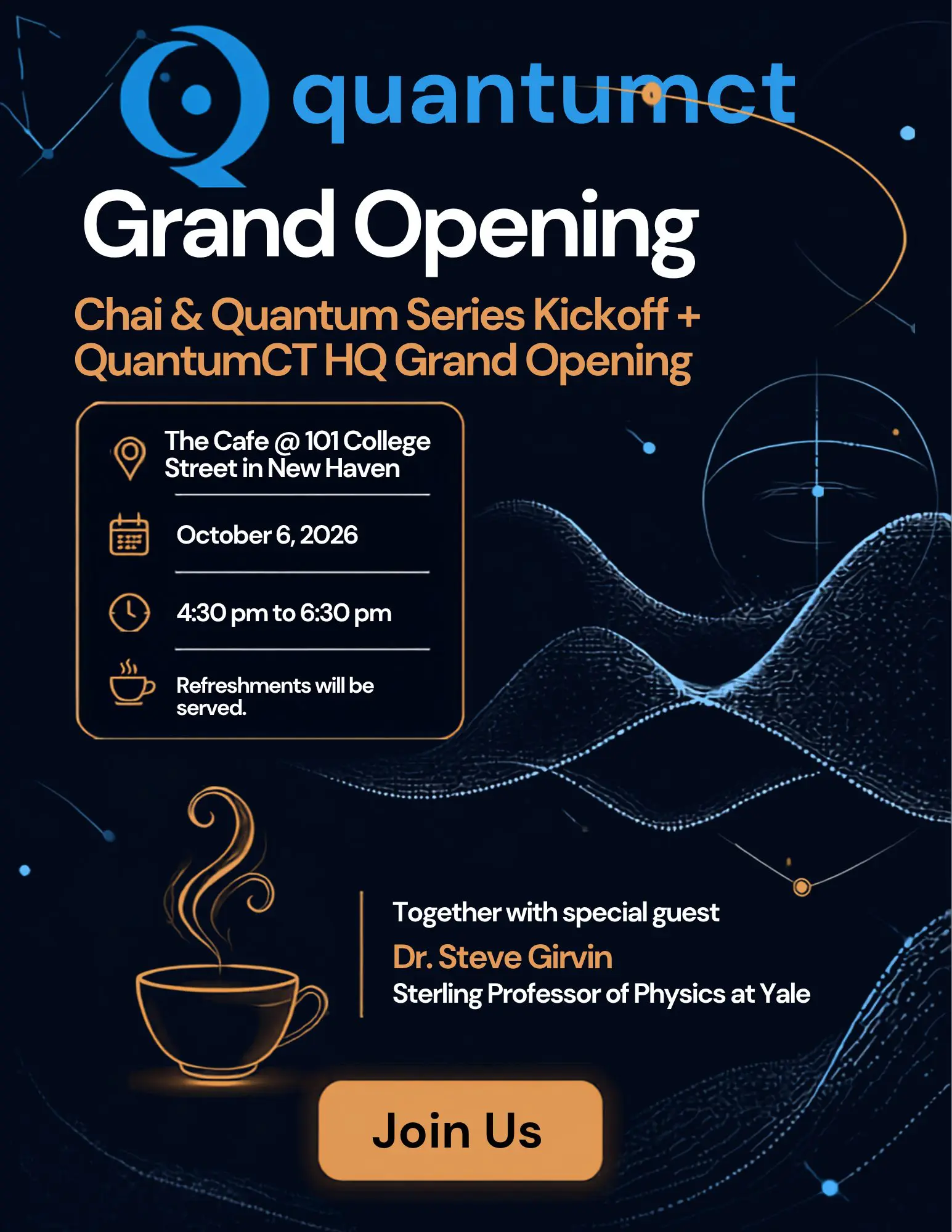
Steven Girvin, Sterling Professor of Physics at Yale University, will begin a new community engagement initiative, offering direct access to expertise in quantum science. QuantumCT designed the series to increase public awareness and encourage connections within the quantum community, launching it alongside the opening of its new home at 101 College Street in New Haven’s innovation district, the company says.
QuantumCT states the series aims to increase awareness of quantum innovation through informal conversations, expert insights, and open dialogue. This event builds momentum toward qiskit fall fest connecticut 2026, signaling a long-term commitment to advancing quantum technologies in Connecticut.
QuantumCT Launches “Chai & Quantum” Community Engagement Series
The inaugural event also celebrates QuantumCT’s relocation to 101 College Street in New Haven, a deliberate location within Connecticut’s growing innovation district. This new space is intended to facilitate collaboration between researchers, entrepreneurs, and policymakers focused on advancing quantum technologies. The program’s launch signifies a commitment to making quantum science more accessible, and the new location reflects the increasing momentum within Connecticut’s tech sector.




See today’s quantum computing news on Quantum Zeitgeist for the latest breakthroughs in qubits, hardware, algorithms, and industry deals.