C12 and Thales have received the 2026 Quantum Effects Award for QuantumTrack, a hybrid quantum-classical solution demonstrating a practical application of quantum computing in real-time radar tracking, the company says. The project achieved a speed improvement of 100 times over competing quantum annealers on a benchmark test, while matching the performance of the best classical solvers.
These results were obtained on Callisto, C12’s quantum emulator, which faithfully reproduces the physical behavior of a processor with up to 20 qubits. “This award is first and foremost a recognition of the work we have been doing with Thales for several years,” said Pierre Desjardins, CEO and co-founder of C12.
Carbon Nanotube Qubits Address Radar’s Multi-Target Tracking Bottleneck
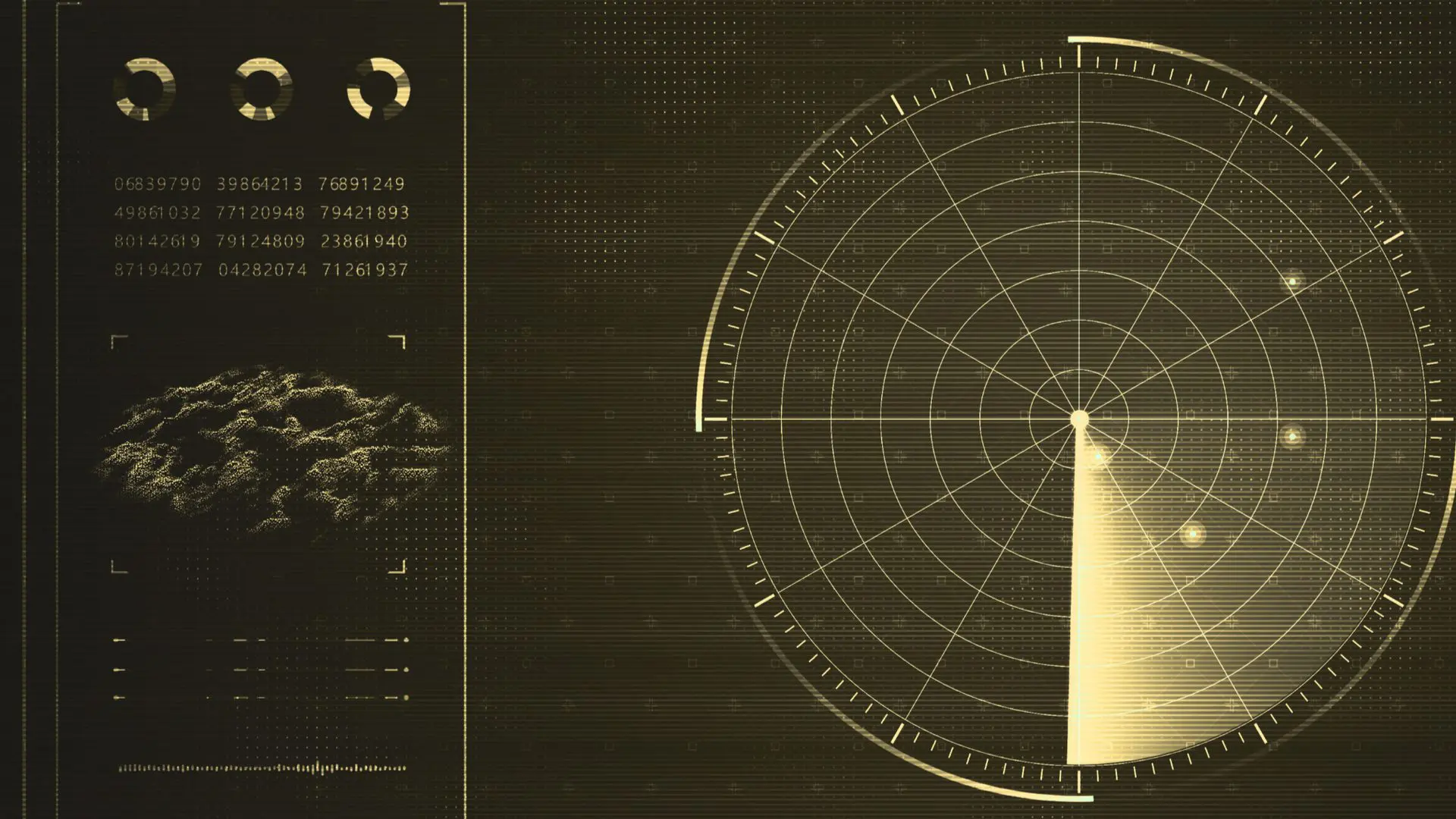
The QuantumTrack project, a collaboration between C12 and Thales, directly addresses a critical limitation in modern radar systems: the exponential growth of computational demand in multi-target tracking. Rather than attempting to solve the entire tracking problem with quantum hardware, the teams implemented a hybrid quantum-classical workflow, partitioning large instances into subproblems suitable for near-term processors. This approach uses the high connectivity inherent in C12’s spin-qubit architecture, built using carbon nanotubes coupled to a microwave resonator, a design known as spin-cQED.
The core challenge lies in the Multiple Hypothesis Tracking (MHT) method, the standard for associating radar detections with known trajectories. As the number of tracked objects increases, the number of possible combinations, hypotheses, grows exponentially, creating a computational bottleneck. Classical solvers must prune these hypotheses to maintain real-time performance, potentially discarding valid scenarios.
This limitation is becoming increasingly acute with the rise of drone traffic demanding new Unmanned Traffic Management (UTM) systems and the emergence of saturation attacks requiring more robust defense systems. Jean-Marc Divanon, Radar CoE Director at Thales, explained that “Multi-target tracking lies at the heart of next-generation radar, which must operate in increasingly dense environments, whether managing drone traffic or countering emerging threats.” Together with C12, we are already exploring how quantum computing can remove this bottleneck, through an approach co-designed all the way from the qubit to the operational system.
The company’s processors, developed at its Quantum Fab in Paris, use spin qubits, quantum bits encoded in the spin of electrons, and are designed for high connectivity. This allows for efficient processing of the subproblems generated by the QuantumTrack algorithm.
C12’s Callisto quantum emulator, capable of simulating up to 13 noisy qubits, helped validate the approach before deployment. The project reflects a broader, ongoing collaboration between C12 and Thales that spans both science and industry. The company, founded in 2020 and backed by €29M+ in funding, is currently developing Aïdôs, its first-generation carbon nanotube spin-qubit processor, planned for 2027.
Aïdôs will demonstrate the company’s first logical qubit operations using 16 physical qubits. The company’s partnership with CEA to develop wafer-scale multi-qubit chips and its EU HiFiQC grant further solidify its position in the emerging quantum computing landscape.
QuantumTrack shows that a quantum processor can take on a real-world operational problem with demanding real-time constraints, and that our carbon nanotube architecture is particularly well suited to this kind of use case.
QuantumTrack’s Hybrid Approach Leverages C12’s Spin-Qubit Architecture
High connectivity between qubits, a unique characteristic of C12’s processors, underpins the architecture of QuantumTrack. Unlike many quantum computing approaches, C12’s spin qubits, fabricated from carbon nanotubes, are not limited by nearest-neighbor interactions, enabling complex calculations across the processor. This feature, combined with the ability to switch between memory and annealing modes, forms the core of the hybrid quantum-classical workflow. The design of QuantumTrack reflects a deliberate co-design strategy between C12 and Thales, extending from the qubit level to the overall radar system.
This collaboration allowed the teams to focus on the most computationally intensive aspect of multi-target tracking, selecting mutually compatible hypotheses and offload it to the quantum processor. The approach divides large problem instances into smaller subproblems, solved via quantum annealing, then integrates the results back into the original tracking graph.
These qubits exhibit record coherence times of 1.3 microseconds, exceeding silicon quantum dots by a factor of 100, a benchmark achieved in 2025. With a team of 62 people, including 22 PhDs, C12 is a key player in the emerging field of carbon nanotube-based quantum computing, and QuantumTrack is a tangible example of its potential.
Multi-target tracking lies at the heart of next-generation radar, which must operate in increasingly dense environments, whether managing drone traffic or countering emerging threats.
Jean-Marc Divanon, Radar CoE Director at Thales



See today’s quantum computing news on Quantum Zeitgeist for the latest breakthroughs in qubits, hardware, algorithms, and industry deals.