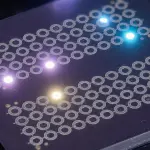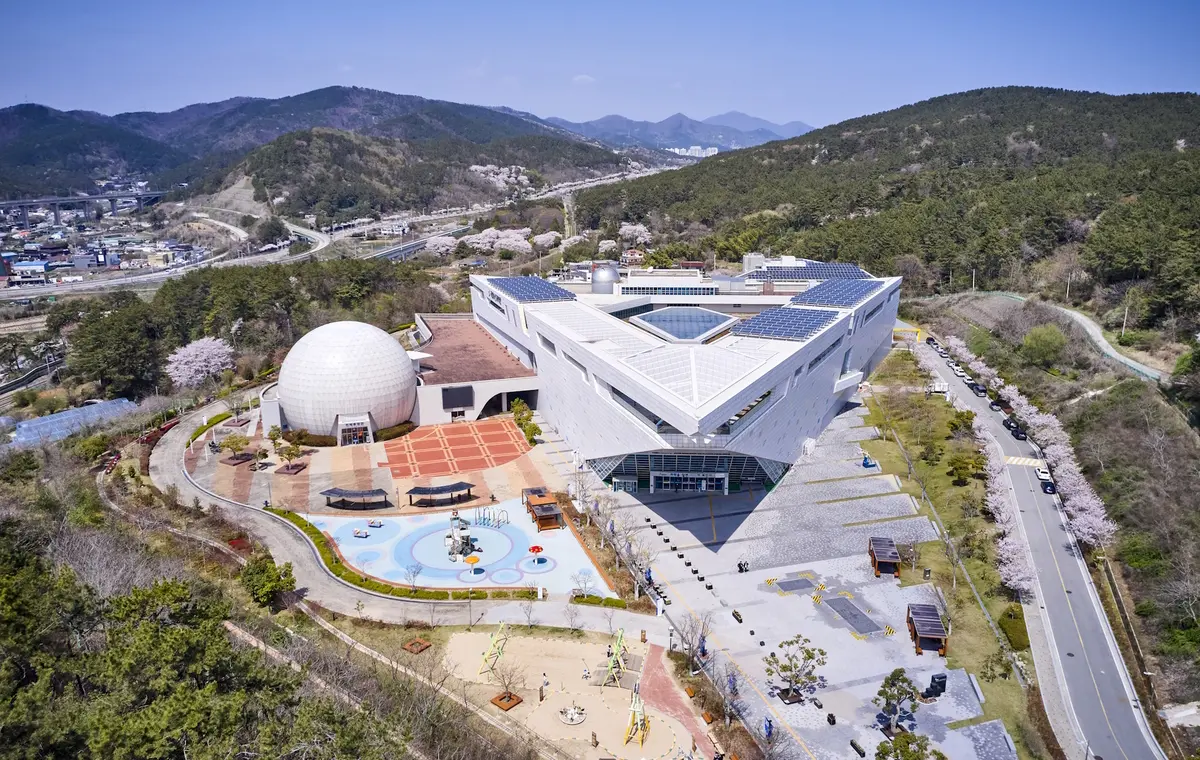
Visitors to Busan’s National Science Museum now explore quantum mechanics by entering an exhibition designed to evoke the Platform 9¾ scene from the Harry Potter series. The exhibition features a model of a 50-qubit quantum computer and an actual quantum processing unit displayed by the Korea Research Institute of Standards and Science.
Running through November 22nd, the program also offers 35 students in grade 4 and above a rare opportunity to tour KRISS labs and witness experiments firsthand. The event aims to deepen understanding of this future technology, explained through interactive displays and a lecture concert on the 21st.
“Quantum Magic School” Exhibits Quantum Principles
KRISS provided the quantum processing unit, allowing the public to view equipment typically confined to specialized research facilities. The exhibition’s design deliberately mirrors the entrance to Hogwarts School of Witchcraft and Wizardry, using a “quantum tunneling” concept as a portal for visitors. This physical representation of quantum tunneling, a fundamental principle governing the behavior of particles at the microscopic level, draws a parallel to the iconic Platform 9¾ scene from the Harry Potter series.
Beyond the static displays, the exhibition incorporates interactive elements designed to explain complex quantum concepts. Visitors can explore the principles of superposition, entanglement and uncertainty through exhibits like a recreation of the Schrodinger’s cat thought experiment and a plasma ball demonstration. The program extends beyond the museum walls with a “Science Field Trip” offering 35 students in the fourth grade and above a unique opportunity to tour KRISS laboratories in Daejeon.
Participants will witness a superconductor experiment and explore the KRISS campus, including the famed “Newton’s apple tree,” gaining firsthand exposure to active quantum research. The exhibition also includes a public lecture and performance, “Quantum Magic × Talk Concert,” held in the museum’s main conference room. Magician Lee Jun-hyung will perform illusions designed to visually represent quantum phenomena like superposition and entanglement.
Following the performance, Choi Jae-hyuk, head of the Quantum Technology Institute at KRISS, will explain the underlying quantum mechanics in a manner accessible to both adults and children. Kwon Soo-jin, head of the science culture division at the National Science Museum in Busan, said, “We designed the program so that people could see and experience quantum science directly and understand it easily, through magic, science lectures and a tour of a research institute.”
The exhibition, running through November 22nd in the small exhibition hall on the first floor of the National Science Museum in Busan, seeks to bridge the gap between abstract theory and tangible experience. The museum’s collaboration with KRISS highlights a commitment to public engagement with advanced technologies.
The exhibition’s design, blending entertainment with education, reflects a deliberate effort to overcome the perceived difficulty of quantum mechanics and inspire a broader appreciation for its potential impact. The combination of physical exhibits, interactive displays, and live performances aims to create a multi-faceted learning experience, making quantum science less a distant concept and more a tangible reality for visitors of all ages.
We designed the program so that people could see and experience quantum science directly and understand it easily, through magic, science lectures and a tour of a research institute.
Kwon Soo-jin, head of the science culture division at the National Science Museum in Busan
Source: https://en.sedaily.com/society/2026/11/06/busan-science-museum-opens-quantum-magic-school-for-public


See today’s quantum computing news on Quantum Zeitgeist for the latest breakthroughs in qubits, hardware, algorithms, and industry deals.