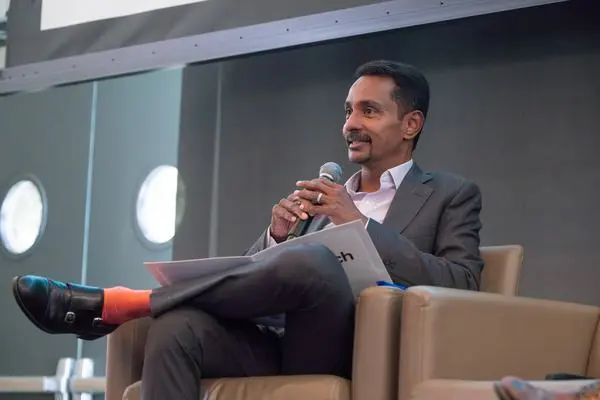
Caltech’s President Ray Jayawardhana highlighted Oratomic, a quantum computing spinoff based in Pasadena, as a prime example of translating scientific achievement into real-world operation at the recent statewide Quantum California Convening. The initiative, launched in November 2025 by the California Governor’s Office of Business and Economic Development and the University of California Office of the President, aims to support a comprehensive quantum innovation ecosystem. Jayawardhana said researchers at Caltech and Oratomic report that a fully realized quantum computer could be operational by the end of the decade due to recent error-correction breakthroughs.
Caltech Partnerships Fuel California’s Quantum Innovation Ecosystem
The $775 million in venture capital secured by Oratomic, a Caltech quantum computing spinoff based in Pasadena, exemplifies the accelerating translation of academic research into commercial ventures within California’s burgeoning quantum ecosystem. This deliberate supporting of connections between research and industry is a key component of the Quantum California initiative.
The initiative’s structure aims to align academic institutions, researchers, national laboratories, industry players, investors and government agencies around a shared vision for quantum technology and workforce development. Manuel Endres, professor of physics at Caltech, along with colleagues John Preskill and Hsin-Yuan Huang, published research in March 2026 demonstrating that a functional fault-tolerant quantum computer may require as few as 10,000 qubits, significantly fewer than the millions previously estimated.
The collaborative spirit extends beyond Oratomic, with Caltech forging partnerships with organizations like Web Services . The Center for Quantum Computing, established on Caltech’s campus in 2021, focuses on superconducting qubits, a distinct approach from Oratomic’s neutral-atom technology. Hirosi Ooguri, Caltech’s Fred Kavli Professor of Theoretical Physics and Mathematics, explained that these partnerships benefit Caltech researchers and students and the broader scientific community.
“For California, this creates opportunities to bring more skilled people into the region and connect university research with industrial development,” Ooguri said. The Jet Propulsion Laboratory , managed by Caltech for, is also deeply involved in advancing quantum technologies, particularly in quantum sensing.
Shouleh Nikzad, chief technologist, emphasized the increasing demand for precision measurements in space science, driving the need for quantum-enhanced capabilities. She noted that the upcoming $1 billion PRIMA mission will use microwave kinetic inductance detectors (MKIDs) invented in 1999 by Jonas Zmuidzinas and Rick LeDuc, demonstrating a direct lineage from Caltech research to operational space technology. “We are focused on high-precision measurements, and not just for the science part of our endeavor, but also for our precision positioning, navigation, and timing,” Nikzad said.
Preskill further explained that research conducted at Caltech in the 1990s “is guiding what companies are trying to do now to realize fault-tolerant machines. … What it means for universities is that we should be strengthening the university effort, because there’s so much we don’t know. “The talent ecosystem here is quite special, and that’s something we should continue to bolster. It’s a whole new discipline of engineering that we’re developing to build these fault-tolerant architectures.” Dolev Bluvstein, co-founder and CEO of Oratomic, highlighted the importance of a skilled workforce for the future of quantum computing. “It’s a whole new discipline of engineering that we’re developing to build these fault-tolerant architectures.”
Big tech companies are making large investments in quantum technologies, and venture capital is fueling a burgeoning start-up ecosystem, but let’s appreciate how we got here.
John Preskill, Richard P. Feynman Professor of Theoretical Physics at Caltech


See today’s quantum computing news on Quantum Zeitgeist for the latest breakthroughs in qubits, hardware, algorithms, and industry deals.