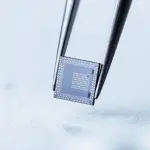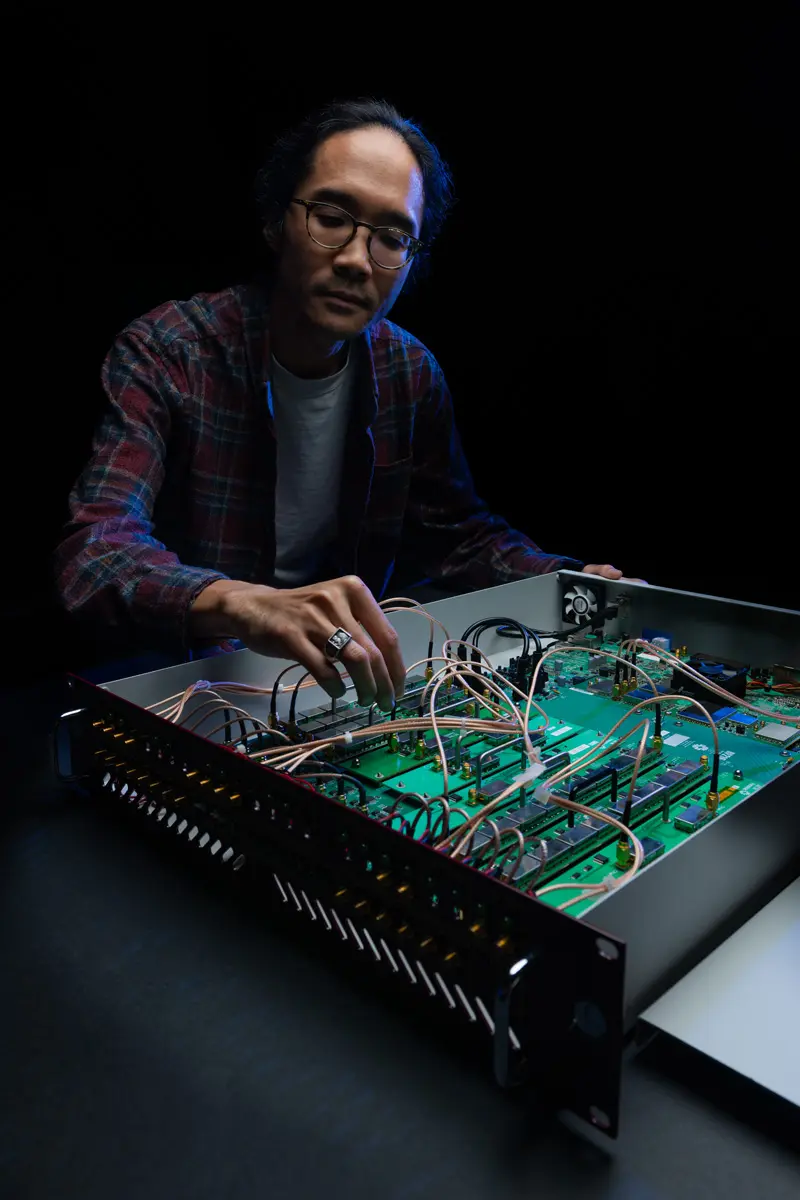
Fermilab has adopted an unusual commercialization strategy for its Quantum Instrumentation Control Kit, or QICK box, allowing Qblox to handle marketing and sales of the device designed and managed exclusively. Originally conceived to aid in the search for dark matter using delicate superconducting qubits, the QICK box now supports nine different quantum system types and has reached hundreds of users.
“Energy I-Corps made us realize that we could really grow our solution,” said Sara Sussman, principal investigator of QICK at Fermilab, after the team completed over 70 interviews to refine its commercialization strategy through the Department of Energy’s program.
Fermilab’s QICK Box Origins for Dark Matter Detection
The team’s participation in the Energy I-Corps program was instrumental in identifying this expanded potential, confirming initial goals and reinforcing the need for continued development of the technology. Fermilab uniquely maintains exclusive design and management of the QICK box, while partnering with Qblox to handle marketing and sales, an unusual approach for a national laboratory. Exclusively designs and manages the product but allows other vendors, such as, to market and sell it.
The QICK box itself represents a significant reduction in size. The team successfully shrunk the system down to a briefcase-sized unit, a considerable improvement over the stacks of hardware traditionally required for quantum control and readout. This portability and reduced footprint are key factors driving its adoption across diverse applications, extending beyond the initial focus on dark matter detection.
Daiane Colombo, Fermilab Entrepreneurial Lead, noted, “The Energy I-Corps program provided a unique and intense two-month learning and hands-on experience.” Colombo and Sussman collaborated to define the commercial direction of the QICK box, building on the initial design intended for precision control of superconducting qubits used in dark matter research. Sussman added, “We’re trying to deliver the highest quality open-source quantum information control kit. That’s the mission for me.” The team is now focused on modernizing the system, integrating automated tune-up procedures and neural networks to accelerate on-chip data analysis.
We’ve achieved our goal of versatility across different quantum platforms. Now we’re focused on modernizing the system to utilize automated tune-up and neural networks to analyze data fast on the chip.
Sara Sussman, principal investigator of QICK at Fermilab
Energy I-Corps Drives QICK Commercialization & Versatility
The QICK box now supports a user base numbering in the hundreds, a significant expansion from its initial design as a dark matter detection tool. This broadened adoption stems from a deliberate shift in commercialization strategy informed by the Department of Energy’s Energy I-Corps program, which facilitated direct engagement with potential customers.
Customer discovery interviews with potential industry partners, the team better appreciated the value of open source to users. The Energy I-Corps program’s intensive two-month format allowed the QICK team to refine its value proposition and identify unmet needs in the quantum information science landscape. “We’ve achieved our goal of versatility across different quantum platforms.” The QICK box’s compact size, roughly equivalent to a pizza box, and open-source design contribute to its appeal, offering a cost-effective and accessible alternative to traditional quantum control systems.
The team is prioritizing further development, with an emphasis on automation and data analysis capabilities, aiming to enhance the user experience and expand the kit’s functionality. “This is all for the benefit of the people using it,” Sussman confirmed, emphasising the commitment to an open and collaborative approach to quantum technology development.
Energy I-Corps made us realize that we could really grow our solution.
Sara Sussman, principal investigator of QICK at Fermilab


See today’s quantum computing news on Quantum Zeitgeist for the latest breakthroughs in qubits, hardware, algorithms, and industry deals.