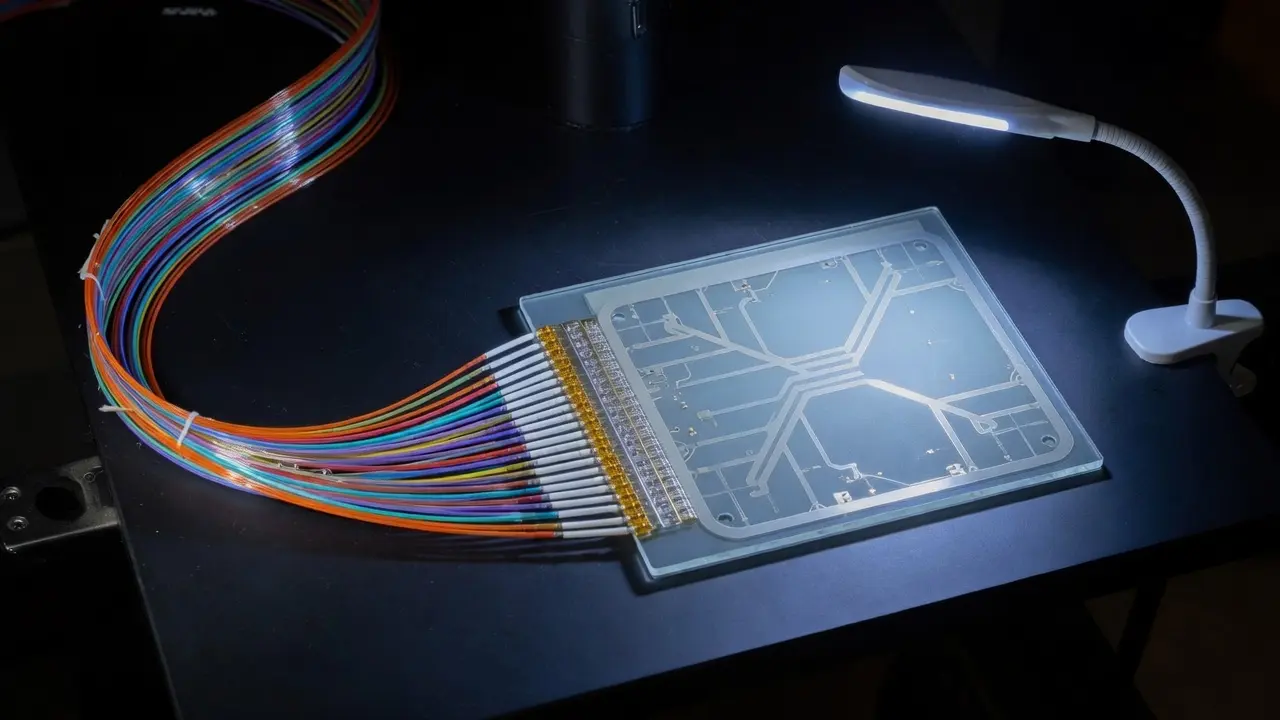
IQM Quantum Computers has fully entangled all 54 qubits on its Emerald processor simultaneously, a feat previously uncommon in commercially available systems where algorithms typically used around 30 qubits reliably. This demonstration shows full-chip performance, allowing cloud users to harness the entire processor for single computations, unlike studies on large quantum chips that often employ only 10 to 20 qubits despite greater hardware availability.
“Entangling the entire chip means every qubit and every connection between them has to work correctly in the same circuit,” said Craig Ciesla, CTO at IQM Quantum Computers. The achievement relies on an automated state-preparation routine and enhanced calibration protocol minimizing idle time and maintaining fidelity above the entanglement threshold.
Qubit Emerald Processor Achieves Full-Chip Entanglement
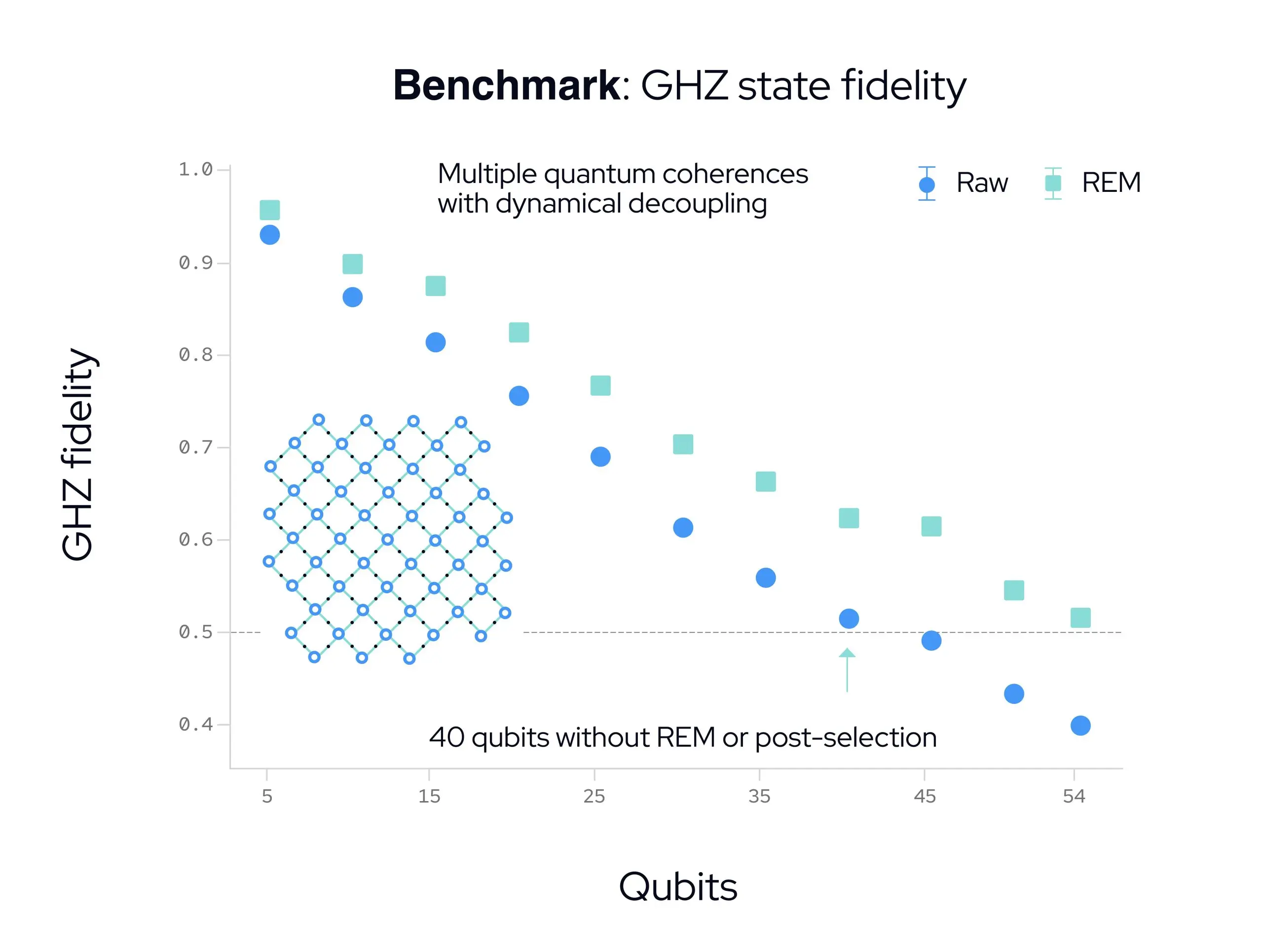
IQM Quantum Computers’ Emerald processor achieved a fidelity of 0.516 across all 54 qubits with readout error mitigation applied, exceeding the classical threshold of 0.500 that distinguishes genuine entanglement from noise. This result demonstrates a significant expansion of usable qubits compared to typical operations, which previously relied on approximately 30 qubits within a single algorithm on the same hardware. The demonstration used a Greenberger-Horne-Zeilinger (GHZ) state, a standard benchmark for large-scale entanglement, prepared across the entire processor to validate the system’s performance at full scale.
This capability is now directly accessible to IQM’s cloud users, allowing them to use the entire processor for their computations rather than being limited to a subset of qubits, IQM Quantum Computers says. “Our current and prospective cloud customers now have the chance to benefit from the same tools and system performance that made this achievement possible,” said Craig Ciesla, CTO, IQM Quantum Computers.
The system intelligently selects the best two-qubit gates, weighing gate fidelity against qubit idle time, and optimizes gate order to maintain performance, according to IQM Quantum Computers. This approach represents a departure from simply scaling up existing methods. Instead, IQM focused on smarter state preparation and gate ordering to achieve full-chip entanglement.
The company reported up to a 50 percent reduction in error rates for quantum operations within the processor, a result of roughly a year of hardware and calibration work across its technical teams. This automated routine is part of a larger effort to automate the operation of quantum computers, alongside AI-driven agentic calibration work intended to further streamline system tuning.
Entangling the entire chip means every qubit and every connection between them has to work correctly in the same circuit.
Craig Ciesla, CTO, IQM Quantum Computers


See today’s quantum computing news on Quantum Zeitgeist for the latest breakthroughs in qubits, hardware, algorithms, and industry deals.