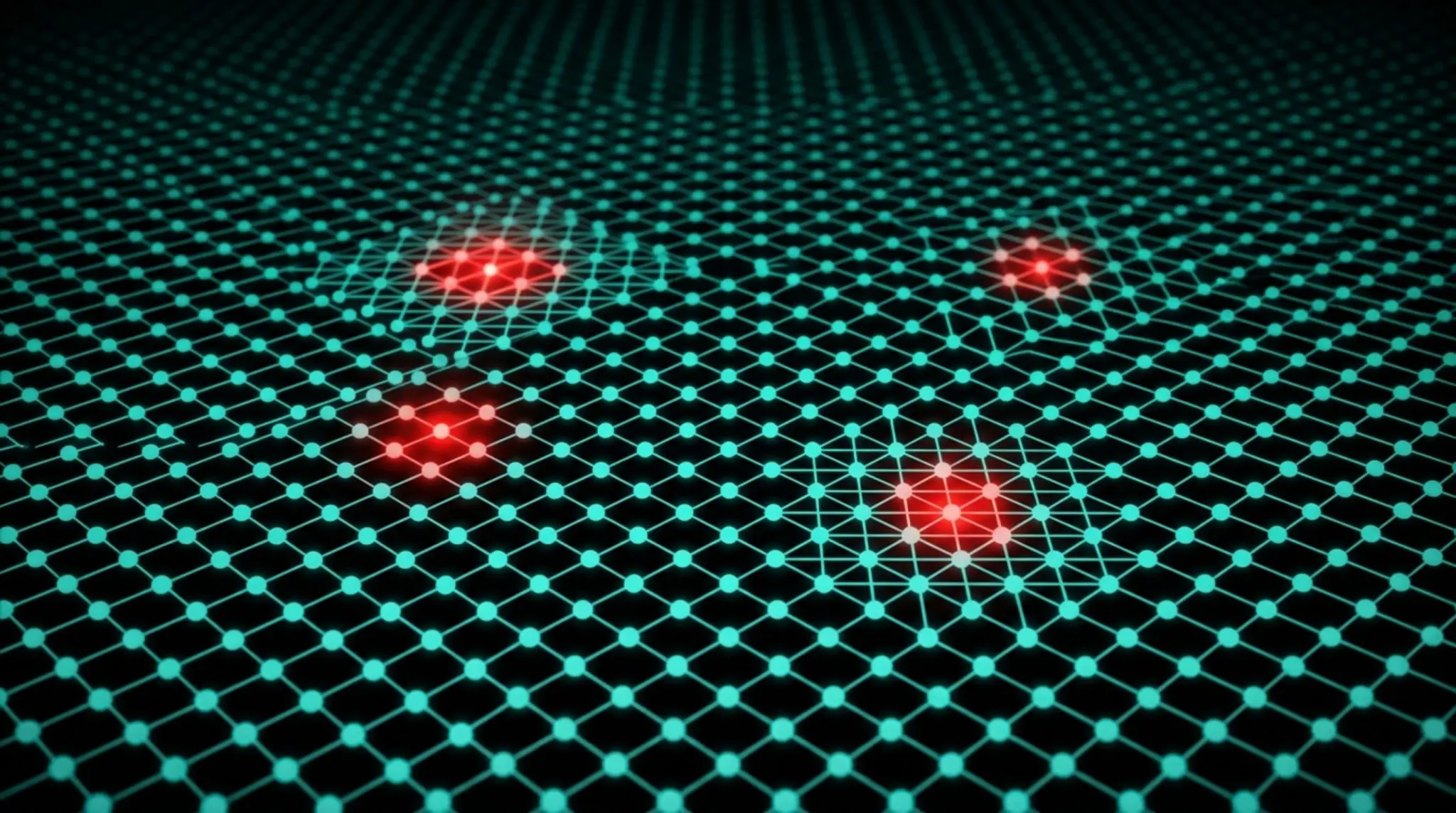
Jeremy B. Kline and colleagues at the Massachusetts Institute of Technology have designed a superconducting qubit achieving microwave-only CZ gates with an infidelity of in just 17 nanoseconds. This new “arm qubit” utilizes two strongly coupled modes, one for data storage and one for coupling, to enable faster, higher-fidelity operations and readout. Simulations demonstrate a Purcell-limited lifetime of 167 milliseconds without requiring a Purcell filter, a component typically needed to extend qubit coherence. These fidelities, achieved through capacitive coupling, position the arm qubit as a promising component for scalable, fault-tolerant quantum computers.
Arm Qubit Design: Coherence and Coupling Architecture
Single-qubit gate infidelities remain below 1×10⁻⁵ within simulations of the new “arm qubit” design, a level of precision enabled by the architecture’s focus on both coupling strength and coherence preservation. This performance surpasses existing experimental benchmarks, suggesting a pathway toward more reliable quantum computations and reduced error correction overhead. The qubit’s design utilizes capacitive coupling exclusively, streamlining fabrication and scalability compared to approaches requiring multiple material layers or complex control schemes.
The architecture achieves a static ZZ coupling, a parasitic interaction hindering computation, of less than 0.4 kHz between data modes, a significant reduction compared to many existing qubit designs. This low level of interaction stems from the isolation of the data modes, facilitated by the arm mode which mediates coupling to external elements without directly impacting the computational states.
Simulations demonstrate cross-Kerr interactions exceeding 350 MHz between the data mode and auxiliary modes, enabling rapid entangling gates despite the minimized parasitic coupling. The ratio of charge operator matrix elements used in simulation was 8.1. The arm qubit’s readout circuit, a capacitively coupled coplanor waveguide resonator, operates without requiring the dispersive regime, a common limitation in many qubit readout schemes. This simplification arises from the inherent isolation between the data mode and any element coupled to the arm mode, allowing for faster and more efficient state determination.
Completed in 17 nanoseconds, this combination of speed and accuracy positions the arm qubit as a strong candidate for building fault-tolerant quantum computers. The team, based at the Massachusetts Institute of Technology, suggests that nonlinear coupling can circumvent the traditional tradeoff between increasing coupling strengths and preserving isolation of computational states.
Fluxonium-Transmon Hybrid Enables Nonlinear Interactions
Nonlinear couplings exceeding several hundred MHz between a data mode and other quantum elements are now achievable with minimal linear coupling, thanks to a new qubit architecture. This design utilizes a dedicated coupling mode, effectively isolating the data storage component from unwanted interactions while facilitating strong connections for gate operations and readout. The qubit, dubbed the “arm qubit”, employs a fluxonium-like mode for data storage and a transmon-like mode to mediate interactions.
The fluxonium component, operating at a lower frequency, between 1-2 GHz, possesses large anharmonicity, enabling precise control and minimizing errors during data storage. Conversely, the higher-frequency transmon mode acts as an “arm,” extending the qubit’s reach to interact with other components of a quantum processor.
Simulated 17ns CZ Gates with 8.6e-5 Infidelity
Simulations reveal microwave-only CZ gates operating with an infidelity of in just 17 nanoseconds. This level of control is enabled by a qubit architecture featuring a dedicated coupling mode that facilitates nonlinear interactions of several hundred MHz between data modes and auxiliary elements while minimizing unwanted linear coupling.
The design demonstrably suppresses ZZ interactions between data modes to less than 0.4 kHz, a critical factor in maintaining qubit coherence and computational fidelity. This performance stems from a large 3 GHz anharmonicity within the data modes, a characteristic also found in fluxonium qubits but operating at a significantly higher frequency, around 1. 5 GHz compared to the typical few hundred MHz of fluxonium designs.
Researchers conducted two simulations, one utilizing a 20 ns square pulse with a linewidth of 100 MHz and another with a 27 ns pulse at 70 MHz, both achieving state assignment errors below 1 x 10⁻⁴. “We show in simulation that this design enables faster, higher-fidelity operation than previous approaches,” the paper states, highlighting the potential for improved quantum computation.
The fidelity calculations incorporate the effects of decoherence, and leakage to non-computational states is accounted for in the calculations, contributing meaningfully to the overall infidelity. Simulated readout results, comparing resonator linewidths of 100 MHz and 70 MHz, reveal average QND infidelities of 2.75 x 10⁻³, alongside corresponding average photon numbers of 3. 49 and 3. 47 for the |0⟩ state.
Fast 27ns Readout with 1e-4 State Assignment Error
Non-dispersive readout achieves a state assignment error of 1 x 10⁻⁴ in just 27 nanoseconds with this new qubit architecture, a speed exceeding typical dispersive readout methods. Simulations indicate this performance is possible assuming a quantum efficiency of 0.5, and relies on a dedicated coupling mode that isolates the data qubit from unwanted decay mechanisms. This design prioritizes rapid measurement without sacrificing fidelity, a crucial step toward scalable quantum processors.
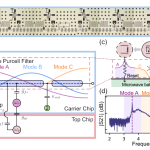
Typically, such filters are essential for extending qubit coherence by suppressing spontaneous emission; however, this qubit’s design inherently protects the data mode, eliminating the need for additional components. This simplification streamlines fabrication and potentially reduces signal loss, contributing to overall system reliability. The simulations reveal a mechanism to suppress shot-noise dephasing, extending the coherence time to 1/Γφ = 15.8 milliseconds, a value critical for complex quantum computations.
The average photon number during readout remains consistent across these variations, at approximately 3.47 and 3.49 for states |0⟩ and |1⟩ respectively. This qubit design also minimizes parasitic interactions that can degrade performance. Specifically, always-on ZZ interaction is held below 0.4 kHz, a significant improvement over designs susceptible to cross-talk. Researchers achieved this by reducing the arm mode junction energy to 13 GHz, effectively suppressing the cross-Kerr interaction between the data mode and the resonator.
The simulations, conducted using the QuTiP software package, model the readout process with a stochastic Schrödinger equation, accounting for realistic noise and decoherence effects. Calculations of quantum nondemolition (QND) infidelity reveal values of when the data mode is in the ground and excited states, respectively, contributing to an overall average QND infidelity. The design also allows for conditional interactions between the data mode and auxiliary elements.
Purcell-Limited Lifetime of 167ms via Arm Mode Isolation
Calculations detail the Purcell lifetime as determined by resonator decay rates as described in the supporting material. The design’s ability to circumvent the need for a Purcell filter is coupled with a demonstrated mechanism to suppress shot-noise dephasing, with 1/Γ_φ = 15.8 ms. This suppression is achieved through careful consideration of the readout resonator’s thermal occupation and frequency, with simulations accounting for an effective temperature of 45 millikelvin.
The shot noise dephasing rate is computed using a formula that incorporates the resonator’s decay rate and thermal photon number, highlighting the interplay between these parameters and qubit coherence. This combination of extended lifetime and suppressed dephasing positions the qubit as a promising candidate for complex quantum computations requiring sustained coherence. This speed is notably faster than typical dispersive readout methods, a consequence of operating outside the dispersive regime due to the inherent isolation between the data and arm modes.
The readout circuit utilizes a standard coplanar waveguide resonator capacitively coupled to the arm mode, using a relatively high resonator frequency and a linewidth of 100 MHz. The researchers state, emphasizing the performance gains achieved through this innovative approach. This is accomplished by a unique configuration where coupling to the arm mode strongly influences the data mode’s behavior, but direct hybridization with the computational states is minimized.
Specifically, states coupled by the capacitive element C23 can strongly interact with the arm mode’s states without significantly affecting the core computational states |00⟩ and |10⟩. This careful isolation is crucial for maintaining qubit fidelity and enabling complex quantum operations.
👉 More information
🗞 Arm qubit: A superconducting qubit co-designed for coherence and coupling
✍️ Jeremy B. Kline, Alec Yen, Stanley Chen and Kevin P. O’Brien
🧠 DOI: http://link.aps.org/doi/10.1103/3l3b-7jsm



See today’s quantum computing news on Quantum Zeitgeist for the latest breakthroughs in qubits, hardware, algorithms, and industry deals.