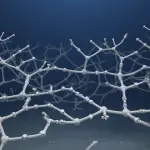
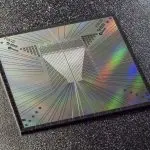
Quantonation leads a $25.5 million seed round in ZuriQ, a spin-out from ETH Zürich, to advance a new approach to building trapped-ion quantum computers. Unlike most designs that arrange ions in one-dimensional chains, ZuriQ utilizes a two-dimensional architecture with ions moving freely across a chip, potentially unlocking greater scalability. “A common misconception is that the quantum race is already decided,” said Christophe Jurczak, Founding Partner at Quantonation, emphasizing the potential for fundamental breakthroughs. In under 18 months, the company has demonstrated a working 3×3 array of individually controlled ions, the largest of its kind to date, fabricated with established industrial partner Infineon. This new funding will support ZuriQ’s expansion and its pursuit of processors capable of supporting thousands of qubits.
ZuriQ’s 2D Architecture with Penning Micro-traps Enables Scalability
Quantonation’s recent $25.5 million investment in ZuriQ signals strong confidence in an alternative approach to scaling trapped-ion quantum computers, diverging from established one-dimensional designs. While many companies build upon arranging ions in linear chains, ZuriQ utilizes Penning micro-traps and static magnetic fields to create natively two-dimensional processors. Professor Jonathan Home of ETH Zürich, a scientific advisor to ZuriQ, explains that this geometric shift is crucial; “Hold ions in a line and the count grows one at a time; hold them in two dimensions, and it grows with the area of the chip.” He posits that this difference represents the potential to move from tens of ions to thousands on a standard chip. This demonstrator represents the largest two-dimensional array of its kind to date, and the underlying chips were produced using established industrial processes with manufacturing partner Infineon.
The company’s growth from four to eighteen employees, attracting talent from organizations like IonQ and Xanadu, underscores its momentum. The new funding will directly support scaling the number of ions supported by ZuriQ’s processors, expanding the research program, and accelerating chip fabrication. Dr. Pavel Hrmo, co-founder and CEO of ZuriQ, believes their architecture offers a distinct advantage; “We spent longer in the lab, and that time allowed us to identify an alternative route that is easier to scale.” He asserts that their two-dimensional design will allow qubit counts to grow more readily than systems based on older designs, ultimately aiming for the thousands of qubits needed for practical quantum computing applications. “The trapped-ion companies that started the race began with one-dimensional designs that were useful stepping-stones, but the real challenge is whether they can successfully pivot to two dimensions as they attempt to scale,” Hrmo added.
A common misconception is that the quantum race is already decided, but that is far from reality.
Christophe Jurczak, Founding Partner at Quantonation
Quantonation recently led a $25.5 million seed funding round for ZuriQ, a Swiss quantum computing company emerging from ETH Zürich, signaling continued investor confidence in diverse approaches to quantum processor development following a $4.2 million pre-seed round in 2025. This investment will directly support ZuriQ’s efforts to scale its unique trapped-ion architecture, expand its growing team, and accelerate the creation of processors capable of supporting hundreds, and eventually thousands, of qubits. The funding reflects a belief that fundamental advancements in physics and engineering can still significantly alter the trajectory of quantum computing scale-up. ZuriQ distinguishes itself from many competitors by eschewing traditional one-dimensional ion arrangements in favor of a natively two-dimensional architecture utilizing Penning micro-traps and static magnetic fields. The company has expanded from an initial team of four to eighteen, attracting personnel from organizations like IonQ, Xanadu, and Hamamatsu.
The trapped-ion companies that started the race began with one-dimensional designs that were useful stepping-stones, but the real challenge is whether they can successfully pivot to two dimensions as they attempt to scale.
Dr. Pavel Hrmo, co-founder and CEO of ZuriQ
Quantonation’s recent $25.5 million investment follows a $4.2 million pre-seed round in 2025, demonstrating continued investor enthusiasm for ZuriQ’s approach to overcoming limitations in current quantum processor development.
Our architecture is two-dimensional from the ground up, so the number of qubits we can place on a chip will grow far more readily than in systems built on a legacy blueprint.

See today’s quantum computing news on Quantum Zeitgeist for the latest breakthroughs in qubits, hardware, algorithms, and industry deals.