Rigetti Computing will receive up to $100 million in funding over three years from the U.S. Department of Commerce to advance superconducting quantum computing research and development, a substantial investment intended to address critical scaling challenges. The funding, allocated through the CHIPS Act, is unique in that the Department will also secure an equity stake in Rigetti consistent with the total funding amount. “Quantum computing will have far reaching impacts on our nation’s national security, economic interests, and overall prosperity,” said Dr. Subodh Kulkarni, Rigetti’s CEO. Secretary of Commerce Howard Lutnick said these investments will lead the world into a new era of American innovation.
Rigetti and U.S. Government Quantum Computing LOI
The U.S. Department of Commerce has committed a figure that underscores the growing federal investment in quantum technologies and specifically targets scaling challenges within superconducting qubit research. This is not a traditional grant; the Department will receive an equity stake in Rigetti proportional to the funding amount, signaling a deeper, longer-term partnership than typical research sponsorships. The investment, channeled through the CHIPS Act, aims to bolster U.S. leadership in a field considered critical for both national security and economic competitiveness.
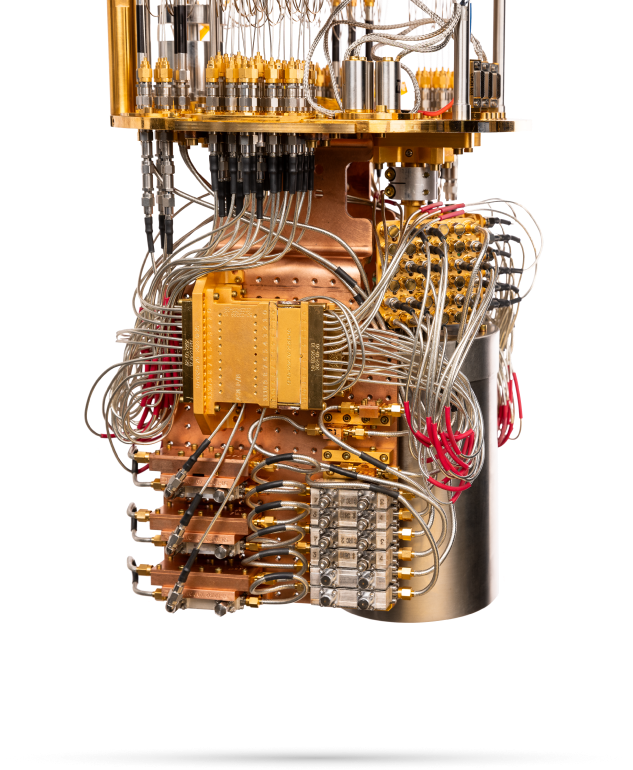
The letter of intent details plans for Rigetti to pursue research and development projects focused on overcoming key technical hurdles in building larger, more stable quantum computers. Rigetti’s current systems, utilizing superconducting qubits, already achieve gate speeds of nanoseconds, approximately 1,000 times faster than alternative qubit modalities like trapped-ion or neutral-atom systems. The funding is expected to accelerate progress toward quantum leadership and technological resilience, highlighting the anticipated benefits for national defense, materials science, and other fields. The company has already demonstrated a 108-qubit machine, built using a proprietary chiplet-based technology, at its Fab-1 manufacturing facility. Dr. Subodh Kulkarni, Rigetti’s CEO, said, “We are honored that the U.S. government is seeking to partner with Rigetti to accelerate the pace of quantum computing commercialization and to bolster U.S. leadership in this field.” This investment suggests a sustained commitment to quantum computing, regardless of shifting political landscapes, and a belief in its potential to reshape multiple sectors.
CHIPS Act Funding for Superconducting Qubit R&D
The pursuit of scalable quantum computing continues to draw significant investment, with superconducting qubits currently holding a prominent position in the technology’s development. This speed is crucial as researchers grapple with the complex challenges of maintaining qubit coherence and minimizing errors. Recent financial commitments from the U.S. Department of Commerce signal a deepening governmental stake in this technology. This move underscores a belief in Rigetti’s potential and a desire to directly benefit from its advancements. This investment is expected to accelerate progress toward a milestone that promises to unlock the technology’s transformative potential.
The Department of Commerce’s incentives strengthen and accelerate U.S. quantum leadership and technological resilience.
Bill Frauenhofer, Executive Director of Semiconductor Investment and Innovation
Rigetti’s Chiplet Technology and QPU Systems
Rigetti Computing is actively addressing a core challenge in quantum processing: scalability. Rather than pursuing monolithic qubit designs, the company has adopted a chiplet-based approach to building larger, more powerful quantum processing units (QPUs). This strategy, evidenced by the deployment of Cepheus-1-108Q, utilizes twelve 9-qubit chiplets tiled together, representing a significant step toward increasing qubit counts without sacrificing performance. The investment comes from the U.S. Department of Commerce, allocated through the CHIPS Act. Rigetti’s proprietary chiplet technology, combined with in-house manufacturing at Fab-1, the industry’s first dedicated quantum device manufacturing facility, allows for greater control over the production process and potentially faster iteration cycles. The company also offers the Novera QPU, a 9-qubit system designed for broader R&D access, intended to plug into existing cryogenic and control systems. Secretary of Commerce Howard Lutnick said, “With today’s CHIPS Research and Development investments in quantum computing, the U.S. is leading the world into a new era of American innovation.” Dr.
With today’s CHIPS Research and Development investments in quantum computing, the Trump administration is leading the world into a new era of American innovation.
Secretary of Commerce Howard Lutnick
Quantum Computing Applications in National Security & Beyond
The escalating investment in quantum computing extends far beyond theoretical physics, with tangible implications for national security and economic competitiveness. Rigetti Computing’s recent letter of intent with the U.S. Department of Commerce is strategically targeted at bolstering U.S. leadership in a field deemed critical for both national defense and economic advancement, with implications spanning advanced materials, biopharmaceutical discovery, financial modeling, and energy systems. Bill Frauenhofer, Executive Director of Semiconductor Investment and Innovation, emphasized that “The Department of Commerce’s incentives strengthen and accelerate U.S. quantum leadership and technological resilience.” Rigetti’s own advancements, such as the deployment of the industry’s largest multi-chip quantum computer, Cepheus-1-108Q, built from twelve 9-qubit chiplets, demonstrate a clear path toward more powerful systems. Dr.
Quantum computing will have far reaching impacts on our nation’s national security, economic interests, and overall prosperity.
Dr. Subodh Kulkarni, Rigetti’s CEO



See today’s quantum computing news on Quantum Zeitgeist for the latest breakthroughs in qubits, hardware, algorithms, and industry deals.