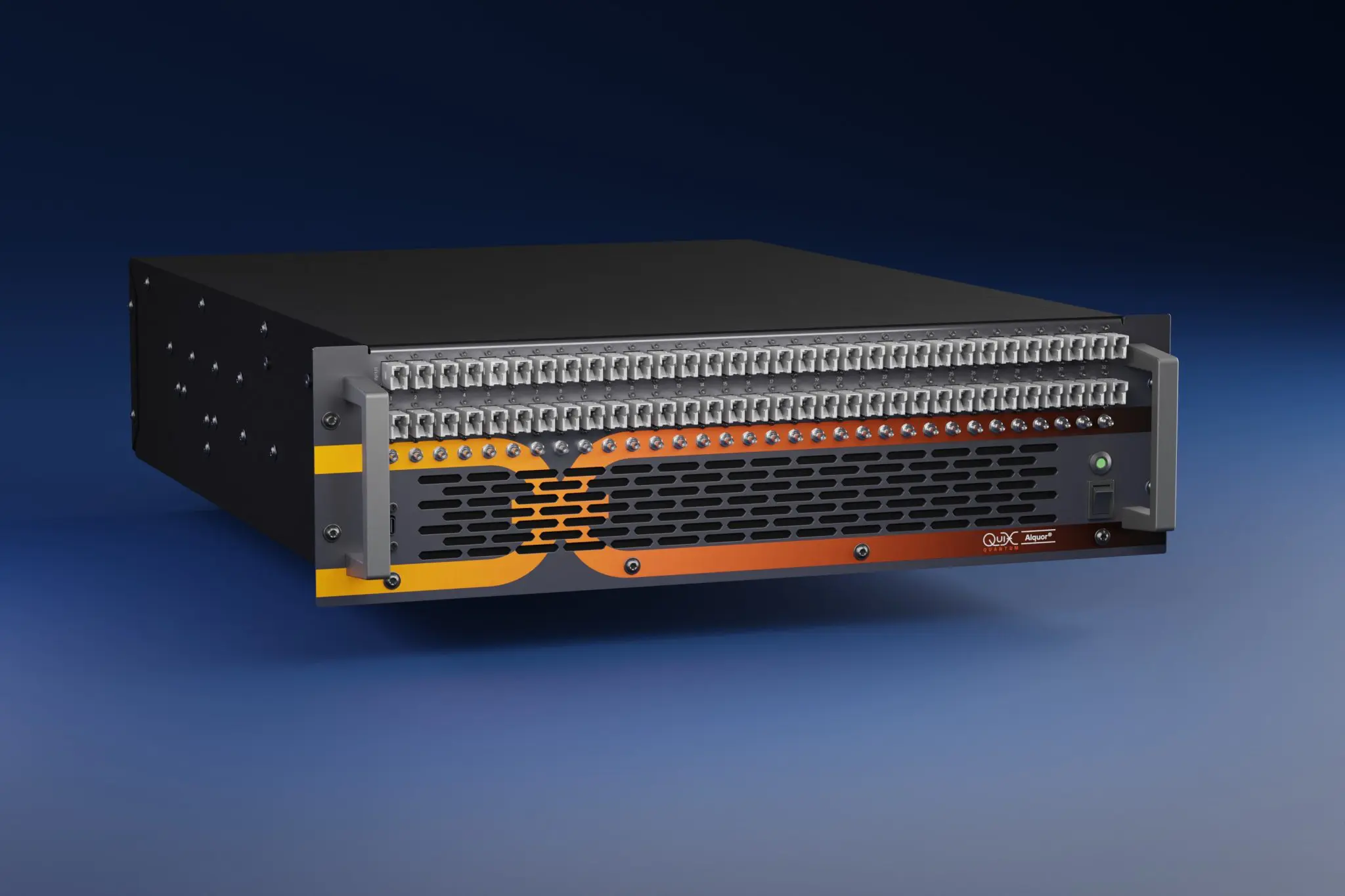
QuiX Quantum has introduced the Photonic Assembly Control Unit, or PACU, a rack-mountable system designed to host up to 1,000 phase shifters and standardize control for its photonic quantum systems. This new unit addresses a critical engineering challenge in photonic quantum computing: reliably managing the increasing number of tunable elements required for more complex chips. PACU supports both 1,000 low-speed and 32 high-speed phase shifters, offering a tiered control approach for diverse quantum operations and integration with existing high-speed systems. “As photonic quantum chips become more capable, the systems around them must scale as well,” said Stefan Hengesbach, CEO of QuiX Quantum. “PACU gives us a common control architecture across our photonic platform,” designed to facilitate modularity and integration into larger quantum computing environments.
Photonic Assembly Control Unit Enables Scalable Quantum Systems
QuiX Quantum has unveiled a new system component designed to overcome a major hurdle in scaling photonic quantum computers: control complexity. Unlike earlier, bespoke control systems, PACU standardizes the interface between classical electronics and the delicate quantum states manipulated within photonic chips, a critical step for building larger, more reliable machines. This isn’t simply about adding more components; it’s about creating a cohesive architecture that can handle the intricate orchestration of hundreds, and eventually thousands, of quantum operations. This nuanced design allows for efficient allocation of resources, optimizing performance and reducing energy consumption. The inclusion of 32 high-speed connectors is particularly noteworthy, anticipating the needs of advanced measurement-based photonic quantum computing architectures. The unit’s 3U, 19-inch rack-mount design, complete with Ethernet and USB connectivity, signals a deliberate move toward compatibility with existing data center infrastructure, a crucial factor for eventual commercial deployment.
Beyond sheer capacity, PACU addresses practical concerns surrounding maintenance and reproducibility. Replacing or upgrading components is streamlined through board-to-board connectors, eliminating fragile flat cables and enabling hot-swappable operation. Internal monitoring and overheat protection further enhance system stability and reliability. QuiX Quantum emphasizes that PACU isn’t just about supporting current photonic chips; it’s about establishing a repeatable control architecture for future universal quantum computing systems.
PACU Architecture Supports 1,000 Phase Shifters & Rack Integration
The pursuit of scalable quantum computing necessitates more than just advances in qubit technology; it demands a parallel evolution in the control systems that orchestrate these delicate quantum states. Existing control architectures often struggle to accommodate the increasing complexity of photonic quantum processors, presenting a significant bottleneck to progress. This tiered approach allows for optimized resource allocation, handling both intricate and simpler operations within a single system. This increase in control density is coupled with a practical design focused on integration. The PACU’s 3U, 19-inch rack-mountable form factor signals a departure from purely laboratory-bound quantum experiments, aligning with the demands of data center and high-performance computing environments. Features such as Ethernet and USB connectivity, air cooling, and E2000 optical connectors demonstrate a commitment to operational stability and ease of serviceability. The PACU is designed to improve the reliability and maintainability of photonic quantum systems, to its capacity.
Photonic assemblies connect via board-to-board connectors rather than fragile flat cables, enabling hot-swappable operation and a more resilient interface. This focus on practical engineering extends to condition feedback from the photonic assembly to the control unit, and overheat protection mechanisms.
It is designed to make our systems more modular, maintainable and ready for integration into larger quantum computing environments.
Stefan Hengesbach, CEO of QuiX Quantum


See today’s quantum computing news on Quantum Zeitgeist for the latest breakthroughs in qubits, hardware, algorithms, and industry deals.