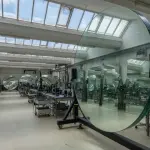
Immanuel Bloch, Chair of Experimental Physics at LMU and Director at the Max Planck Institute of Quantum Optics, will share the Wolf Prize with Jun Ye for advances in controlling ultracold atomic systems. Bloch’s research establishes quantum simulation as a key approach to understanding complex quantum many-body systems, allowing researchers to investigate fundamental phenomena under precisely defined conditions.
Among his landmark achievements is the observation of the quantum phase transition from a superfluid to a Mott insulator, a shift in the fundamental behavior of matter. “This really came as a huge surprise yesterday!” said Professor Bloch, adding that the prize is “wonderful recognition for all the members of our teams and for Munich as a center of scientific research.”
Bloch’s Research Defines Quantum Simulation Paradigm
Bloch’s research has revealed a complex pathway of quantum material behavior, observing a fermionic Mott insulator evolving from a pseudogap metal to a Fermi liquid. This progression provides insights into the properties of solids and novel quantum materials.

This observation builds on the team’s success in arranging ultracold atoms within optical lattices constructed from laser light, allowing for controlled interactions and precise observation of individual particles. The team’s development of quantum gas microscopy is a technique enabling observation and control of individual atoms within these ultracold systems with extraordinary precision, and this level of control allows scientists to recreate and study complex quantum systems, providing deeper insights into the fundamental properties of quantum matter.
Bloch’s work has decisively shaped the paradigm of quantum simulation, establishing it as a vital experimental approach to studying complex quantum systems. The Wolf Foundation recognizes these transformative, widely applicable advances in the control of ultracold atomic systems, acknowledging the far-reaching implications for both modern physics and emerging quantum technologies.


See today’s quantum computing news on Quantum Zeitgeist for the latest breakthroughs in qubits, hardware, algorithms, and industry deals.