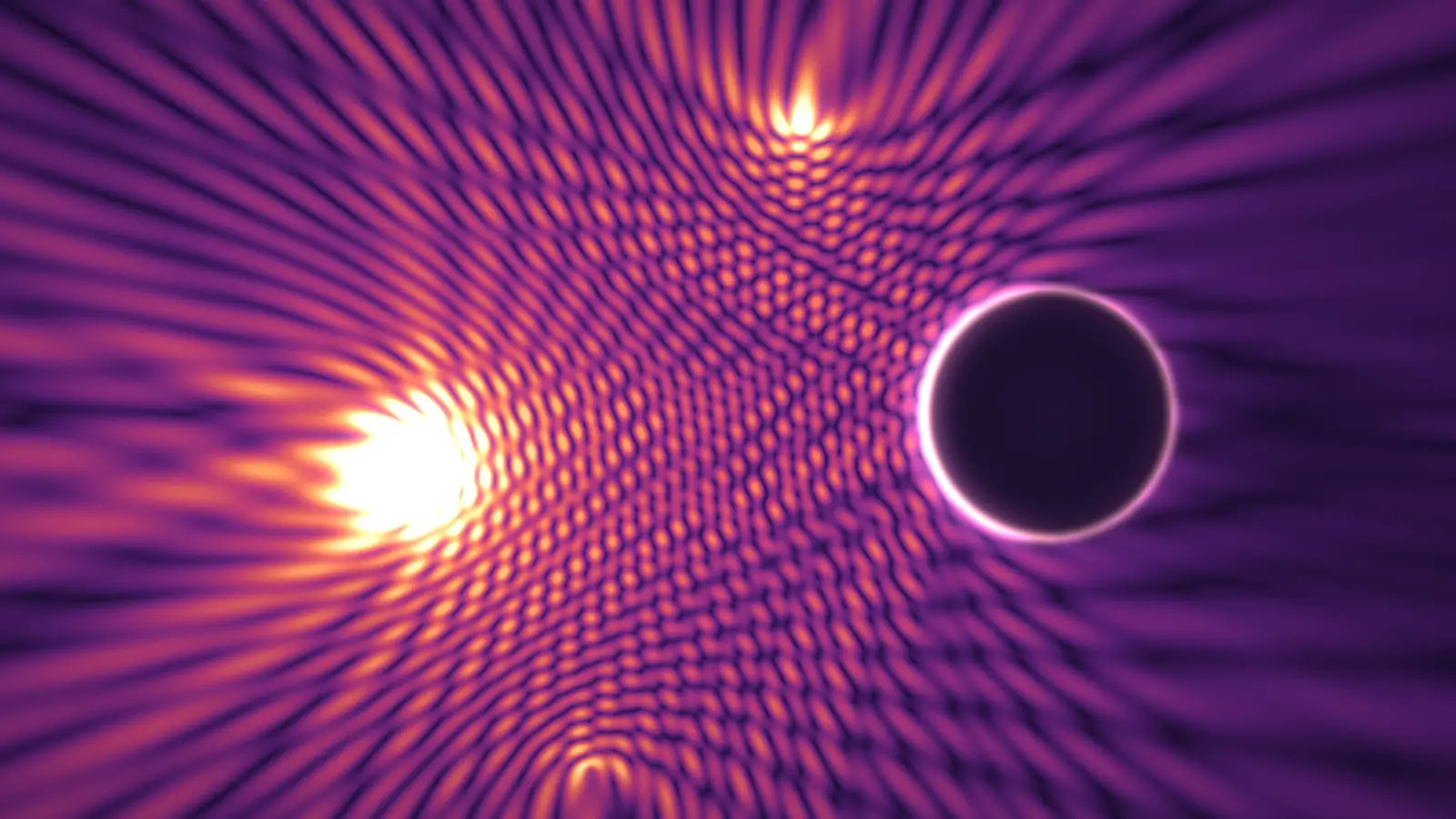
Researchers from Quantum Computing and the Department of Electrical and Computer Engineering, University of Waterloo have detailed a scheme achieving nearly unity probability of single photon subtraction under ideal conditions. The work demonstrates a path toward more precise quantum experiments by coupling Λ-type emitters with chiral slow-light photonic crystal waveguides for efficient photon removal. This approach utilizes Single Photon Raman Interaction, or SPRINT, and offers a potentially practical alternative to systems requiring cold atom integration, as solid-state emitters could enable realization of the scheme.
SPRINT Scheme for Deterministic Photon Subtraction
A near unity probability of single photon subtraction is theoretically achievable using a newly proposed scheme, potentially unlocking more precise quantum experiments. Researchers detailed the approach, termed Single Photon Raman Interaction, or SPRINT, in a recent publication focusing on the coupling of a three-level quantum emitter with a chiral waveguide. The work demonstrates a pathway toward deterministic control over photons, a critical step for advanced quantum technologies requiring precise manipulation of light.
The proposed SPRINT scheme relies on the specific interaction between photons and Λ-type emitters, coupled with chiral slow-light photonic crystal waveguides to efficiently remove single photons from a light stream. Analytical and numerical studies detailed in the publication suggest that, under ideal conditions, the probability of subtracting a single photon can approach unity; this level of control surpasses previous methods and minimizes loss inherent in probabilistic photon subtraction techniques.
This enhanced efficiency is crucial for applications demanding high-fidelity quantum states, such as quantum key distribution and quantum computation. Integrating cold atoms into these systems presents significant technical hurdles, but the researchers highlight solid-state emitters as a potentially practical alternative for realizing deterministic photon subtraction. The study reports that “the use of chiral slow-light photonic crystal waveguides coupled to Λ-type emitters can perform efficient photon subtraction,” outlining a specific combination of materials and structures for experimental implementation.
The team’s analysis considered both coherent and Fock state inputs, demonstrating the scheme’s versatility across different light sources. Pasharavesh, Sarkar, and Venuturumilli are listed as equal contributors to the work, indicating a collaborative effort to explore the feasibility of this approach. The researchers acknowledge that further editing was underway at the time of publication, noting the manuscript was provided for early access.
The potential of various quantum emitter-waveguide platforms as candidates for experimental realization was also discussed. The findings, published in npj Quantum Information, offer a promising route toward building more robust and reliable quantum systems.


See today’s quantum computing news on Quantum Zeitgeist for the latest breakthroughs in qubits, hardware, algorithms, and industry deals.