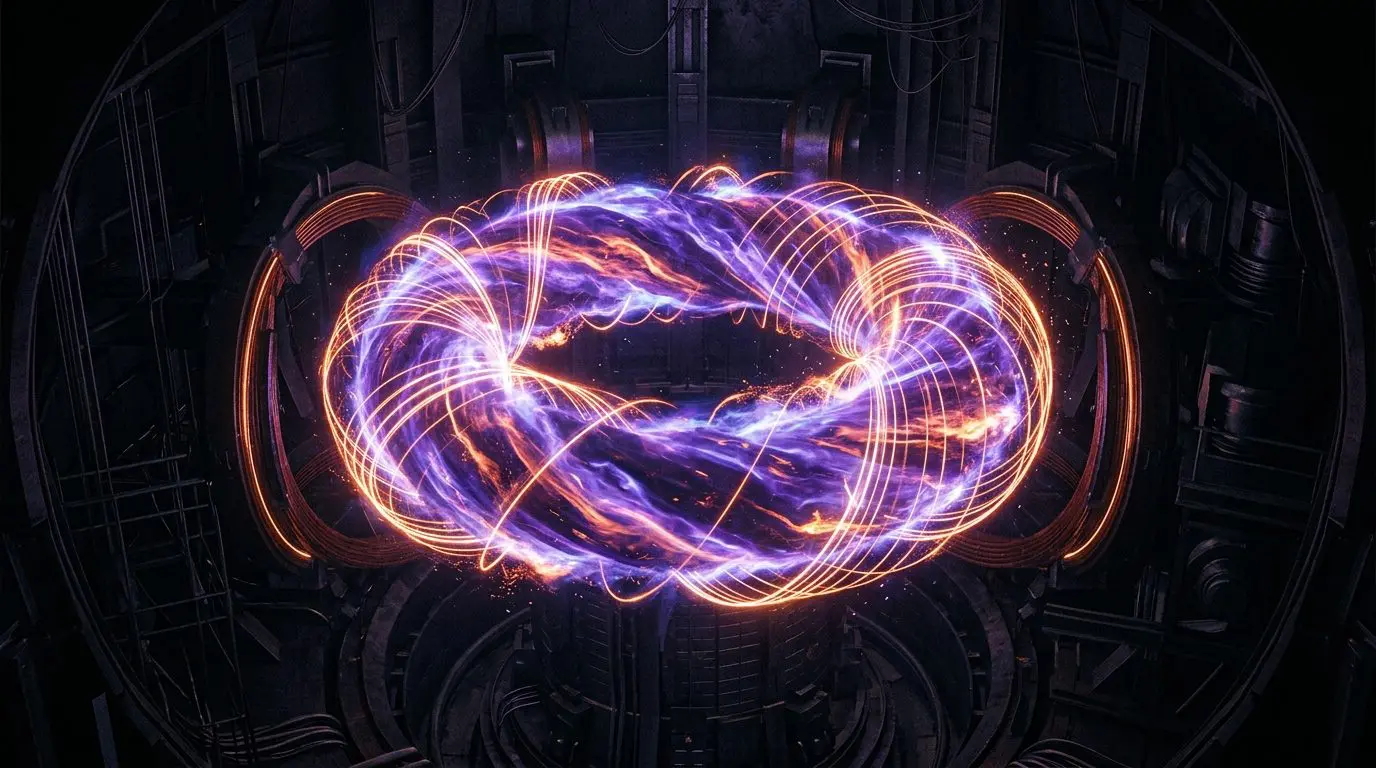
The United Kingdom Atomic Energy Authority and Princeton Plasma Physics Laboratory are forging a transatlantic link between their advanced supercomputers, creating the SUNRISE-STELLAR-AI Federation. This partnership connects UKAEA’s SUNRISE mission-focused AI supercomputer with PPPL’s STELLAR-AI platform, and will utilize data from experiments at the MAST Upgrade facility in Oxfordshire and the NSTX-U facility in New Jersey to train shared artificial intelligence models.
“Fusion is one of the great scientific and engineering challenges of our time,” says Joe Milnes, Executive Director for Engineering and Computing at UKAEA; “To solve these challenges, fusion needs partnerships.” The collaboration, formalized at the Global Fusion Policy Summit in London, aims to accelerate the design of future fusion power plants and promote regulatory harmonization for investors.
SUNRISE & STELLAR-AI Federation Accelerates Fusion Energy Development
UKAEA’s SUNRISE supercomputer and PPPL’s STELLAR-AI platform will now share data, accelerating the development of artificial intelligence models specifically tailored for fusion research, rather than relying on general-purpose computing approaches. This transatlantic connection represents a focused effort to use AI’s potential in addressing the complex challenges inherent in achieving sustainable fusion energy, a goal that demands increasingly sophisticated computational tools.
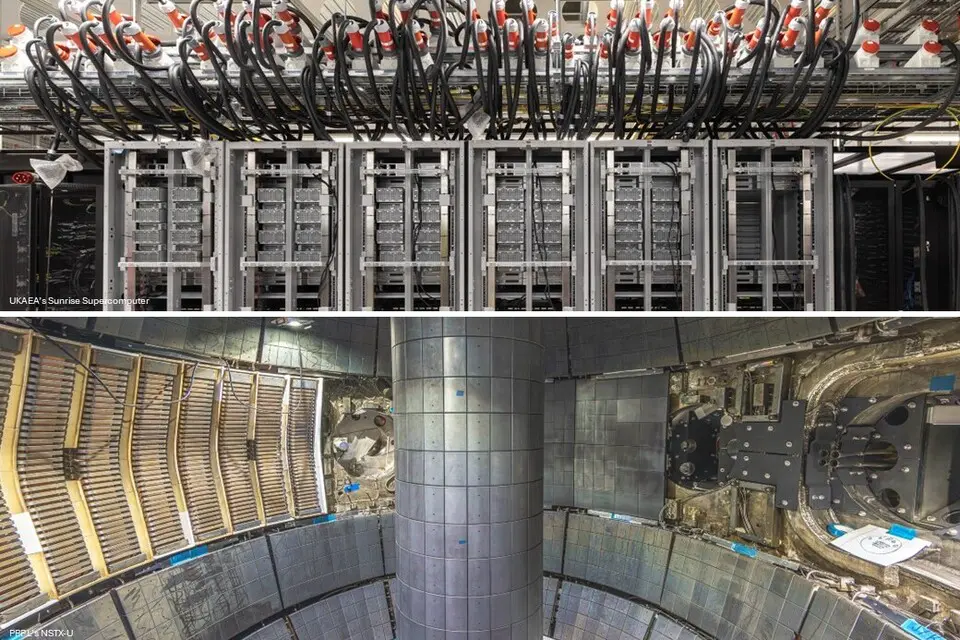
This reliance on real-world experimental results is critical, as it allows the AI to learn from the nuances and complexities of actual fusion plasmas, improving the accuracy and reliability of its predictions, UKAEA says. Researchers will be able to develop more powerful machine-learning models that better capture the underlying physics, accelerating future fusion projects like the UK’s Spherical Tokamak for Energy Production, known as STEP Fusion, and US concepts such as PPPL’s Spherical Tokamak Advanced Reactor, or STAR.
The collaboration aims to shorten the design cycle for future fusion power plants by combining supercomputing power and expertise, making more effective use of existing experimental data, and providing a shared platform for the next generation of fusion scientists on both sides of the Atlantic. Both MAST Upgrade and NSTX-U utilize similar compact spherical tokamak designs, a characteristic that enhances their suitability for joint AI training, as models trained on data from a single machine often struggle to generalize to different configurations. The federation intends to cultivate the next generation of fusion and AI specialists through training programs, workshops, research opportunities, and broader international collaborations.
Rob Akers, Director of Computing Programmes and Senior Fellow at UKAEA, explained that the organizations would draw on experimental data from both leading fusion machines, using simulation to fill data gaps and extend datasets into unexplored regimes. “The real power will come from working as one team. Together, we can learn faster and learn more, extracting maximum insight.” Researchers also plan to explore the creation of digital twins of both facilities, detailed virtual copies of the physical fusion machines supported by continuous data from ongoing experiments.
These digital twins will allow scientists to test modifications and predict machine behavior in a software environment before implementing changes in the physical hardware, significantly reducing the time and cost associated with experimentation. The team will investigate methods for seamlessly transferring computing jobs between the platforms, which utilize different hardware, enabling scientists to select the optimal supercomputing resource for each specific problem.
Shantenu Jha, Head of Computational Sciences at PPPL, articulated the vision for a unified computational ecosystem. “Our goal is to let models and experiments move freely between the two systems.” The SUNRISE-STELLAR-AI Federation builds upon a memorandum of understanding signed in June, establishing a framework for joint work between the two organizations and solidifying their commitment to accelerating the path towards commercially viable fusion energy.
The £45 million investment from the UK government in SUNRISE, the UK’s first AI supercomputer dedicated to fusion energy, underscores the nation’s commitment to this technology, while STELLAR-AI, operated with support from Princeton University, provides a complementary platform in the United States.
Jonathan Menard, Chief Scientist at PPPL, emphasized the necessity of international collaboration. “A fusion power plant is one of the most complex machines humanity has ever tried to build and no single laboratory or nation will design it alone.
By federating the SUNRISE and STELLAR-AI computer platforms, we can train AI on data from two leading fusion facilities, test ideas across two of the most capable computing systems in the world that are designed for fusion research, and accelerate the path to a compact fusion power plant.” The federation’s success hinges on this shared expertise and the ability to use AI to overcome the remaining hurdles in realizing the promise of fusion energy.
UKAEA and PPPL would draw on experimental data from two world-leading fusion machines, using simulation to fill the gaps and extend those datasets into regimes we have yet to explore.
Shantenu Jha, Head of Computational Sciences at PPPL
See today’s quantum computing news on Quantum Zeitgeist for the latest breakthroughs in qubits, hardware, algorithms, and industry deals.