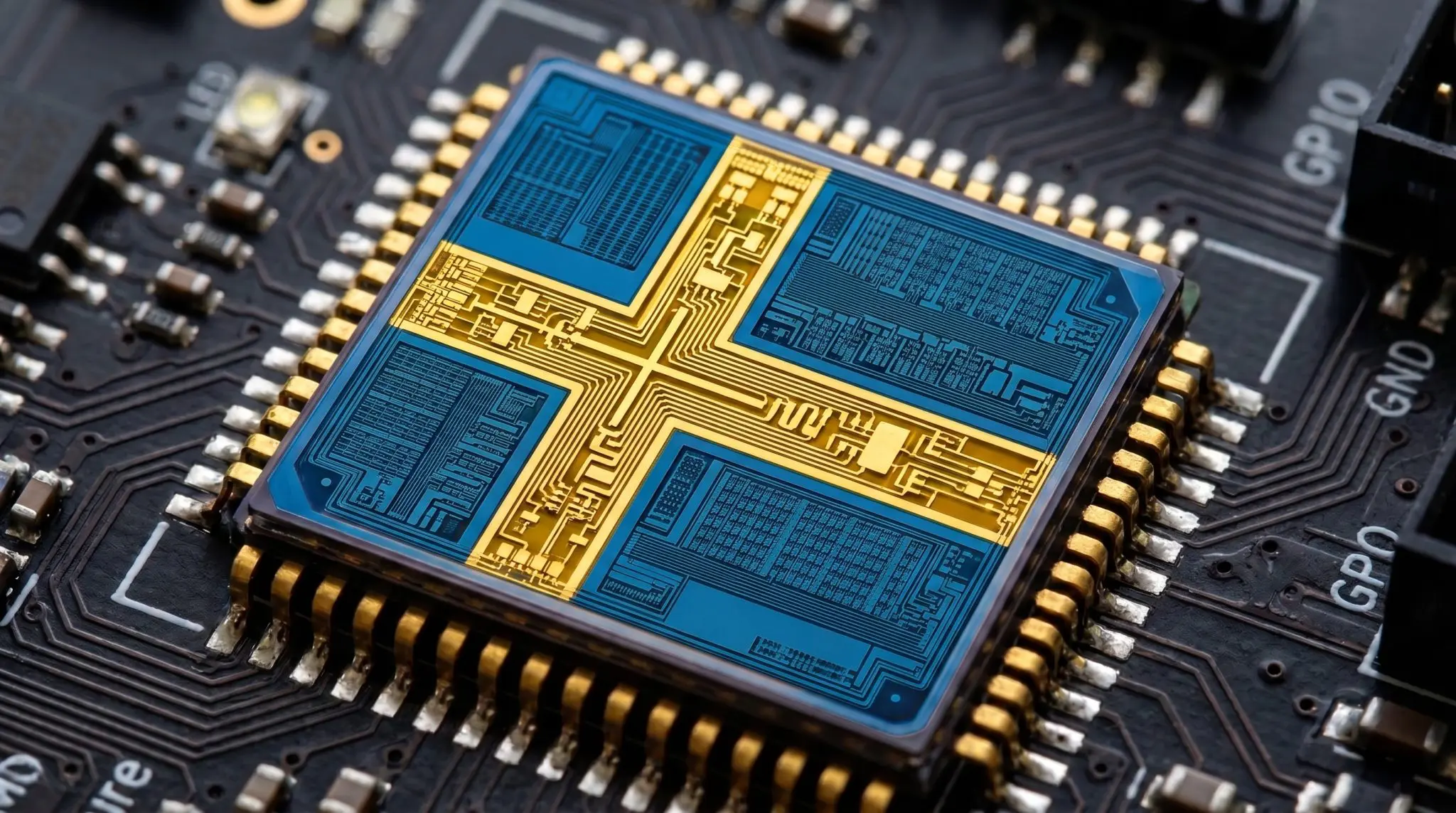
Sweden has established a national quantum technology strategy with objectives extending to 2036, signaling a long-term commitment to the field’s economic and security implications. Presented on August 18, the plan focuses on bridging a critical gap between Sweden’s internationally impactful academic quantum research and its translation into commercial applications, European Commission says.
Rather than launching new programs, the government intends to coordinate existing and future initiatives across universities, public authorities, and industry, building on assets like the Wallenberg Centre for Quantum Technology at Chalmers University of Technology. This approach aims to strengthen research, skills, and international cooperation within the growing quantum ecosystem.
Sweden’s 2036 Quantum Strategy: Research to Commercialization
The government recognizes a central impediment to progress is a gap between academic research and commercial applications, despite acknowledging Sweden’s internationally impactful quantum computing research environments. This strategic focus aims to translate existing scientific strength into economic and security advantages, rather than solely pursuing fundamental discovery. Six Swedish universities recently joined a new Swedish Centre for Quantum Technology, intended to create a more coordinated national structure for research, innovation, and education.
Research-intensive deep-tech companies often face challenges securing substantial capital during the extended period between initial research and commercial viability, a problem the strategy seeks to address through improved access to infrastructure and private investment. The government outlined ambitions beyond purely academic pursuits. Sweden’s plan also aligns with the broader European effort building on the EU’s Quantum Europe Strategy and anticipating a forthcoming European Quantum Act intended to strengthen research and industrial production.
WACQT and National Assets Support Quantum Development
This focus on hardware development is bolstered by existing research infrastructure, including facilities like MAX IV and the European Spallation Source (ESS), which provide crucial materials research capabilities for advancing quantum technologies. The strategy prioritizes coordination of existing and future initiatives across the innovation chain, from fundamental research through to commercialization, to maximize the impact of current resources.
The strategy explicitly links quantum development to national security concerns, noting that future quantum computers could eventually break current encryption systems. This prompts a call for public institutions and companies to develop expertise in post-quantum cryptography, replacing vulnerable algorithms with methods designed to resist attacks from both conventional and quantum computers; Sweden aims to align with the wider European shift, expecting a transition to begin by the end of 2026.
The government argues that maintaining international scientific cooperation will increasingly require protecting sensitive knowledge from industrial espionage and unwanted technology transfers.
Post-Quantum Cryptography and National Security Concerns
Beyond economic projections, Sweden’s national quantum technology strategy explicitly addresses emerging security threats posed by advancements in quantum computing. The government recognizes that currently encrypted information could be vulnerable once sufficiently powerful quantum computers become available, prompting a proactive focus on post-quantum cryptography. This emphasis on security aligns with a broader European initiative; in 2025, EU countries agreed on a coordinated roadmap for transitioning to post-quantum cryptography. Member States are expected to begin this transition by the end of 2026, with critical infrastructure targeted for completion no later than 2030. Sweden’s strategy further integrates quantum research with export controls, investment screening, and research security protocols, acknowledging the need to protect sensitive knowledge from espionage and unwanted technology transfers. Maintaining international scientific cooperation, the government asserts, will increasingly depend on safeguarding this knowledge.
The strategy complements the European Commission’s Quantum Europe Strategy, aiming to establish Europe as a global leader in quantum technology by 2030. Sweden views collaboration within the EU, alongside Nordic and Baltic partnerships, as crucial for sustaining advanced laboratories, manufacturing capacity, and specialized talent, resources difficult to maintain at a purely national level.
The European Commission estimates that the global quantum sector could exceed €155 billion by 2040, while creating thousands of highly skilled jobs in the European Union.



See today’s quantum computing news on Quantum Zeitgeist for the latest breakthroughs in qubits, hardware, algorithms, and industry deals.