

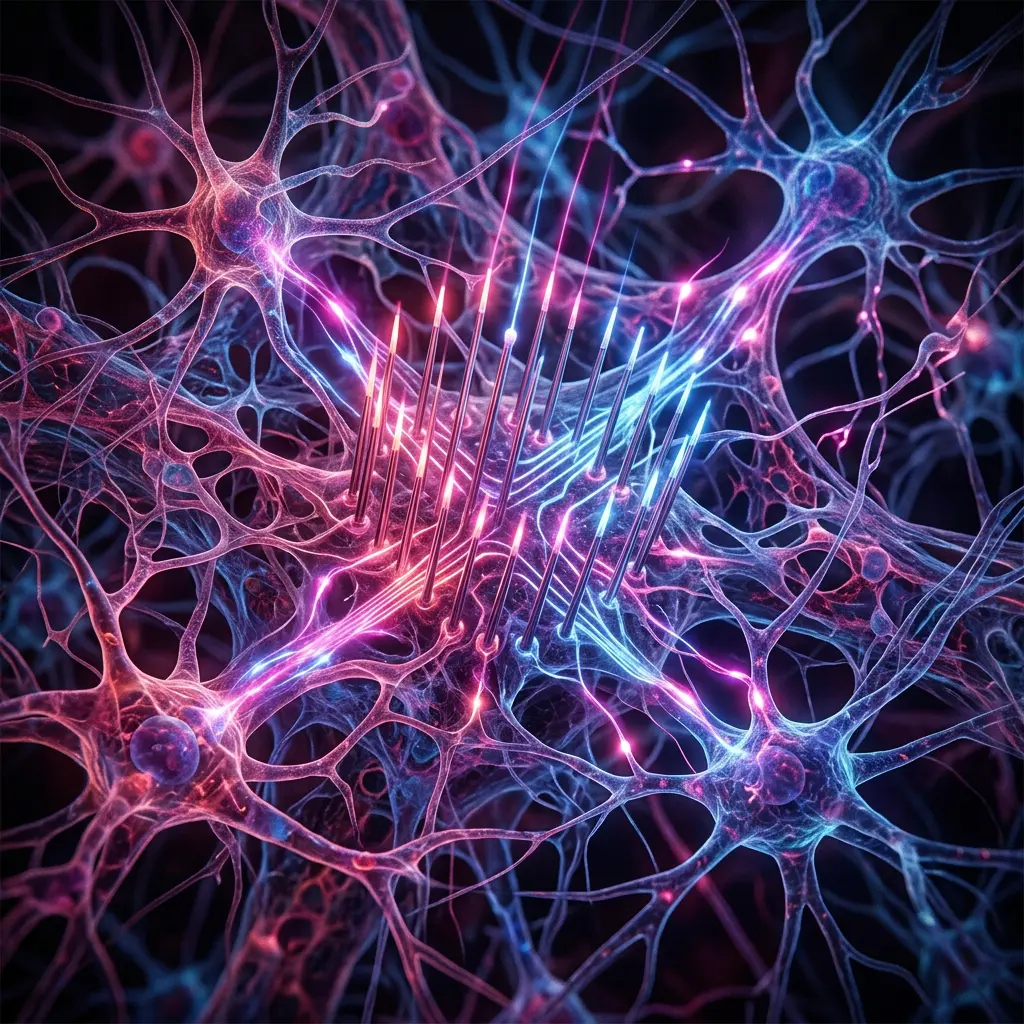
Shaanxi Normal University and Xi’an University of Posts and Telecommunications researchers are shifting the focus of quantum gate design from optimizing pulse amplitudes to learning the entire process of quantum evolution, utilizing a method called physics-informed neural networks. The work represents a move beyond simply finding a control solution to understanding the underlying structure of how that control is achieved. Rather than pre-defining control pulse shapes or durations, the team’s approach allows the artificial intelligence to independently arrive at physically expected results. For rotation gates, the optimized evolutions recover the physical organization expected for bounded single-qubit control, with no prescribed pulse ansatz or duration scan. This method not only synthesizes gates but also makes optimized quantum controls physically readable, diagnosable, and locally refinable, identifying localized bottlenecks in maintaining the geometric condition and using this diagnosis as feedback.
Researchers at Shaanxi Normal University and Xi’an University of Posts and Telecommunications are developing a new approach to quantum gate design, moving beyond traditional pulse optimization to directly learn quantum evolution. This represents a fundamental shift from controlling how to control to controlling the process itself. This work, detailed in recent findings, utilizes physics-informed neural networks (PINNs) to represent the entire evolution of a single-qubit gate, simultaneously learning the control fields, Bloch-state trajectories, and total duration under the governing Bloch equation. Unlike conventional methods that treat pulse parameters as the primary optimization target, this approach views the gate as a unified dynamical object, where control, evolution, and time are intrinsically linked.
Crucially, the representation doesn’t merely synthesize gates, but also enables a level of diagnostic control previously unavailable. When applied to geometric gates, where the path of quantum evolution is integral to the operation, the representation identifies localized bottlenecks in maintaining the geometric condition and uses this diagnosis as feedback, allowing the artificial intelligence to reduce residual path error while simultaneously preserving high fidelity.
Instead, the team utilizes physics-informed neural networks to represent the complete process, allowing for a unified and continuous optimization. This means the artificial intelligence independently arrives at solutions consistent with established physical principles, a crucial step toward more robust and reliable quantum control. The representation identifies localized bottlenecks in maintaining the geometric condition and uses this diagnosis as feedback, effectively allowing the artificial intelligence to self-diagnose and refine its own control designs.
Limitations of Discrete-Pulse Formulations in Quantum Control
Traditional methods often treat gate duration, pulse shape, and trajectory properties as separate problems, a separation the researchers argue obscures the inherent physical coupling of these elements. The current work challenges this approach, positing that a quantum gate isn’t merely a waveform, but a space where fields generate trajectories defining the implemented operation, with duration setting the timescale for both dynamics and the target. This limitation of discrete representations becomes particularly apparent when adapting gates to real-world constraints. The team’s physics-informed neural networks (PINNs) offer a continuous representation of gate dynamics, encoding the governing Bloch equation as a differentiable constraint.
This allows the network to generate control fields and trajectories as continuous functions of time, optimizing not just for fidelity but also for adherence to physical limitations and the overall time cost. “The optimized object is no longer only a finite vector of pulse amplitudes,” the researchers write, emphasizing the holistic nature of their approach. This ability to diagnose bottlenecks and use this diagnosis as feedback suggests a pathway toward more robust and adaptable quantum systems, capable of responding to hardware-specific and locally varying experimental conditions.
The team’s work extends beyond simply achieving high fidelity; the representation allows for a diagnosis of bottlenecks. This capability to pinpoint and address weaknesses within the control process is crucial, as it enables the creation of “physically readable, diagnosable, and locally refinable” quantum controls. The researchers suggest this process-level view will be particularly valuable for adapting gates to specific hardware limitations, task requirements, and even locally varying experimental conditions.
The work demonstrates that this method naturally yields results aligned with established physical principles, without requiring researchers to predefine pulse shapes or scan through various durations. The team’s representation doesn’t simply synthesize gates, but also provides a means to inspect and refine the underlying structure of the control process. This is particularly valuable when considering real-world constraints; the system optimizes not only for gate fidelity but also for the duration of the process and the bounds of the control fields.
This represents a fundamental change in how control solutions are conceived, moving beyond simply finding a functional pulse to understanding the underlying dynamics that create it. The authors highlight that the learned object is “not only a waveform to be propagated, but a controlled physical process whose internal structure and local limitations can be read out within the same differentiable representation.”
👉 More information
🗞 Evolution-Level Quantum Optimal Control of Single-Qubit Gates with Physics-Informed Neural Networks
✍️ Yao Du, Jian-Jian Cheng, Lin Zhang, Ming-Liang Hu and Xingang Wang
🧠 ArXiv: https://arxiv.org/abs/2607.14884


See today’s quantum computing news on Quantum Zeitgeist for the latest breakthroughs in qubits, hardware, algorithms, and industry deals.



