Aalborg University will house a seven-qubit quantum computer by 2027, a deliberate investment in engineering education rather than a competition with larger quantum research institutions. The university intends to integrate the hardware directly into its curriculum, preparing students to develop future quantum technology before it becomes widely available for research.
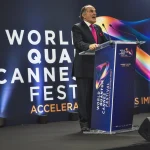
“We don’t think of the quantum computer as a physicist or mathematician,” says Rafal Wisniewski, professor at the Department of Electronic Systems, Aalborg University. “There aren’t many engineering schools in Europe that have a quantum computer, because you don’t think of them in the engineering world.
Aalborg University Focuses Quantum Computing on Engineering Education
The planned seven-qubit quantum computer at Aalborg University distinguishes its approach from many leading quantum research institutions, which are currently focused on scaling to systems exceeding 1,000 qubits. This deliberate limitation reflects a strategic decision to prioritize practical engineering education over sheer computational power, a distinction highlighted by university officials. Rather than competing in the race for the largest qubit count, Aalborg University aims to provide students with hands-on experience with a functional, albeit smaller, quantum system.
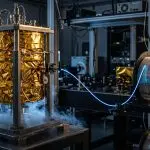
The physical infrastructure required to house and operate this quantum computer is substantial; it will necessitate two dedicated rooms, with the vast majority of the space devoted to supporting systems. These systems include advanced cooling apparatus, detailed electronics and extensive electromagnetic shielding, demonstrating that the challenges of quantum computing extend far beyond the processor itself.
Mikko Nurminen, Sales Director, emphasized this point, stating, “As quantum technology moves from research laboratories into practical application, the industry needs more people with practical experience with quantum hardware. Plug’N’Teach gives students and researchers at Aalborg University the opportunity to gain just that experience, and we are proud to deliver the cryogenic infrastructure that makes it possible.” This focus on the complete system, rather than solely the qubits, is central to the university’s educational goals.
Aalborg University’s commitment to integrating quantum computing into its curriculum is particularly noteworthy given its timing; the system is slated for completion in 2027, positioning the university as an early adopter of this technology in engineering education. This proactive approach aims to equip students with the skills necessary to not only understand quantum theory but also to address the practical challenges of building and maintaining quantum systems.
The university’s investment in quantum computing draws a parallel to its earlier success with space technology, where it became a hub for research and industry. In 2003, Aalborg University became the first Danish university to launch a nanosatellite, a move that spurred the development of a thriving space technology cluster in the North Jutland region. Wisniewski hopes to replicate this success with quantum computing, envisioning a similar ecosystem of companies and researchers emerging around the university.
This long-term vision emphasises the university’s belief in the transformative potential of quantum technology. The anticipated benefits of this hands-on learning experience extend beyond the immediate skills gained by students. The university also intends to use the quantum computer for its own research, particularly in areas where quantum computing can address complex problems in energy, materials science and environmental sustainability.
Denmark’s future engineers must have access to the hardware already during their education. Our students and researchers will gain a better understanding of the technology, so we can lead quantum technology from the laboratory and out into the real world.
Rafal Wisniewski, professor at the Department of Electronic Systems, Aalborg University
Seven-Qubit System Enables Research in Energy, Materials, and Transition
Although it is a small quantum computer, it is still so powerful that it can be used in research. Ordinary computers are good at small problems, but when the problems grow, they are best solved by a quantum computer. “Therefore, the quantum computer must also be used in our research within areas such as energy, materials and green transition,” Rafal Wisniewski said.
But the quantum computer must first and foremost give students and researchers an understanding of the technique. Aalborg University, as an engineering university, must help develop the quantum computers of the future, so that the components, for example, become smaller and more energy efficient.
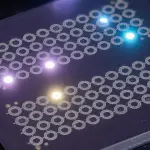
The qubits lie on a small chip that must be cooled down to about -273 degrees, which is close to absolute zero, because qubits are very sensitive to heat and other disturbances. Rafal Wisniewski hopes that the same will happen with quantum computers.
We don’t think of the quantum computer as a physicist or mathematician. There aren’t many engineering schools in Europe that have a quantum computer, because you don’t think of them in the engineering world. We need to change that.
Rafal Wisniewski, professor at the Department of Electronic Systems, Aalborg University

See today’s quantum computing news on Quantum Zeitgeist for the latest breakthroughs in qubits, hardware, algorithms, and industry deals.