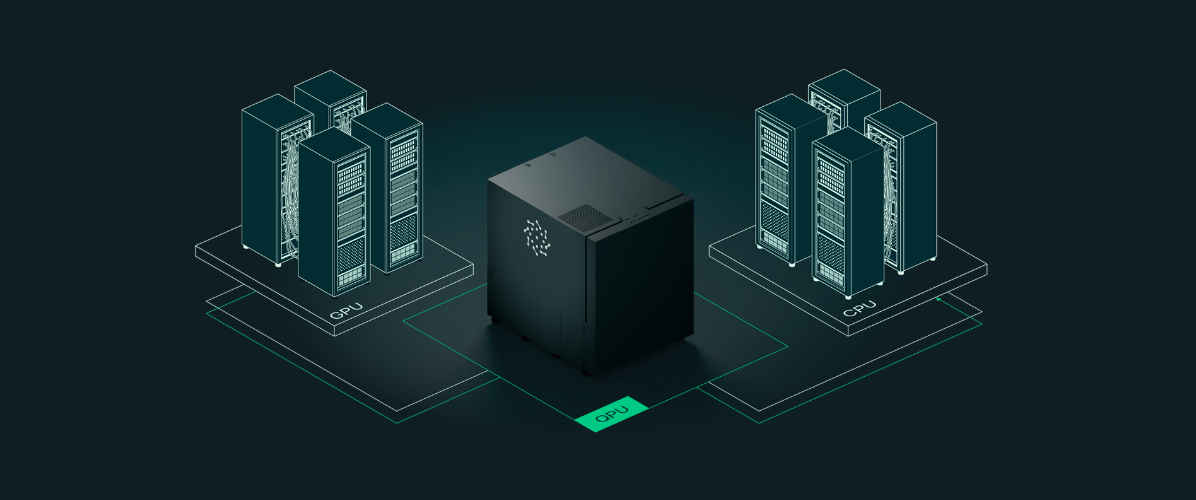
Slurm version 26.11 released this month marks the first time the widely used workload manager natively supports quantum processing units (QPUs) as hierarchical resources, streamlining access for high-performance computing centers. Pasqal is extending its hybrid HPC-QC platform to use this new capability, allowing its neutral-atom QPUs to be managed alongside CPUs and GPUs with reduced code maintenance, the company says.
“Quantum computers will not be adopted as islands,” says Loïc Henriet, CTO of Pasqal, “They will be adopted when they become one more resource in the infrastructure supercomputing centers already run.” This integration, developed in collaboration with IBM, aims to simplify quantum computing operations and enable hybrid quantum-classical workflows.
Pasqal and IBM Integrate Neutral-Atom QPUs with Slurm’s Hierarchical Resources
NVIDIA’s expansion of Slurm to include Hierarchical Resources (HRES) is the key technology enabling Pasqal to manage its neutral-atom QPUs alongside CPUs and GPUs within Slurm, minimizing external code maintenance for high-performance computing centers. This integration, unveiled at SC26, moves beyond previous methods requiring separate tools and processes for quantum processor allocation, streamlining access for HPC users. Slurm can now automatically verify QPU availability, schedule jobs and manage resource release, facilitating hybrid workflows that combine classical and quantum computing resources.
Pasqal collaborated with IBM in 2025 to develop the Quantum Resource Management Interface (QRMI), an open interface initially used to schedule Pasqal’s QPUs through Slurm; this collaboration now underpins the deeper integration announced this month. The QRMI’s vendor-agnostic design means the approach extends beyond Pasqal’s hardware, supporting any QRMI-compatible quantum processor, including those from IBM.
Compared to Slurm’s standard resource models, HRES offers a more efficient method for sharing limited resources like quantum computers among multiple users and jobs. Sam Stanwyck, Director of Quantum Product at NVIDIA, added, “Our goal is to make quantum processors productive tools for scientists working on computing’s hardest problems.” This integration allows HPC users to run complex simulations combining CPUs, GPUs and QPUs without the need for separate quantum session management, simplifying the process and accelerating research. Enabling hybrid GPU-QPU workflows with Slurm HRES and Pasqal QPUs is a central benefit of the new system.
Our goal is to make quantum processors productive tools for scientists working on computing’s hardest problems.
Sam Stanwyck, Director of Quantum Product at NVIDIA
Slurm 26.11 Enables Hybrid GPU-QPU Workflows via QRMI and CUDA-Q
Pasqal and IBM demonstrated a closer integration of quantum processing units with Slurm workload management through the expanded Hierarchical Resources (HRES) features in Slurm 26.11, reducing the need for custom plugins previously required for quantum job scheduling. This builds upon the 2025 release of the Quantum Resource Management Interface (QRMI), initially developed with the Rensselaer Polytechnic Institute and the STFC Hartree Centre, which first allowed Pasqal’s QPUs to be scheduled via Slurm, according to the company.
Pasqal further integrated the NVIDIA CUDA-Q platform into its QRMI implementation earlier this year, streamlining the process. This integration has been successfully verified in both simulated and cloud environments, including Pasqal Cloud, and is currently being implemented at CINECA, the Italian supercomputing center.
There, Pasqal’s QPU is connecting with the Leonardo supercomputer using Pasqal’s open-source Warden middleware and QRMI. NVIDIA stated, “NVIDIA’s expansion of Slurm, together with CUDA-Q and partners like Pasqal, brings quantum programming and resource management into the supercomputing workflows scientists already use, giving them a practical way to explore where quantum acceleration can advance their research.” Users can use Pasqal’s open-source software suite, including Pulser, QoolQit and application libraries like its QUBO solver, or NVIDIA CUDA-Q, with Pasqal having added emulation of its devices within that platform.
Quantum computers will not be adopted as islands. They will be adopted when they become one more resource in the infrastructure supercomputing centers already run.
Loïc Henriet, CTO of Pasqal


See today’s quantum computing news on Quantum Zeitgeist for the latest breakthroughs in qubits, hardware, algorithms, and industry deals.