A meeting at the American Physical Society conference in March 2025 solidified a researcher’s desire to join Riverlane, the company already admired for its work in quantum error correction. Following a master’s program spanning KU Leuven and Université Grenoble Alpes, a program uniquely positioned immediately after the COVID-19 pandemic, the researcher transitioned from a PhD to Riverlane in October 2026.
Despite Riverlane offering two days of remote work per week, the researcher chooses to be in the office daily, valuing the collaborative environment. “My team is made up of friendly, curious, and open-minded individuals who I really enjoy collaborating with,” they say, highlighting the company’s culture.
From Physics to QEC: Researcher’s Academic and Early Career Path
Prior to this, a foundation in physics at KU Leuven in 2017 evolved into an engineering focus for a master’s degree, uniquely structured as a joint-degree Erasmus Mundus programme. This programme facilitated a year of study abroad at Université Grenoble Alpes immediately after the disruptions of the COVID-19 pandemic, offering a valuable international experience during a period of limited global mobility.
During that master’s programme, the researcher’s work at the pheliqs CEA laboratory focused on a hole-spin qubit in France, providing early exposure to the challenges of quantum systems and the impact of noise. That hands-on experience with noise ultimately sparked an interest in quantum error correction, driving the researcher to pursue a PhD and, eventually, to seek a position at Riverlane, a company already recognized as a leader in the field.
The researcher’s admiration for Riverlane wasn’t spontaneous; it developed over time, culminating in a firm desire to contribute to the company’s work if the opportunity arose, the company says. The researcher’s early work with qubits informed a later focus on the practical application of error correction techniques, bridging the gap between theoretical research and real-world implementation. This trajectory reflects a deliberate move towards a role where research directly influences product development and the broader quantum computing ecosystem.
The office environment itself encourages these interactions, with a well-equipped kitchen area and regular informal gatherings, including chess games, providing spaces for colleagues to connect outside of formal meetings. This emphasis on a collaborative atmosphere emphasises the researcher’s preference for a dynamic, socially-rich work setting, even with the flexibility of remote options available.
Riverlane’s Deltaflow System: Bridging Theory and Hardware Benchmarking
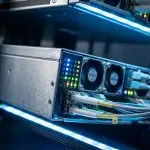
Riverlane’s Deltaflow system functions as a link between theoretical advances in quantum error correction and their practical implementation on real-world quantum processing units. The company’s research workflow is deliberately structured to translate novel codes, algorithms, and decoding techniques into demonstrable capabilities within the Deltaflow system, a process that extends beyond pure research. Riverlane’s Experiments team, where the researcher focuses their efforts, then benchmarks hardware performance using Deltaflow connected to partner QPUs, ensuring research remains aligned with the limitations and possibilities of existing technology.
This iterative process feeds insights back to both partners and internal teams, driving improvements across the entire quantum computing stack. This focus on practical application distinguishes Riverlane’s approach, allowing for a direct translation of research into tangible product influence and partner hardware advancements.
The researcher’s role specifically centers on validating experiments through simulations before deployment on partner QPUs, a step that bridges the gap between theoretical concepts and real-world results, according to the company. This work contributes to a broader research effort aimed at optimizing the performance of quantum error-correcting codes on actual hardware, rather than solely within simulated environments.
The team’s ability to connect research directly to product development is a key component of Riverlane’s strategy. Daily routines reflect this emphasis on collaboration and hands-on experimentation; the researcher typically begins the day discussing recent results with the team and identifying the next optimization or hypothesis to test.
Lunch often involves a group outing to nearby markets, followed by a shared meal in Riverlane’s well-stocked kitchen, supporting a sense of community and informal knowledge exchange, the firm reports. “I have a small bite at home when I wake up, but I usually finish my breakfast in our office kitchen with a piece of fruit and a granola or protein bar,” the researcher noted, highlighting the social aspect of the work environment.
The afternoon is often dedicated to running experiments on partner QPUs accessed through the cloud, allowing for real-time testing and data acquisition. This constant feedback loop between theory, simulation, and hardware is central to Riverlane’s approach to quantum error correction and its commitment to bridging the gap between research and practical application.
Riverlane Culture: Collaboration, Learning, and Knowledge-Sharing
Riverlane prioritises a collaborative environment that extends beyond simply allowing remote work. This preference highlights a deliberate emphasis on collective problem-solving and knowledge exchange, supported through regular informal interactions like kitchen breakfasts and chess games.
The company’s approach to bridging the gap between theoretical and applied quantum error correction (QEC) relies heavily on this shared understanding and rapid iteration between teams, Riverlane reports. The structure of daily work at Riverlane is designed to facilitate this constant flow of information.
Internal team meetings are a platform for demonstrating results and cross-pollinating ideas, while partner meetings ensure alignment on project milestones and a shared understanding of hardware realities. This dual focus, internal learning and external collaboration, is further reinforced by a regular knowledge-sharing series, titled T and bisqubits, demonstrating a commitment to continuous professional development. The researcher notes that this role represents an ideal balance between academic research and practical industry application, a combination that attracts talent seeking tangible impact.
Completing a PhD shortly before joining in October 2026, they found a role offering the perfect mix of experimentation and real-world impact. This combination, alongside working with brilliant colleagues, contributes to the overarching goal of bringing fault-tolerant quantum computers closer to reality, and Riverlane actively seeks individuals who share that ambition.
Source: https://www.riverlane.com/blog/day-in-the-life-of-a-qec-researcher