
NVIDIA announced that Slurm 26.11 adds plugin support for Hierarchical Resources (HRES), allowing a supercomputing center to describe a QPU as a shared, cluster-level resource and connect it to external services, such as the software that manages the device. IQM Quantum Computers is supporting NVIDIA’s integration of its superconducting quantum computers with the updated Slurm system, already running at leading centers like Oak Ridge National Laboratory, VTT Technical Research Centre of Finland, the Leibniz Supercomputing Centre and CINECA.
IQM Chief Technology Officer Craig Ciesla explains that quantum computers become useful at scale when they behave like every other resource in a supercomputing center, a point demonstrated by partner MQSC’s MQSC Orchestrator successfully scheduling IQM systems through this new capability.
IQM Integration Enables Slurm Scheduling of Quantum Processors
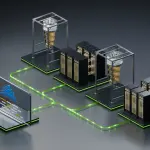
IQM supports NVIDIA’s work to make quantum computers schedulable in Slurm. This release introduces plugin support for Hierarchical Resources (HRES), a capability allowing supercomputing centers to define quantum processing units as shared, cluster-level resources connected to external services, a feature previously unavailable for quantum computers. The integration allows for unified job submission alongside traditional CPU and GPU workloads, streamlining access for researchers. IQM engineers are evaluating how HRES maps onto the company’s hybrid setups and plan to validate it with centers in staging environments as those centers upgrade their Slurm installations.
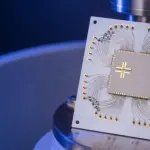
This functional integration extends beyond theoretical support, as demonstrated by MQSC Orchestrator, a product of IQM partner Munich Quantum Software Company. MQSC has combined Slurm’s HRES with the Quantum Device Management Interface, or QDMI, to successfully schedule IQM systems like the IQM Emerald processor. Lukas Burgholzer, Chief Technology Officer and Co-Founder of MQSC, said that their work with IQM shows how shared interfaces can turn quantum hardware into a resource that computing centers can operate through their existing infrastructure.
Quantum computers become useful at scale when they behave like every other resource in a supercomputing center. Slurm is where users meet our systems today.
Craig Ciesla, Chief Technology Officer, IQM


See today’s quantum computing news on Quantum Zeitgeist for the latest breakthroughs in qubits, hardware, algorithms, and industry deals.